
Valanga nigricornis
Valanga nigricornis
Description
How to identify
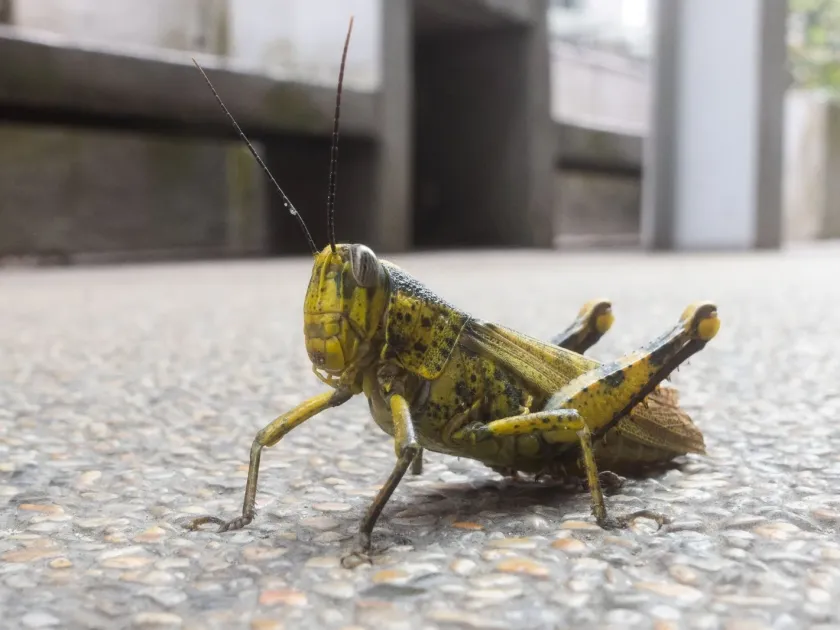
Valanga nigricornis, commonly known as the Javanese grasshopper, belongs to the family Acrididae. It is a robust, large grasshopper with an adult body length ranging from 50 to 80 millimeters.
The coloration of this species is typically greenish or brownish, providing excellent camouflage among foliage. A diagnostic feature is the presence of dark, almost black, markings on the hind tibiae.
Females are significantly larger than males, a typical trait within this family. Their antennae are notably dark, which is the source of the specific name nigricornis.
Adults possess fully developed wings, allowing them to disperse effectively across agricultural landscapes. Nymphs, or hoppers, are similar in shape to adults but lack functional wings.
They inhabit sunny, open areas and are frequently found on plantation crops, forest edges, and gardens where they can feed and reproduce in warm, tropical conditions.
What it damages
Valanga nigricornis is a highly polyphagous insect, meaning it feeds on a vast array of plant species. It is a notorious pest for oil palm and coconut palm plantations.
In Southeast Asia, this grasshopper causes severe damage to fruit trees including citrus, mango, papaya, and cocoa. It is also known to attack various ornamental and vegetable crops.
Damage involves the consumption of leaves, shoots, and sometimes young fruits. In cases of high population density, defoliation can be extensive, severely impacting tree vigor.
Both nymphs and adults possess powerful mandibles, allowing them to strip leaves down to the midribs. Repeated feeding cycles hinder the photosynthetic capacity of host plants.
In nurseries, this pest is particularly devastating, as a few individuals can destroy young seedlings, leading to substantial economic losses for plantation managers.
When it appears
The life cycle of Valanga nigricornis is closely linked to rainfall patterns and humidity. Population peaks usually coincide with the onset of the rainy season, which promotes lush vegetative growth.
Females deposit their eggs in loose, moist soil. The development time from egg to adult is influenced by temperature, typically spanning several months under tropical conditions.
Multiple generations can occur within a single year if environmental conditions remain favorable, leading to rapid population surges and potentially massive outbreaks.
During drier periods, development may slow down, but the insects remain hardy, hiding in sheltered areas. Monitoring throughout the year is crucial for early detection.
Field technicians track the presence of egg-laying sites and nymphs to time intervention efforts effectively before adults reach their peak reproductive potential.
Signs of infestation
The most obvious sign of an infestation is the presence of ragged or notched leaf margins. Eventually, only the primary veins of the leaves may remain.
Large amounts of frass (insect droppings) accumulating on the ground beneath trees are a reliable indicator of a high grasshopper population in the canopy above.
Visual observation is usually successful during early morning or late afternoon when the grasshoppers are most active and visible on the stems or leaves of the plants.
Young plants or seedlings may appear stunted or completely stripped of their foliage. In fruit crops, irregular feeding marks on the rind of the fruit can also be identified.
Surrounding weeds often show signs of herbivory, indicating that the population is expanding from non-crop areas into the cultivated fields.
Control measures
Integrated Pest Management (IPM) is essential for controlling Valanga nigricornis. Cultural practices, such as maintaining weed-free fields, help reduce alternative food sources.
Chemical control using insecticides (such as synthetic pyrethroids or organophosphates) is often necessary during outbreak years to protect commercial plantations.
Biological control agents, including entomopathogenic fungi like Metarhizium anisopliae, have shown promise in naturally suppressing grasshopper populations in humid environments.
- Manual collection and destruction of nymphs and adults in small plots.
- Using light traps to capture adults and monitor activity levels.
- Targeted applications of insecticides to breeding sites during the egg-laying phase.
Consistent monitoring and the application of pest threshold guidelines ensure that control measures are implemented only when necessary, minimizing environmental impact.
Taxonomy
- Latin name
- Valanga nigricornis
- Order
- Orthoptera (locusts)
- Family
- Acrididae
- EPPO code
- VALANI
Discussion
No discussions yet — be the first.