
Acrida
Acrida
Description
How to identify
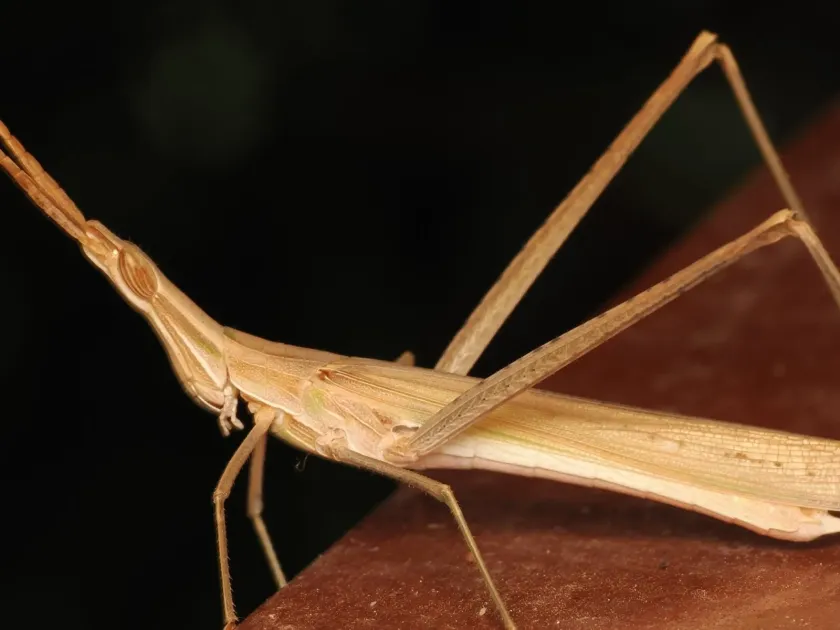
Acrida is a genus of insects belonging to the family Acrididae (true grasshoppers). They are easily identified by their elongated, slender bodies and distinctive cone-shaped heads, which allow them to mimic blades of dry grass or plant stems.
Their coloration typically ranges from bright green to brownish-yellow, providing excellent camouflage within dense vegetation. Adults possess strong hind legs for leaping and well-developed wings for flight, enabling them to move across large agricultural landscapes.
Sexual dimorphism is evident, as females are generally larger and more robust than males. The nymphs closely resemble miniature versions of the adults, gradually growing and developing their wing pads through a series of molting stages.
These insects prefer open, sunny habitats with plenty of grasses. They are thermophilic, meaning their activity levels and reproduction rates are significantly influenced by ambient temperatures during the growth season.
Systematically, Acrida falls under the order Orthoptera. Like other grasshoppers, they undergo hemimetabolous development, meaning they pass through nymphal stages rather than having a pupal stage, gradually gaining adult features.
What it damages
Acrida are polyphagous, meaning they feed on a wide variety of plant species. They pose a threat to cereal crops such as wheat, barley, oats, and maize, as well as various types of sorghum and forage grasses.
In cases of high infestation, these insects can severely damage pasture and hayfields, reducing the quantity and nutritional quality of the forage. This is particularly problematic in areas where livestock rely on natural vegetation.
When natural food sources become scarce, particularly during droughts, these grasshoppers are known to migrate into irrigated fields, attacking vegetables and other high-value crops if they are in the vicinity.
The damage begins with the consumption of the leaf edges, often resulting in jagged, uneven margins. As the population density increases, the damage progresses to stems and reproductive parts, which can lead to significant yield losses.
Furthermore, the damage caused by feeding often leaves the plant susceptible to secondary attacks by fungi and bacteria. This weakens the overall vigor of the crop, making it less resilient to environmental stressors.
When it appears
The life cycle of Acrida is highly dependent on seasonal fluctuations. Overwintering occurs in the soil, where eggs are deposited in protective, hardened pods that survive the winter cold and desiccation.
Nymphs emerge in the spring once soil temperatures reach a specific threshold. This timing often aligns with the vegetative growth stages of cereal crops, which provide a plentiful food source for the emerging young.
There is typically one generation per year. The activity of adults peaks during mid-to-late summer, which is the primary window for intense feeding and reproductive activities, such as mating and oviposition.
As the season draws to a close, females seek out suitable soil sites to lay their eggs. They favor loose, well-drained soil, often found in fields, meadows, or along the margins of agricultural land, to ensure the eggs survive the upcoming winter.
Climate factors such as rainfall and temperature significantly dictate the population dynamics. Warm, dry summers often favor the survival of nymphs, leading to higher populations the following year.
Signs of infestation
The most common sign of an infestation is the presence of irregular "notched" or eaten leaf edges on the host crops. This is a characteristic symptom of grasshopper feeding and should be monitored closely.
Visual observation during the day is often effective, as the grasshoppers will jump or fly when disturbed. Finding high numbers of these insects in the canopy is a clear indicator that control measures may be necessary.
The presence of fecal pellets (frass) on the ground or on the lower leaves of the plants is another sign of feeding activity. This frass is often cylindrical and can help identify the intensity of the infestation in specific patches.
Patches of stunted or heavily defoliated plants are a sign of long-term feeding. When crops show signs of thinning or premature wilting, it is often a result of sustained pressure from the grasshopper population.
Standard monitoring involves sweep netting in a diagonal pattern across the field. This allows farmers to calculate the number of grasshoppers per square meter and compare it against economic thresholds for their specific crop.
Control measures
Preventive agricultural practices are the first line of defense. Deep autumn plowing is highly effective, as it exposes the egg pods to harsh winter conditions and natural predators, significantly reducing the population for the next season.
Effective weed management is also crucial, as unmanaged field edges and fallow lands act as breeding grounds. Keeping these areas clean and minimizing preferred host weeds reduces the risk of grasshopper migration into the main crop.
When populations exceed economic thresholds, chemical intervention becomes necessary. The use of registered insecticides, including pyrethroids or organophosphates, applied during the nymphal stages, provides the best control results.
Application timing is critical; treatments should ideally be applied when the grasshoppers are still in their early nymphal stages, as they are less mobile and more susceptible to control measures than flying adults.
Biological control methods, such as the conservation of natural predators (birds, reptiles, and predatory insects) and the application of entomopathogenic fungi, are becoming more relevant in integrated pest management programs.
Taxonomy
- Latin name
- Acrida
- Order
- Orthoptera (locusts)
- Family
- Acrididae
- EPPO code
- ACRISP
Discussion
No discussions yet — be the first.