
Acorypha glaucopsis
Acorypha glaucopsis
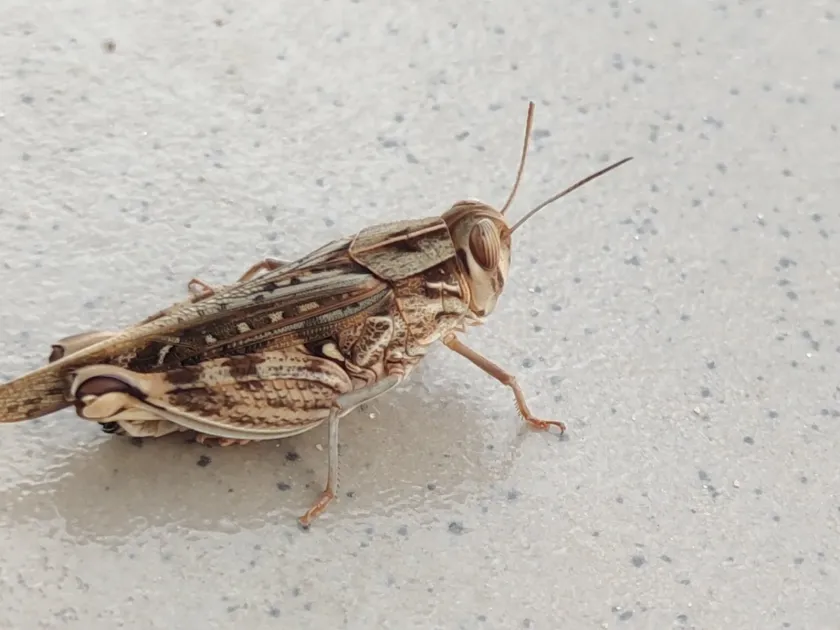
Description
How to identify
Acorypha glaucopsis is a species of grasshopper belonging to the family Acrididae. These insects are primarily recognized as agricultural pests in regions with hot and arid climates.
Adult insects are characterized by their specialized coloration, which provides excellent camouflage against dry vegetation. Their name, glaucopsis, refers to the blue-grey tint found in certain parts of their body.
The biology of this species is highly adapted to drought-prone environments. Unlike some migratory locusts, they often exhibit non-gregarious behavior but can reach high densities under favorable conditions.
The lifecycle follows a standard pattern for grasshoppers: egg, nymphal stages, and the adult phase. Eggs are laid in the soil and are capable of remaining in diapause until environmental cues trigger hatching.
Morphologically, they possess robust mouthparts designed for chewing coarse plant tissue, allowing them to thrive on a variety of grasses and crops common in their native range.
What it damages
This species is a polyphagous pest, meaning it consumes a wide range of botanical hosts. It is particularly known for attacking cereals, including sorghum, millet, and maize crops.
Beyond cereal grains, Acorypha glaucopsis can cause significant damage to legumes, which poses a serious threat to food security in farming regions of Africa and neighboring territories.
Both nymphs and adults contribute to the damage by feeding on leaves, stems, and reproductive parts of plants, which leads to reduced biomass and lower grain yields.
In cases of outbreak, these grasshoppers can devastate large areas of pasture land, severely impacting livestock productivity by reducing the available forage for cattle and sheep.
The severity of the damage is correlated with population density and the growth stage of the crop. Young seedlings are especially vulnerable and may be entirely destroyed by feeding swarms.
When it appears
The phenology of Acorypha glaucopsis is strictly governed by the seasonal rainfall cycle. Activity begins shortly after the onset of the wet season in their native habitats.
Rainfall triggers the hatching of nymphs from the egg pods buried in the soil. This timing often coincides with the germination and early growth stages of agricultural crops.
Adults are most active during warm daylight hours, utilizing solar heat to increase their metabolic rate and flight efficiency, which aids in locating food sources.
As the rainy season concludes, the grasshoppers finalize their reproductive cycle. Females lay eggs in the soil, which then enter a dormant state to survive the impending dry season.
Integrated pest management programs emphasize the importance of monitoring field edges and common vegetation immediately after the first rains to detect early signs of hatching.
Signs of infestation
The earliest signs of an infestation include small, irregular holes in the leaf blades and margins, often referred to as "notching," caused by the feeding activity of young nymphs.
The presence of grasshopper frass (excrement) on the surface of leaves or on the soil below the plants serves as a clear indicator of active feeding populations.
Observing high numbers of small nymphs moving through the field during the early stages of the crop cycle is a critical alert for growers to implement control measures.
Severe infestations are marked by a visible thinning of the crop canopy and the sound of active swarms, which can often be heard during the hottest parts of the day.
In advanced cases, one may observe stems that have been completely stripped or girdled, leading to plant wilting and secondary necrosis of the foliage.
Control measures
Controlling Acorypha glaucopsis involves a combination of mechanical and chemical strategies. Cultivation practices, such as deep plowing, are highly effective in destroying egg pods in the soil.
Chemical intervention remains the primary tool for large-scale infestations. Applying systemic insecticides at the early nymphal stages is more cost-effective and environmentally targeted.
Biological control, by encouraging natural predators such as birds, parasitic wasps, and entomopathogenic fungi, plays a vital role in maintaining ecological balance.
Monitoring using pheromone traps and scouts allows for precise timing of pesticide applications, ensuring maximum mortality of the pest with minimum chemical usage.
- Deep plowing to expose and destroy egg masses in the soil.
- Application of selective insecticides during the early nymphal growth phase.
- Maintenance of clean fields to remove alternative host weeds that harbor the pest.
Taxonomy
- Latin name
- Acorypha glaucopsis
- Order
- Orthoptera (locusts)
- Family
- Acrididae
- EPPO code
- ACORGL
Discussion
No discussions yet — be the first.