
Valanga
Valanga
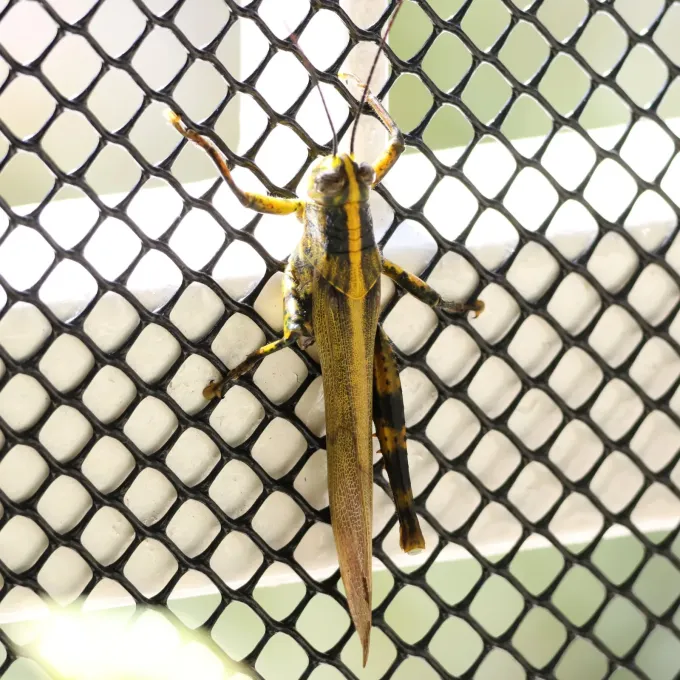
Description
How to identify
Valanga is a genus of large grasshoppers belonging to the family Acrididae. These insects are known for their robust bodies and powerful hind legs, making them highly mobile and capable of causing extensive damage to various types of vegetation in tropical climates.
The adult Valanga usually exhibits a protective coloration ranging from yellowish-brown to olive-green. This coloration acts as camouflage, allowing the insects to blend in seamlessly with their host plants, which makes detection by farmers and agronomists quite challenging.
Systematically, Valanga is classified within the subfamily Cyrtacanthacridinae. Unlike some migratory locusts, Valanga often maintains a more localized population structure, though it can still reach outbreak levels under favorable environmental conditions.
The life cycle of the Valanga involves incomplete metamorphosis, progressing through egg, nymph, and adult stages. Nymphs resemble miniature adults but lack fully developed wings, though they possess a voracious appetite similar to the mature forms.
The mouthparts of Valanga are of the chewing type, highly adapted for consuming tough plant tissues. This structural adaptation allows them to feed on a diverse range of foliage, stems, and even young fruit, posing a significant risk to agricultural productivity.
What it damages
Valanga acts as a polyphagous pest, meaning it feeds on a wide variety of plant species. Fruit orchards are particularly susceptible, with citrus, mango, and coffee plantations often suffering severe leaf loss and reduced yield due to heavy infestations.
Field crops such as cereals, legumes, and various industrial plants are also prime targets. The pest typically destroys young seedlings, which can lead to total crop failure if the infestation occurs early in the growing season, necessitating replanting.
Beyond the direct loss of biomass, the feeding activity of Valanga often facilitates secondary infections. Wounded plant tissues are highly susceptible to the entry of various fungal and bacterial pathogens, leading to further decline in plant health.
When populations reach epidemic proportions, these insects can strip trees completely of their leaves, leaving only the primary veins. This drastically reduces the plant's photosynthetic capacity, resulting in long-term stress and tree mortality.
Quality reduction of agricultural produce is another major economic impact. The presence of insect frass and the physical damage to fruits significantly decrease the market value and export quality of the affected crops.
Signs of infestation
The primary sign of a Valanga infestation is the characteristic irregular leaf margin damage. Unlike pests that create neat holes, Valanga tends to devour leaves from the edge inwards, often leaving a tattered appearance behind.
The accumulation of fecal pellets (frass) under the canopy of infested trees is a reliable sign of active feeding. A high density of these pellets typically correlates with a significant number of insects currently occupying the upper foliage.
Auditory evidence, specifically the stridulation of males during the dusk hours, is a classic indicator of a mature population. This sound is used for mate attraction and suggests that the insects are actively breeding in the vicinity.
Wilting of terminal shoots and the premature shedding of blossoms or young fruits are critical signs of infestation. These indicate that the pest has moved from superficial leaf feeding to damaging more sensitive parts of the plant.
Early morning visual inspections of plant stems often reveal the pests basking in the sun. This is the most effective time to assess the population size before the insects move deeper into the dense foliage during the heat of the day.
Control measures
Managing Valanga requires an Integrated Pest Management (IPM) strategy that combines mechanical, biological, and chemical methods to suppress population growth at different stages of the insect's life cycle.
Mechanical control is highly effective during the egg-laying phase. Deep tillage of soil in susceptible areas destroys egg pods, exposing them to desiccation and natural predators, which significantly reduces the emergence of the next generation.
Biological control involves enhancing the natural predator population. Encouraging birds, spiders, and predatory wasps, as well as utilizing entomopathogenic fungi, can help keep Valanga populations below economic injury levels without relying solely on pesticides.
Chemical intervention should be used as a last resort or when threshold levels are exceeded. Targeted applications of contact or systemic insecticides, timed appropriately with the insect's life cycle, help maximize efficacy while minimizing impact on non-target species.
- Regular monitoring of population density.
- Sanitation of surrounding areas to remove weeds.
- Strategic use of broad-spectrum insecticides.
- Habitat management to favor natural predators.
Taxonomy
- Latin name
- Valanga
- Order
- Orthoptera (locusts)
- Family
- Acrididae
- EPPO code
- VALASP
Discussion
No discussions yet — be the first.