
Vaginulus alte
Vaginulus alte
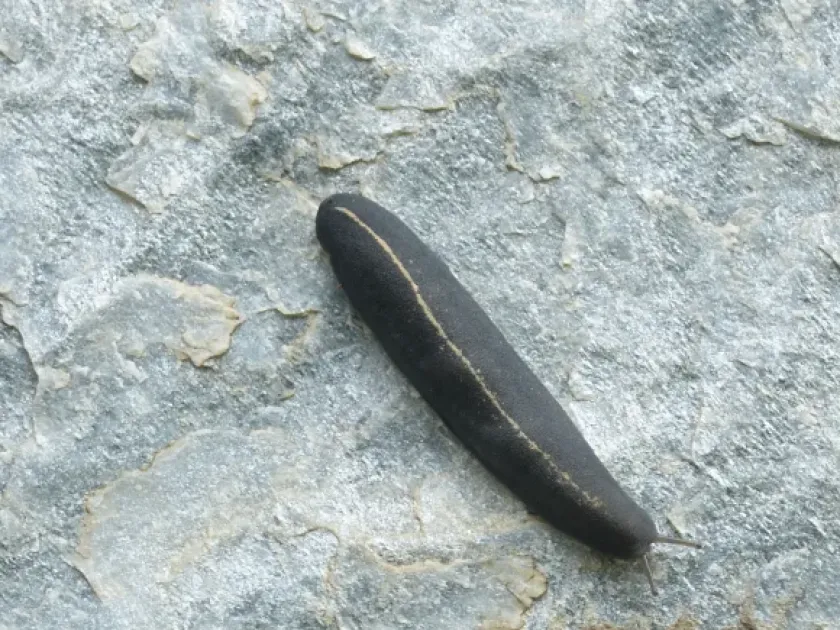
Description
How to identify
Vaginulus alte is a species of land gastropod belonging to the family Veronicellidae, order Systellommatophora. This pest is a shell-less slug characterized by a smooth, fleshy body, usually colored in shades of brown, gray, or olive with darker stripes or spotting patterns.
The adult mollusk can grow quite large, often exceeding 10 centimeters. A key feature of this species is the absence of a visible shell, as the entire dorsal surface is covered by a soft, retractable mantle that protects the internal organs.
The head features two pairs of tentacles: the upper pair bears the eyes, while the lower pair functions as organs of smell and touch. This sensory system allows the slug to locate food sources with precision even in complete darkness.
As a hermaphrodite, Vaginulus alte exhibits high reproductive capacity. This biological advantage allows a small initial population to quickly colonize new areas, posing a consistent threat to horticultural and agricultural production.
The species is highly sensitive to desiccation, which dictates its behavior. It remains hidden in humid, shaded areas during the day—such as under leaf litter, debris, or in topsoil—and emerges at night or during rainfall to forage.
What it damages
This gastropod is a notorious polyphage, meaning it feeds on a wide range of plants. It causes significant damage to leafy vegetables, such as lettuce and cabbage, as well as seedlings of tomatoes, peppers, and various beans, often consuming entire plants.
Beyond destroying seedlings, the slug feeds on fruits and tubers that touch the soil. It gouges deep, irregular holes in produce, which often become entry points for secondary bacterial or fungal pathogens, leading to total rot of the affected fruit.
The damage is characterized by ragged holes in leaves and the removal of plant tissue between veins. Due to its voracious appetite, a group of these slugs can destroy the harvest of an entire garden bed in just a few nights of activity.
In addition to physical destruction, the slug contaminates crops with its mucus and feces. This slime layer, combined with the aesthetic damage, renders the produce unmarketable, causing substantial financial losses for commercial growers.
Furthermore, Vaginulus alte is recognized as an intermediate host for several parasitic nematodes that can infect humans and animals. Controlling this pest is therefore not only a matter of yield protection but also of public health safety.
When it appears
The activity of Vaginulus alte is strictly regulated by temperature and moisture availability. It thrives in warm, humid conditions, making the spring and autumn months, or rainy tropical seasons, the periods of peak infestation.
In temperate climates, the slugs become active as temperatures rise and rainfall becomes more frequent. They are most active at night or on overcast, drizzly days, as these conditions minimize water loss from their skin during movement.
The life cycle involves laying eggs in moist soil or organic matter. The eggs are resilient and can withstand minor fluctuations in moisture. Once conditions improve, the eggs hatch into juvenile slugs that begin feeding almost immediately.
During dry spells or extreme cold, the slugs burrow deep into the soil to enter a dormant state. This ability to wait out adverse conditions makes complete eradication challenging, as the population can rebound rapidly once moisture returns.
Agronomists emphasize monitoring the fields during the early growth stages of crops. This is when plants are most vulnerable to feeding damage, and early intervention is critical to prevent the establishment of a large slug population.
Signs of infestation
The most telltale sign of a Vaginulus alte infestation is the presence of dried, silvery mucus trails found on plant stems, soil surfaces, and garden paths. These trails remain visible even after the slug has retreated to its hiding spot.
Leaves exhibit irregular, scalloped margins where tissue has been scraped away. In severe infestations, only the main leaf veins remain, giving the plant a skeletonized appearance. Seedlings may be completely severed at the base.
Observation of the slugs themselves is the most accurate diagnostic method. Checking the fields with a flashlight at night, especially after irrigation or rain, will typically reveal the pests actively feeding on the crop foliage.
- Shiny, silvery slime trails on surfaces.
- Ragged holes and scalloped leaf edges.
- Deep, sunken lesions on fruits touching the ground.
- Discovery of slugs hiding under mulch or stones.
Inspecting the soil under debris, wooden boards, or weeds during the day is highly effective for assessment. If these hiding spots are wet and contain visible damage, it is a clear indication that a control program needs to be implemented.
Control measures
Cultural management is the first line of defense. Keeping the area free of weeds, decaying organic matter, and dense brush eliminates the hiding spots these slugs depend on, significantly reducing their suitability for colonization.
Physical barriers can protect high-value crops. Spreading coarse materials like wood ash, lime, or crushed eggshells around the base of plants creates an abrasive surface that deters slugs from reaching the crop stems.
Chemical control involving molluscicides, such as those containing metaldehyde or iron phosphate, is effective when applied as baits. These must be used cautiously, following safety instructions to prevent ingestion by non-target wildlife or pets.
Biological control promotes the presence of natural predators like toads, frogs, hedgehogs, and ground beetles. By avoiding broad-spectrum insecticides, you allow these beneficial species to help regulate the mollusk population naturally.
Trapping is a practical, non-toxic method for home gardens. Containers filled with beer or fermented sugary liquids buried at soil level attract slugs, which then drown. Emptying these traps regularly is a simple way to maintain low population levels.
Taxonomy
- Latin name
- Vaginulus alte
- Order
- Molluscs
- Family
- Veronicellidae
- EPPO code
- VAGILE
Discussion
No discussions yet — be the first.