
Tylotropidius gracilipes
Tylotropidius gracilipes
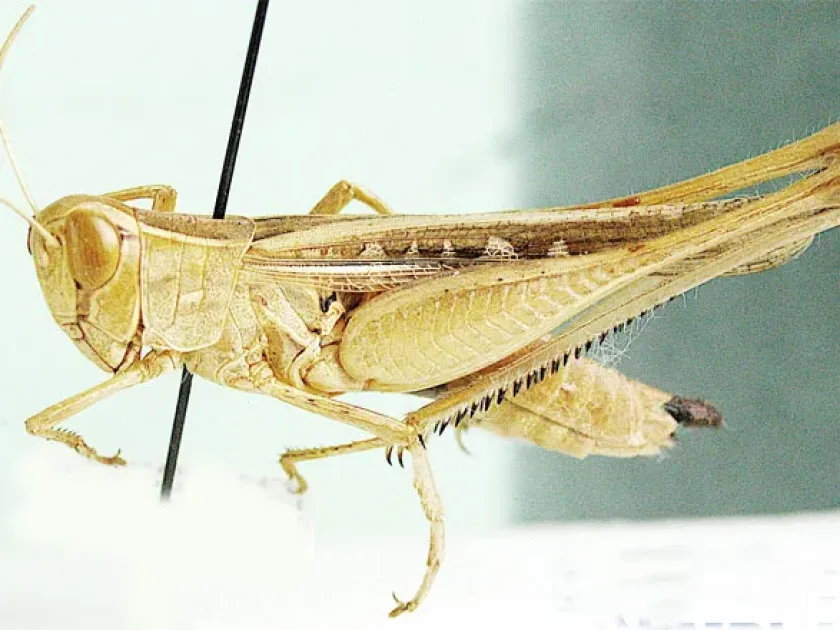
Description
How to identify
Tylotropidius gracilipes is a species belonging to the order Orthoptera and the family Acrididae, commonly known as grasshoppers.
These insects are characterized by their slender body structure and specialized hind legs, which are adapted for jumping and evading threats.
Their coloration is typically adapted to their natural environment, providing camouflage against dry grass and cereal stems.
Identification often requires careful examination of the pronotum and the specific patterns located on the outer area of the hind femora.
As part of the Eyprepocnemidinae subfamily, these insects show distinct behavioral patterns regarding their movement and feeding habits.
What it damages
The pest poses a significant threat to various agricultural crops, with a particular preference for cereals and some legume species.
Adults and nymphs feed by chewing the leaves, often starting from the edges and progressing toward the midrib, which severely reduces photosynthetic capacity.
In cases of high infestation, the pest can cause substantial defoliation, leading to reduced plant vigor and lower overall yields.
Young seedlings are especially vulnerable, as damage to the growing point can kill the plant or cause significant developmental stunting.
The physical wounds caused by feeding also create entry points for secondary fungal and bacterial infections, further damaging the crop.
When it appears
The biological life cycle of Tylotropidius gracilipes is strongly governed by the climatic conditions and the availability of food sources.
Eggs overwinter in the soil and begin to hatch in the spring once temperatures reach the threshold required for development.
Nymphs go through several molting stages, with the adult stage being the most active and damaging period during the mid-summer months.
The activity level of the pest peaks during sunny, warm weather, which facilitates both feeding and reproductive behaviors.
At the end of the season, adults lay their eggs in the soil, which marks the start of the next generation's survival strategy for the following winter.
Signs of infestation
One of the primary indicators of a T. gracilipes presence is the appearance of jagged holes and missing leaf tissue on crop plants.
The sudden movement of insects leaping away when disturbing the canopy is a clear sign of an active infestation.
The presence of fecal pellets on the ground beneath the plants provides evidence of the intensity of the feeding activity.
During peak hours, audible stridulation by males is often noted in areas where the grasshopper population density is high.
Gradual yellowing and necrosis of the leaf edges in damaged plants typically occur as a secondary result of the pest's persistent feeding.
Control measures
Deep autumn plowing is a highly effective method for destroying egg pods that remain in the soil, preventing spring emergence.
Chemical control using registered insecticides is recommended when population thresholds are exceeded during the nymphal stages.
Regular field scouting and monitoring are essential to ensure that control measures are applied at the most effective time.
Maintaining clean field margins and controlling weed growth helps to limit the alternative host plants available to the pest.
Integrated Pest Management (IPM) strategies, including biological control agents and habitat management, are crucial for sustainable agriculture.
Taxonomy
- Latin name
- Tylotropidius gracilipes
- Order
- Orthoptera (locusts)
- Family
- Acrididae
- EPPO code
- TYTPGA
Discussion
No discussions yet — be the first.