
Tylotropidius
Tylotropidius
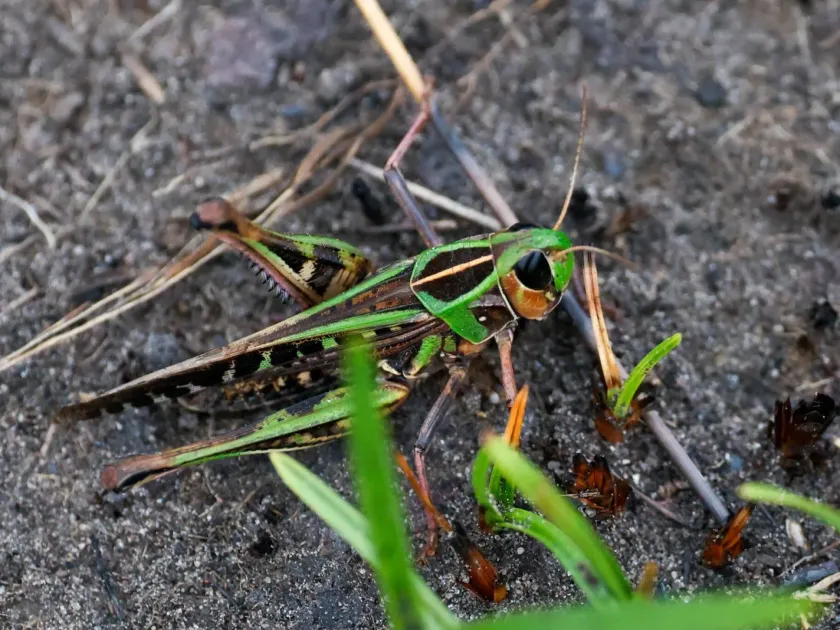
Description
How to identify
Tylotropidius is a genus within the family Eyprepocnemididae (order Orthoptera). These insects possess a robust morphology typical of grasshoppers, featuring strong hind legs designed for jumping.
The adult insects are usually colored in camouflage patterns ranging from brown to olive, allowing them to remain inconspicuous within vegetation. They possess functional wings capable of sustained flight.
The life cycle involves incomplete metamorphosis, passing through egg, nymph, and adult stages. Nymphs resemble miniature versions of adults but lack fully developed wings and reproductive organs.
Females are equipped with strong ovipositors, enabling them to deposit eggs deep into compact soil, which protects the eggs from harsh environmental conditions until hatching.
Identification of specific species within the genus often requires examination of the male genitalia, as external morphological traits can be quite similar across different populations.
What it damages
This pest poses a significant threat to various agricultural crops, particularly in tropical and subtropical regions where it is widely distributed.
They primarily feed on legumes, including peanuts and soybeans, causing severe defoliation and damage to young, tender stems.
The insect also targets cereal crops such as millet and sorghum, where both nymphs and adults consume soft tissues during active vegetative growth stages.
In cases of high infestation levels, the pest can cause massive defoliation, leading to reduced photosynthetic capacity and significant yield loss for farmers.
The feeding activity also creates wounds on the plant surface, providing entry points for various bacterial and fungal pathogens, further complicating plant health.
When it appears
The life cycle of Tylotropidius is strongly synchronized with rainfall patterns. Nymph emergence usually coincides with the start of the rainy season when soil moisture becomes optimal.
Peak adult activity occurs during the period of intensive crop growth, which provides an abundant food source for the rapid development and reproduction of the pest.
The duration of the life cycle varies depending on ambient temperature and food quality, typically spanning several months from egg to adult.
In regions with bimodal rainfall, the pest can complete multiple generations per year, leading to exponential increases in population density on farmland.
During unfavorable conditions, such as prolonged droughts, the insect survives in the egg stage, remaining in a state of diapause protected by the soil.
Signs of infestation
The primary symptom of infestation is the appearance of irregular holes on the leaves, which expand as the grasshoppers continue to feed.
Severe infestations result in skeletonized leaves where only the main veins remain, severely inhibiting the plant's ability to produce energy.
The presence of numerous jumping insects in the field, which scatter when disturbed by human activity or machinery, serves as a clear indicator of a pest outbreak.
Stem damage may be visible as surface grazing or shallow cuts, which can weaken the plant and increase the risk of lodging during windy conditions.
Accumulation of fecal pellets on leaves and the ground beneath the canopy is a secondary sign that a large population is actively feeding in the area.
Control measures
Managing Tylotropidius requires an integrated approach that focuses on mechanical, biological, and chemical control methods to keep populations below economic thresholds.
- Deep plowing of soil prior to planting can effectively destroy egg pods, significantly reducing the density of the initial generation.
- Application of contact or systemic insecticides during the early nymph stages is highly effective in preventing major crop damage.
- Proper crop rotation and maintaining weed-free field margins eliminate secondary food sources and nesting habitats.
- Utilizing light or pheromone-based traps for regular monitoring allows farmers to apply control measures before the population reaches damaging levels.
- Biological control using entomopathogenic fungi provides an environmentally friendly alternative to reduce pest numbers while preserving beneficial insect species.
Taxonomy
- Latin name
- Tylotropidius
- Order
- Orthoptera (locusts)
- Family
- Acrididae
- EPPO code
- TYTPSP
Discussion
No discussions yet — be the first.