
Ring ouzel
Turdus torquatus
Description
How to identify
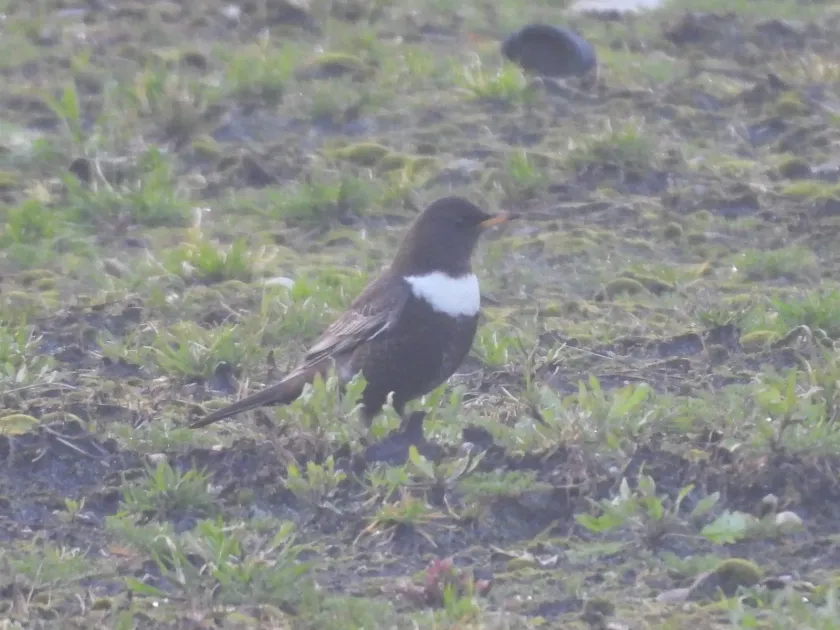
The Ring Ouzel (Turdus torquatus) is a member of the thrush family (Turdidae), primarily identifiable by the distinctive white crescent on the breast of the adult male.
This bird is similar in size and general structure to the common blackbird, but it has a more rugged appearance and distinct white feather edges, particularly in males.
Females and juveniles tend to be browner and have a much less pronounced white collar, which can sometimes lead to confusion with other thrush species found in agricultural zones.
They are generally shy birds of mountain habitats but can become opportunistic feeders when natural food sources are scarce or during migration periods.
Their song consists of repetitive, clear, and slightly melancholic whistle sequences, which are quite distinct from the more complex melodies of the song thrush.
What it damages
The primary agricultural impact of the Ring Ouzel is the consumption of ripening fruits and berries in orchards and domestic fruit gardens, causing significant loss of yield.
These birds feed heavily on various soft fruits, including cherries, raspberries, strawberries, currants, and other berry-producing shrubs common in horticulture.
By pecking into the fruit skin, they often cause physical damage that serves as an entry point for various secondary pathogens, including fungi like Monilinia.
During the early spring period, they may also peck at the buds of fruit trees, which can reduce the potential for blossoming and subsequent fruit set in the season.
As flock-forming birds, they can clear large sections of a fruit patch in a very short time, making them a high-risk factor during the peak harvest season.
When it appears
The period of greatest impact is during the mid-summer harvest season (June and July), when fruits are at their peak sweetness and most accessible to the birds.
Spring migration, occurring in April and May, is a secondary period of interest, though their diet then is primarily focused on ground-dwelling invertebrates.
Autumn migration may bring them back into gardens to forage for late-season fruits and berries before they move to their wintering grounds in the south.
Daily activity is most pronounced during the early morning and late afternoon hours, coinciding with their main feeding and foraging patterns.
Weather conditions play a major role; cold snaps or prolonged rainy periods in the mountains often force these birds to descend into cultivated areas for survival.
Signs of infestation
An accumulation of damaged, pecked, or fallen fruits beneath the canopy is the most immediate indicator of bird activity in an orchard or garden.
Visible markings on the berries often include small, irregular holes or sections missing, which is a classic sign of thrush-type feeding activity.
The presence of bird droppings on leaves and branches, often containing seeds from the consumed fruit, confirms the frequency of their visits to the area.
Noticeable noise, agitation, and alarm calls from the tree canopy upon a human's approach are clear indicators that the birds are present and active.
Evidence of spring bud damage, characterized by clean nipping of the shoot tips, indicates their foraging activity before the fruit becomes available.
Control measures
Exclusion through the use of bird-proof netting remains the most effective, reliable, and non-lethal way to protect valuable fruit crops from bird pressure.
Visual deterrents like reflective tapes, CDs, and predator silhouettes provide short-term protection but must be moved frequently to avoid habituation.
Acoustic deterrent systems that play distress calls or predator sounds can be effective, especially when used in conjunction with visual aids.
Cultural methods, such as providing alternative food sources (e.g., planting less valuable berry bushes on the perimeter), can help divert their attention from primary crops.
- Installing anti-bird netting before fruits begin to change color
- Rotating deterrent devices to keep the birds from getting used to them
- Maintaining a clean orchard floor to remove rotting fruit debris
- Monitoring population activity during peak migration seasons
Taxonomy
- Latin name
- Turdus torquatus
- Family
- Turdidae
- EPPO code
- TURDTO
Discussion
No discussions yet — be the first.