
Eastern bluebird
Sialia sialis
Description
How to identify
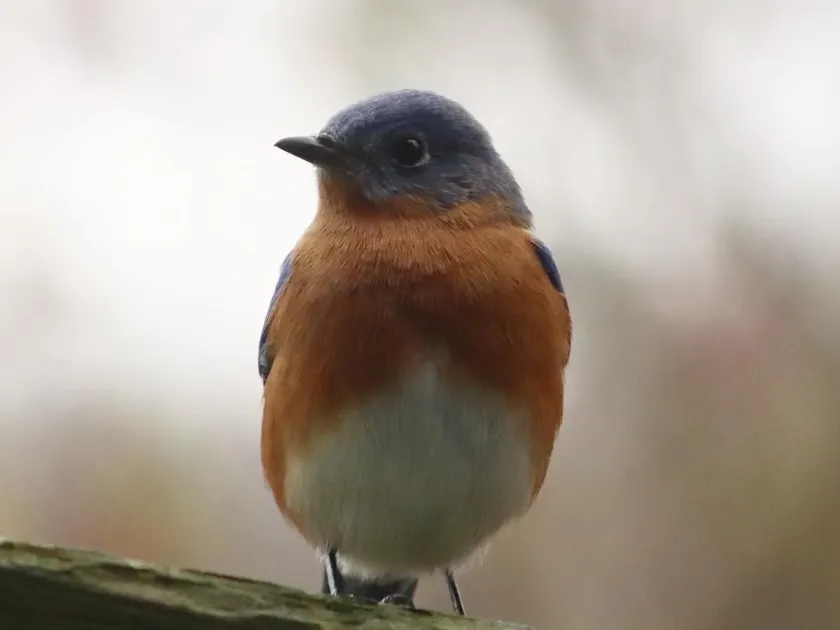
The Eastern bluebird (Sialia sialis) is a small, North American migratory bird belonging to the thrush family (Turdidae). Adult males are easily recognized by their vibrant deep blue backs and warm reddish-brown breasts, while females exhibit a duller, grayish-blue coloration.
They inhabit open woodlands, farmlands, and orchards, often utilizing tree cavities or man-made nest boxes. Their presence is highly desired by gardeners because of their insectivorous diet, which includes many harmful beetles and caterpillars.
These birds are diurnal and highly active during the breeding season. Depending on the climate, they can raise multiple broods per year, maintaining a consistent presence near agricultural areas throughout the warm months.
Eastern bluebirds exhibit strong territorial behavior around their nesting sites, though they become more social and inquisitive when foraging for food for their growing nestlings.
Proper identification is crucial, as their beneficial role in natural pest control usually far outweighs any incidental damage caused to fruit crops in well-managed orchards.
What it damages
While Eastern bluebirds are primarily insect-eaters, they are opportunistic feeders. During the summer, especially in dry weather, they may consume small fruits like blueberries, raspberries, and blackberries when insects are less abundant.
Damage to crops is characterized by peck marks and small holes in the surface of ripening fruits. These punctures can lead to secondary infections, such as mold or fruit rot, which render the harvest less marketable.
It is important to emphasize that bluebirds provide essential ecosystem services by reducing the populations of agricultural pests. In many cases, their insect-control benefits significantly exceed the minor losses caused by their fruit consumption.
Damage is typically more pronounced in small home gardens than in large commercial operations where fruit density and landscape management might discourage bird lingering.
In cases where crops are frequently visited, it is usually because the birds lack alternative food sources or water in the immediate vicinity during the peak ripening season.
When it appears
Eastern bluebirds return to their northern breeding grounds early in the spring, often coinciding with the first stages of garden planting. Their activity peaks during the primary nesting months of June and July.
The risk to berry crops is highest during the mid-to-late summer months, as this aligns with the fledging period of the second and third broods, which significantly increases the demand for varied food sources.
As autumn approaches, bluebirds transition their diet towards wild berries, seeds, and fruits found in non-agricultural settings, reducing their pressure on commercial or home garden produce.
During the winter, many populations migrate to warmer regions, though some remain in the southern parts of their range, usually avoiding cultivated fruit areas in favor of wild shrubs and thickets.
Strategic timing of pest management efforts should focus on the mid-summer period when fruit maturity coincides with the peak of the bird’s feeding activity.
Signs of infestation
The most common sign of bird foraging is the presence of superficial peck marks or partially eaten berries found on the plants, often clustered on the outer, more accessible branches.
Bird droppings found beneath fruit-bearing shrubs or on fencing are a reliable indicator of frequent activity and roosting habits near the crop area.
The sight of bluebirds frequently perching on stakes, wire fences, or low branches near the garden indicates that they are scouting the area for available food.
Observing bluebirds interacting near a garden, combined with their distinctive soft whistles and calls, confirms their presence and activity level in the vicinity of the fruits.
An increasing frequency of damaged fruit over several days during the mid-summer peak serves as a clear alert that the birds have established a feeding pattern on your crops.
Control measures
The most effective and humane method to protect fruit crops is the installation of protective netting. This physical barrier prevents birds from reaching the fruit while causing no harm to the wildlife.
Visual deterrents, such as reflective tape or holographic flash tape, can provide temporary protection by creating discomfort for the birds. It is essential to move these devices periodically to prevent habituation.
Acoustic deterrents, such as devices that emit distress calls or predator sounds, can be successful if applied consistently during the specific time of day when birds are most active.
Providing an alternative source of food or water at a distance from the main berry patch can effectively lure the birds away from the valuable crop, balancing their presence in the garden.
- Install bird-proof netting over berry bushes.
- Use varied visual deterrents like foil strips.
- Maintain a water station far from crops.
- Harvest fruits promptly upon reaching maturity.
Taxonomy
- Latin name
- Sialia sialis
- Family
- Turdidae
- EPPO code
- SIALSI
Discussion
No discussions yet — be the first.