
Brown-headed thrush
Turdus chrysolaus
Description
How to identify
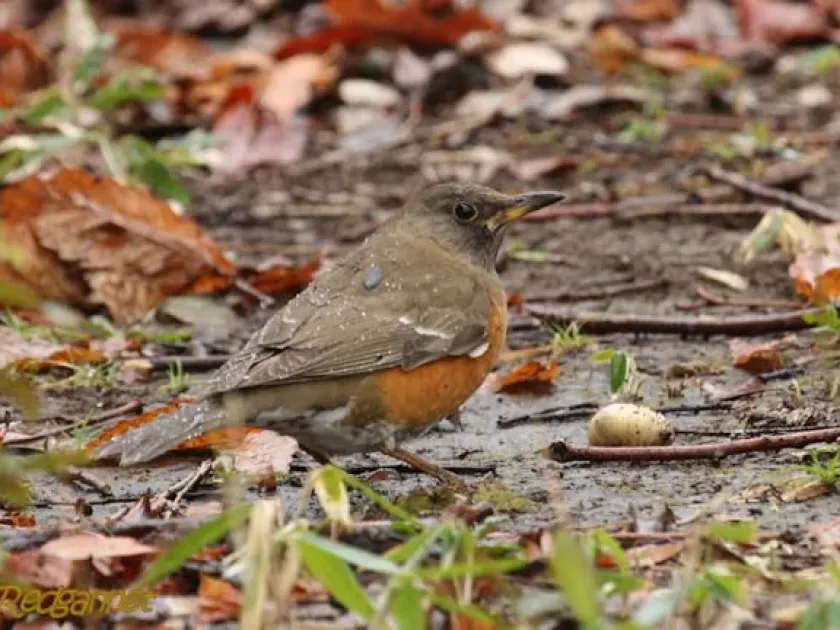
The brown-headed thrush (Turdus chrysolaus) is a bird species of the thrush family known for its migratory behavior and potential to cause agricultural damage. It is characterized by an olive-brown upper body and a distinct rusty-golden breast.
Measuring about 23-24 cm in length, these birds are highly alert and adaptable. They often inhabit woodland edges but readily enter orchards and vineyards when food resources are plentiful during the ripening season.
They are primarily diurnal and exhibit social behavior, often foraging in small groups. Their sharp eyesight and quick reaction times make them efficient at identifying and exploiting high-quality food sources in cultivated areas.
The breeding season involves territorial behavior, but once the young have fledged, the birds become more mobile and prone to aggregating in orchards to feed on berries and small fruits.
Understanding their behavioral patterns is essential for orchard management, as these birds can rapidly transition from wild habitats to commercial farms when native food sources become scarce or less accessible.
What it damages
The brown-headed thrush poses a significant threat to various berry and orchard crops, including cherries, blueberries, strawberries, and grapes. They feed directly on the fruit, causing extensive damage to the crop.
Their feeding behavior often involves puncturing the skin of the fruit, which allows for moisture loss and secondary infections such as fungal rot, rendering the remaining fruit unmarketable.
In high-density orchards, flocks can cause substantial financial loss by destroying a large percentage of the harvest in a very short time frame. Damage is often disproportionately high compared to the actual amount consumed.
Besides fruit, they may feed on buds in early spring, which hinders the growth and productivity of the trees. This type of damage is particularly problematic for young plantings or vulnerable crop varieties.
The spread of pathogens through their droppings and their tendency to move between trees further complicates the management of fruit quality and hygiene in commercial settings.
When it appears
The peak risk period for crop damage occurs during the summer months when fruits reach maturity. This is when the thrushes are most active in targeting orchards for feeding.
Spring is another critical time when the birds may attack tree buds due to the shortage of other natural food sources. This can impact the long-term vigor of the orchard.
Migration periods can lead to sudden influxes of bird populations, creating unpredictable surges in pressure on agricultural lands that require immediate defensive action.
Post-breeding season flocks, consisting of parents and juveniles, pose a sustained risk until late autumn, necessitating a prolonged protection period for late-ripening varieties.
Effective management requires tracking the phenological stages of the crops and aligning protective measures with the timing of fruit development and ripening.
Signs of infestation
Visible punctures and peck marks on the skin of fruits are the primary indicators of a thrush infestation. Fruits may appear partially eaten or damaged while still attached to the plant.
An abundance of dropped, partially consumed fruit on the ground beneath the canopy is a clear sign of high bird activity in the area.
Auditory cues, such as sharp alarm calls or vocalizations during group movement, help in identifying the presence of these birds in the orchard early in the morning or evening.
The accumulation of bird droppings on branches and leaves in specific areas of the orchard suggests that these locations are being used as frequent perching or feeding sites.
Visible damage to terminal buds and small twigs in early spring can also serve as a diagnostic indicator of bird foraging, especially when other pests have been ruled out.
Control measures
Physical barriers, such as bird-proof netting, represent the most reliable method to protect high-value crops from bird damage throughout the ripening season.
Bioacoustic deterrents that emit distress calls or predator sounds are effective in commercial orchards, though they work best when combined with other methods to prevent habituation.
Visual deterrents, including reflective tape, holographic devices, and predator models, provide short-term relief but should be rotated to maintain their efficacy.
Cultural practices like prompt harvesting ensure that crops do not stay in the field longer than necessary, thereby reducing the window of opportunity for bird attacks.
Active patrol programs or automated gas cannons are often utilized in larger operations to create an environment that the birds perceive as unsafe or undesirable for foraging.
Taxonomy
- Latin name
- Turdus chrysolaus
- Family
- Turdidae
- EPPO code
- TURDCH
Discussion
No discussions yet — be the first.