
Hermit thrush
Catharus guttatus
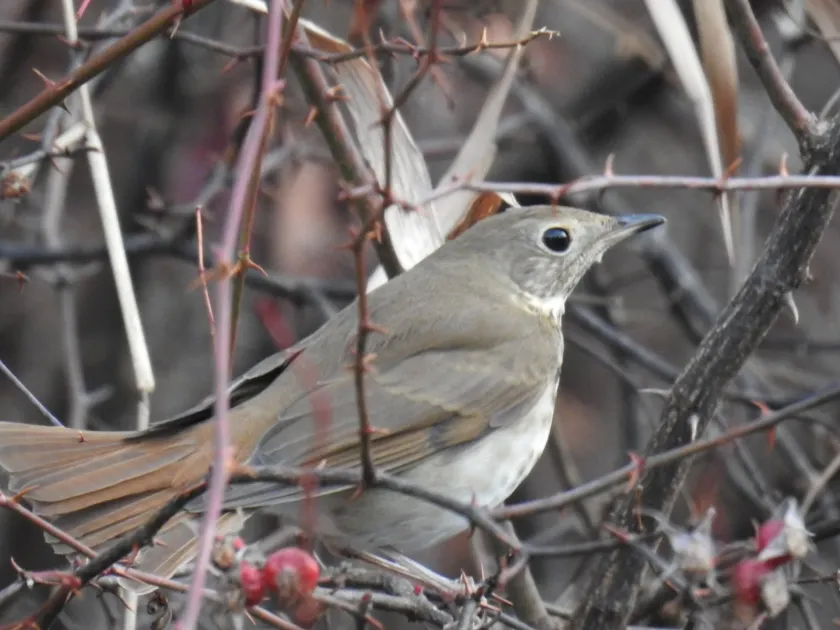
Description
How to identify
The hermit thrush (Catharus guttatus) is a bird species within the thrush family, characterized by its brownish upperparts and spotted breast, which helps it blend into forest undergrowth.
It is identifiable by its behavior of bobbing its tail, especially after landing. While typically forest-dwelling, it can become an opportunistic feeder in agricultural settings during migration.
The biological cycle of the hermit thrush includes seasonal migrations during which large flocks may temporarily settle in orchards, leading to increased pressure on fruit crops.
Unlike many other birds, it prefers lower levels of trees and shrubs, making it a direct threat to low-growing berry bushes like raspberries, blueberries, and currants.
Understanding its migratory pattern is essential for agricultural management, as the potential for crop damage peaks during the specific months when these birds are passing through the region.
What it damages
The hermit thrush causes significant economic losses by consuming mature berries and fruits, which it finds easily accessible in cultivated orchard environments.
The primary crops affected include raspberries, blackberries, cherries, and grapes. The bird pecks at the fruit, puncturing the skin and consuming the succulent flesh within.
Damaged fruit often serves as a substrate for fungal pathogens, such as Botrytis, which can quickly spread through the entire crop, leading to secondary rot and further yield loss.
Contamination of harvested fruit with droppings is a major hygiene concern, potentially leading to the rejection of produce batches by quality control standards in commercial operations.
In addition to direct consumption, the birds may cause mechanical damage to delicate clusters of grapes or small berries, reducing the overall market value of the harvest.
Signs of infestation
The most common sign of infestation is the presence of partially pecked fruit remaining on the plant, which often shows characteristic small, jagged beak marks.
Visible bird droppings on foliage and fruit clusters in the lower sections of the shrubs indicate regular presence of the birds in those specific areas of the garden.
The discovery of discarded seeds and skins underneath the bushes during the peak ripening season is a clear indicator of feeding activity by thrush-sized birds.
Frequent movement of small flocks within the tree canopy, accompanied by sudden noise and flight, is a strong behavioral sign that birds are actively foraging in the area.
A noticeable and rapid decline in berry quantity without any corresponding evidence of insect pests, such as holes or larvae, suggests that birds are the primary culprits.
Control measures
Physical exclusion through the use of bird-proof netting is the most effective and reliable method to safeguard berries and small fruits from thrush predation.
Bioacoustic devices that play distress calls of raptors can effectively deter hermit thrushes, provided the system is set to randomize sounds to prevent bird habituation.
Visual deterrents, including reflective tapes and scare-eye balloons, should be rotated regularly in position to maintain their efficacy against migratory birds that are passing through.
Cultural management involves rapid harvesting strategies, where fruit is picked as soon as it reaches the desired ripeness to minimize the window of opportunity for bird damage.
- Installation of fine-mesh horticultural netting.
- Prompt sanitation by removing fallen, overripe fruit.
- Strategic placement of ultrasonic deterrent systems.
Taxonomy
- Latin name
- Catharus guttatus
- Family
- Turdidae
- EPPO code
- KTHUGU
Discussion
No discussions yet — be the first.