
Thrush
Turdus
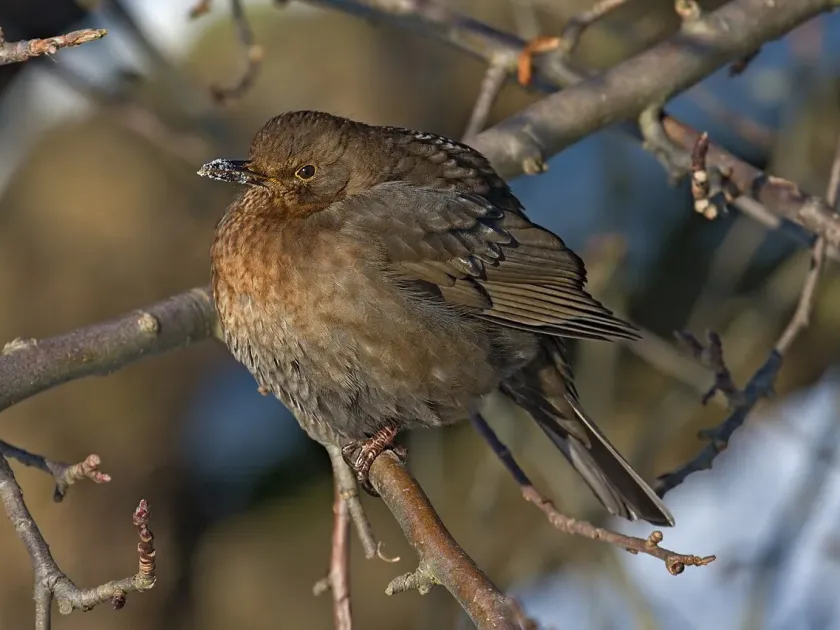
Description
How to identify
Thrushes (Turdus) are a family of passerine birds known for their musical songs and, unfortunately, their significant impact on commercial and private gardening.
These birds are medium-sized with dense, often spotted plumage. They are highly intelligent, adaptable, and social, especially when foraging in flocks during the ripening season.
The most problematic species include the Blackbird (Turdus merula) and the Fieldfare (Turdus pilaris), both of which have evolved to thrive in human-modified landscapes.
They possess a strong beak capable of piercing fruit skin, allowing them to access the succulent inner tissues. Their sharp eyesight allows them to identify ripening fruit from a significant distance.
Due to their high cognitive abilities, thrushes learn to bypass simple scarecrows, making them persistent pests that require multi-faceted control strategies.
What it damages
Thrushes cause extensive damage to various soft fruits, including strawberries, raspberries, blueberries, cherries, currants, and table grapes.
The primary damage involves pecking holes in the fruit, which makes them unsellable and susceptible to rot. Once a fruit is punctured, it is usually abandoned by the bird for a fresh one.
Beyond fruit loss, they cause mechanical damage by landing on branches. Large flocks can break young twigs on cherry or plum trees, hindering the tree's development.
The accumulation of bird droppings on crops creates sanitation issues, spreading potential diseases and making the remaining fruit undesirable for human consumption.
In vineyards, thrushes are particularly destructive during the sugar-accumulation phase, where they can destroy significant portions of the crop in just a few days.
When it appears
The period of concern starts in late spring, as thrushes transition from foraging for soil invertebrates to seeking out early ripening berries and fruits.
June and July are critical months, coinciding with the peak of the strawberry, cherry, and raspberry harvest seasons when bird activity reaches its maximum.
In late summer and autumn, thrushes continue to target late-ripening fruits, rowan berries, and grapes as they prepare for seasonal migration or wintering.
Their daily activity is most intense during the early morning and before dusk, which are the primary times when they systematically raid orchards.
Extreme weather conditions, especially hot and dry summers, increase their search for hydration, leading them to aggressively target succulent garden fruits.
Signs of infestation
Visible punctures and deep gouges in ripening berries are the most obvious indicators of thrush activity. You will often find discarded fruit husks under the bushes.
Audible cues, such as loud, harsh chattering or alarm calls near the fruit trees, often indicate that a flock is currently present and feeding in the area.
The presence of whitewashed bird droppings on foliage, branches, and soil between rows confirms that the area is being frequently visited by a large group.
An uneven reduction in harvest, starting from the most exposed or top-layer fruits, is a classic sign of thrush feeding habits before they penetrate deeper into the canopy.
Observing a sudden, synchronized flight of birds from the orchard when approached is definitive proof that they have established a feeding route in your garden.
Control measures
Physical exclusion remains the gold standard for protection. Installing UV-stabilized bird netting over berry rows or individual trees is the most effective method.
Acoustic deterrents like electronic bird distress calls are useful, provided they are adjusted frequently to prevent the birds from habituating to the sound.
Visual aids such as flash tape, spinning discs, and predator decoys can be effective only if they are repositioned regularly to maintain the illusion of danger.
Maintaining a clean orchard by harvesting fruit immediately as it ripens minimizes the "window of opportunity" for thrush attacks.
- Ensure adequate irrigation to reduce the bird's thirst-driven feeding
- Use propane cannons in large-scale commercial vineyards
- Remove potential nesting spots near the fruit production area
Taxonomy
- Latin name
- Turdus
- Family
- Turdidae
- EPPO code
- TURDSP
Discussion
No discussions yet — be the first.