
Pale Thrush
Turdus pallidus
Description
How to identify
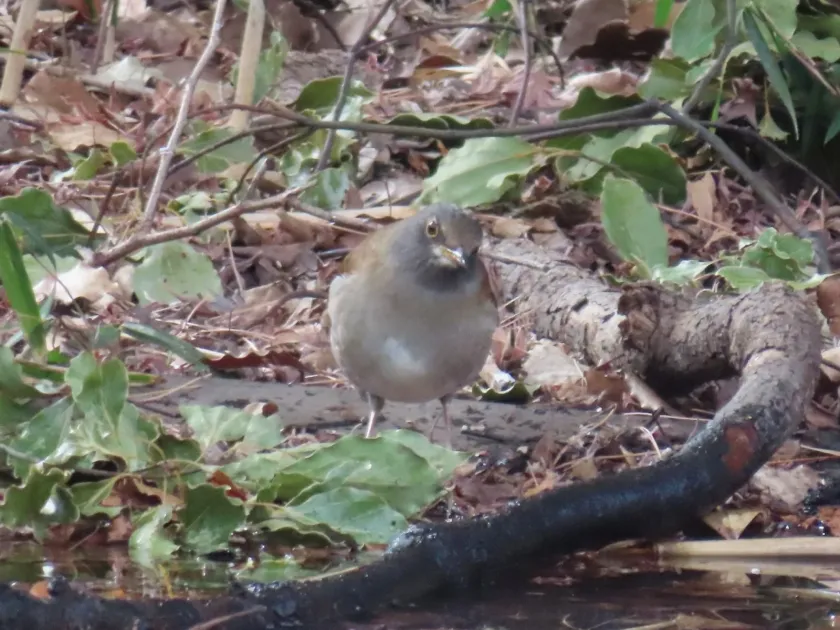
The Pale Thrush (Turdus pallidus) is a bird species belonging to the Thrush family (Turdidae) within the order Passeriformes. It is characterized by its relatively uniform pale brown or grayish-brown plumage, which provides effective camouflage in dense orchard foliage.
An adult bird typically measures around 23 centimeters in length. It possesses a robust, versatile beak, an evolutionary adaptation that allows it to feed on both small insects and a wide variety of fruit, making it highly adaptable to agricultural environments.
Sexual dimorphism is subtle, making it difficult to distinguish between males and females in the field. Juvenile birds display a more mottled appearance, which helps them remain hidden from predators during the nesting season.
The species prefers a secretive lifestyle, often inhabiting bushy areas and thickets adjacent to farmland. This behavior makes it challenging for farmers to detect flocks until they begin feeding on the crops.
Their high level of adaptability to human-altered landscapes makes them a common sight in agroecosystems where they successfully exploit food resources.
What it damages
The primary agricultural threat posed by the Pale Thrush occurs during the fruit ripening season. As omnivorous birds, they frequently target cultivated fruit and berry farms, leading to substantial economic losses.
Crops such as strawberries, raspberries, blackberries, and blueberries are particularly vulnerable. The birds peck into the fruit to consume the pulp, rendering the produce unmarketable and destroying the profit potential of the crop.
Beyond direct consumption, the physical damage caused by the birds' beaks compromises the fruit's skin, which often triggers secondary infections such as gray mold (Botrytis). This results in rapid rot, causing entire clusters of fruit to become spoiled.
In orchards, they are known to consume cherries, plums, and early varieties of apples. This feeding behavior often leads to fruit drop or damage that leaves the remaining fruit on the branches susceptible to disease.
Damage intensity is highly dependent on the local bird population density and the availability of wild forage in nearby forested areas. In years when natural food sources are scarce, pressure on agricultural crops increases dramatically.
When it appears
The Pale Thrush is most active as a pest from late spring through early autumn, coinciding with the maturation cycle of various horticultural crops.
As summer progresses and berries reach their peak ripeness, the birds tend to form small flocks. This grouping behavior significantly increases the rate of fruit loss per hectare, requiring immediate intervention from growers.
During the autumn migration period, these birds continue to forage intensely, taking advantage of late-season fruit as they accumulate energy reserves for their journey to warmer climates.
Seasonal dynamics are heavily influenced by the availability of wild berries in the surrounding ecosystem. Monitoring these natural food sources can provide agronomists with a clearer picture of the likely pressure on their specific fields.
Consistent observation of bird migration patterns helps farmers anticipate the arrival of these flocks, allowing for the proactive deployment of deterrent systems.
Signs of infestation
The most common indicator of a Pale Thrush infestation is the presence of fruit with visible beak marks, typically manifested as irregular holes or gouged sections on the berry skin.
Droppings left on leaves, branches, or between planting rows serve as clear evidence of a large flock's presence and activity within the field.
The auditory signs are also telling; the thrush's distinct vocalizations and the sound of wings flapping as they take flight upon human approach are reliable indicators of their presence.
A sudden, unexplained disappearance of ripe fruit overnight or in the early morning is a strong signal that birds have been feeding on the plantation.
Damaged fruit often appears shriveled or moldy, as the wounds created by the birds act as entry points for pathogens that rapidly break down the fruit tissue.
Control measures
The use of physical exclusion netting is widely considered the most effective method for protecting berries. Nets create a barrier that prevents birds from reaching the fruit while causing no harm to the animals.
Acoustic deterrents that broadcast the distress calls of predatory birds are highly effective at discouraging thrushes, provided that the sounds are rotated frequently to prevent the birds from habituating to the noise.
Visual deterrents, including reflective tape, holographic discs, or artificial predator decoys, work by creating movement and flashes of light that keep the birds on high alert, causing them to move to less protected areas.
Good agricultural practices, such as timely harvesting, are essential. Removing ripe fruit as soon as it matures reduces the available food source and discourages flocks from lingering on the property.
A multi-layered integrated pest management (IPM) strategy that combines physical barriers with various types of acoustic and visual deterrents provides the best chance of minimizing crop losses in high-risk zones.
Taxonomy
- Latin name
- Turdus pallidus
- Family
- Turdidae
- EPPO code
- TURDPA
Discussion
No discussions yet — be the first.