
Common blackbird
Turdus merula
Description
How to identify
The Common blackbird (Turdus merula) is a member of the thrush family, Turdidae. The male is easily recognized by its solid black plumage, bright yellow bill, and yellow eye ring.
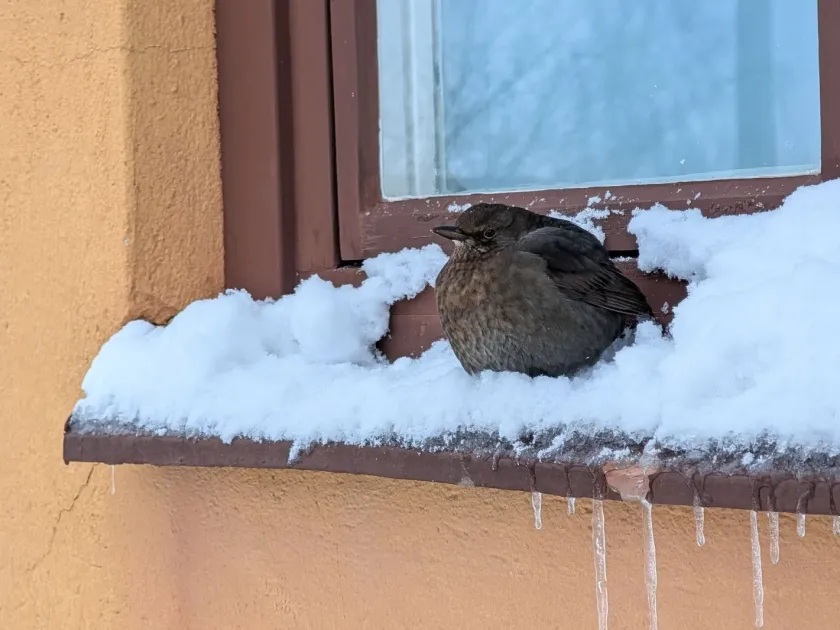
Females and juveniles are typically dark brown with mottled underparts, providing excellent camouflage when they are foraging or nesting in dense garden vegetation.
This species is highly intelligent and has successfully adapted to human-altered landscapes, making suburban gardens and orchards primary habitats.
Their life cycle includes multiple broods per year, which necessitates a steady supply of high-energy food, leading them to exploit cultivated fruit and berry crops.
They are robust birds, weighing between 80 and 125 grams, which allows them to easily manipulate various types of fruit and garden structures.
What it damages
Blackbirds cause significant damage to soft fruits, particularly strawberries, raspberries, blackberries, and blueberries, often consuming the entire berry before harvest.
Fruit trees such as cherries, sweet cherries, and apricots are frequently targeted, with the birds pecking holes into the fruit and ruining the yield.
Vineyards are also susceptible, as blackbirds pierce the grape skins, leading to juice loss, secondary infections, and attacks by wasps and other insects.
In addition to fruit, they disturb garden beds by digging through mulch in search of invertebrates, which can expose plant roots and damage young seedlings.
The cumulative damage caused by a flock of blackbirds can lead to substantial economic losses in both home gardens and small-scale commercial fruit production.
When it appears
The period of highest risk begins when early berries start to ripen in late spring and continues through the peak harvest months of June and July.
Late summer and autumn bring a secondary peak of activity when late-season apples, pears, and ornamental berries like rowan become available.
Breeding and nestling phases increase the birds' appetite, driving them to forage more aggressively near human settlements during these critical periods.
Following the fledging of young birds, flock size increases, and foraging becomes more systematic, often leading to rapid and severe crop losses.
Local climate and the availability of natural forest food sources determine the intensity of garden raids; dry summers often force birds to seek moisture in garden fruits.
Signs of infestation
The most obvious sign of blackbird activity is the presence of partially eaten fruit and debris scattered on the ground beneath bushes and trees.
Gardeners often notice distinct beak marks on ripening berries, which appear as small, deep punctures or wide, irregular gouges in the fruit flesh.
Increased vocalization, including loud, aggressive alarm calls when humans approach the garden, is a strong indicator of their presence in the canopy.
The physical disturbance of soil and mulch around the base of plants provides evidence that the birds have been foraging on the ground.
Visual confirmation of flocks perching on nearby fences or power lines during the harvest season suggests they are monitoring the ripening progress of your crops.
Control measures
Installing high-quality bird netting over fruit bushes and trees is the most reliable way to physically prevent access and protect the yield.
Biolacoustic repellents that broadcast distress signals or predator sounds can effectively deter blackbirds from lingering in the orchard area.
Visual deterrents, such as predator decoys and reflective materials, can be used but require frequent relocation to prevent the birds from habituating.
- Harvesting fruit promptly as soon as it reaches maturity.
- Using individual mesh bags to cover grape clusters and large fruit.
- Installing physical barriers like raised cage structures over berry rows.
An integrated strategy, combining physical netting with periodic rotation of deterrent methods, provides the best protection for small-scale gardening.
Taxonomy
- Latin name
- Turdus merula
- Family
- Turdidae
- EPPO code
- TURDME
Discussion
No discussions yet — be the first.