
Chigger mites
Trombicula
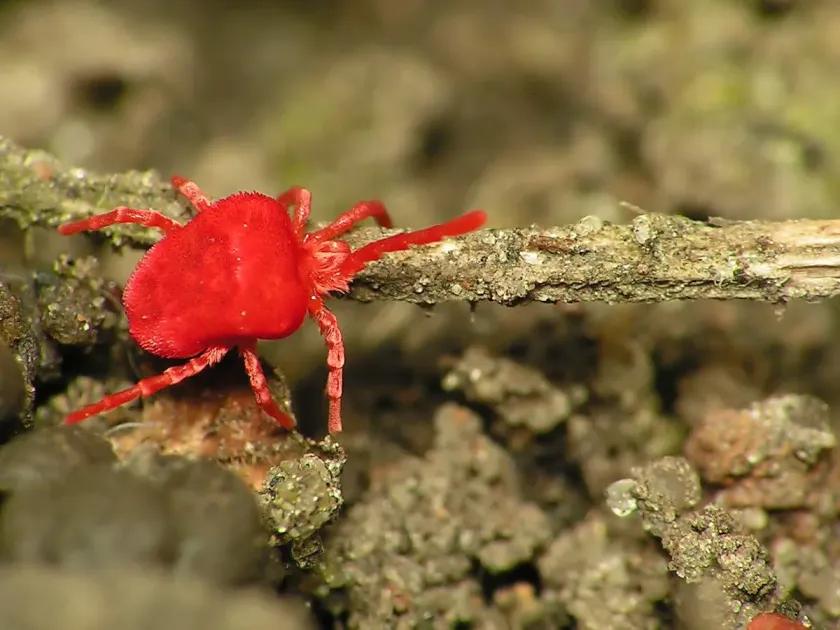
Description
How to identify
Chigger mites belong to the family Trombiculidae, order Trombidiformes. The adult forms are free-living predators that thrive in the top layer of the soil.
They are characterized by their vibrant red color and velvety appearance due to the dense covering of small, fine hairs on their bodies.
The adult mites typically measure between 1 to 2 mm in length and act as generalist predators, feeding on various small arthropods and eggs found in the soil.
It is only the larval stage of these mites that is parasitic, seeking out warm-blooded hosts to attach to and feed on their lymph fluids.
Recognizing these mites correctly is essential for agronomists, as they are often confused with harmful phytophagous mites like the spider mite.
What it damages
Chigger mites do not cause direct damage to plants, as they do not consume foliage, stems, or fruits, making them harmless to crop development.
In many agricultural scenarios, they act as beneficial organisms by reducing the populations of other small soil-dwelling pests through predation.
The primary issue associated with their presence is the inconvenience caused to field workers, as the larvae can cause skin irritation during harvest or maintenance.
There is no economic damage threshold for these mites in commercial crop production, as they do not affect the yield or quality of the harvest.
Consequently, they are viewed as a manageable component of the soil ecosystem rather than a threat that requires intensive chemical intervention.
When it appears
The seasonal activity of chigger mites begins in the spring when soil temperatures reach favorable levels for their developmental stages.
The population tends to peak during the summer months when warm, humid conditions provide an ideal environment for breeding and larval activity.
Their life cycle is highly sensitive to moisture; dry, arid conditions generally cause their activity to cease or move deeper into the soil profile.
By late autumn, the mites transition into overwintering stages, burrowing deep into the substrate to survive the upcoming winter months.
Agricultural practices that alter the microclimate of the field can significantly influence the density and distribution of mite populations throughout the year.
Control measures
Specific chemical pesticides are not recommended for chigger mites on crops because they are not plant pests and are part of the beneficial soil fauna.
Good agricultural practices, such as maintaining weed-free field margins and paths, are effective in minimizing their presence near working areas.
Improving soil drainage and avoiding excessive moisture in the fields can naturally reduce the suitability of the habitat for these mites.
Standard cultivation techniques and regular soil turning are sufficient to disrupt the breeding cycle and reduce mite numbers in the topsoil.
Personal safety for workers is managed through the use of appropriate protective gear and repellents to prevent bites during necessary field operations.
Taxonomy
- Latin name
- Trombicula
- Order
- Mites
- Family
- Trombiculidae
- EPPO code
- TROBSP
Discussion
No discussions yet — be the first.