
Neoschoengastia americana
Neoschoengastia americana
Description
How to identify
Neoschoengastia americana is a species of chigger mite belonging to the Trombiculidae family within the order Trombidiformes. These mites are known for their parasitic larval stage that affects various hosts, primarily birds.
The larval form is microscopic and possesses a specialized structure to attach firmly to the host's skin. The adult stage, however, is free-living and resides in the soil, feeding on organic matter.
The lifecycle follows a complex process: egg, larva, protonymph, deutonymph, and adult. Only the larval stage is parasitic to animals, making it the primary concern for agricultural producers.
Identification often requires careful skin scraping and microscopic examination of the mites, as they are easily confused with other small ectoparasites found in poultry environments.
These mites typically inhabit areas with dense vegetation or leaf litter, which provides the necessary humidity for their survival and development before they find a host.
What it damages
This mite is a significant pest in poultry farming, causing a condition frequently referred to as trombiculosis. It affects chickens, turkeys, and several species of wild birds.
The larval stage attaches to the host's skin, where it injects digestive enzymes to dissolve skin tissue. This process creates localized tissue damage and a strong inflammatory response.
Affected birds suffer from intense itching, which leads to restlessness, reduced food intake, and general stress. Consequently, this hinders growth rates in young stock and reduces overall productivity.
In large-scale operations, infestations can lead to decreased egg production and damaged skin quality on carcasses, which negatively impacts the market value of the products.
Secondary infections are a major risk as birds frequently peck and scratch the irritated areas, creating open wounds that are prone to bacterial colonization.
When it appears
The seasonal activity of Neoschoengastia americana is highly dependent on environmental conditions, particularly soil temperature and moisture levels, which are critical for the survival of the larvae.
Activity usually peaks during the warm months, as larvae require specific temperature ranges to emerge from the soil and ascend vegetation to locate a host.
In regions with consistent warm and humid climates, the pest can remain active for a large portion of the year, posing a chronic threat to free-range poultry flocks.
Periods of extreme dryness or cold cause the mites to burrow deeper into the soil, temporarily reducing the immediate risk of infestation for birds on the surface.
Managing the pasture or coop environment during these peak seasonal periods is essential for preventing major outbreaks and ensuring the health of the flock.
Signs of infestation
Early signs of an infestation include changes in bird behavior, such as excessive preening, restlessness, and scratching of the legs, abdomen, or wings where the mites are attached.
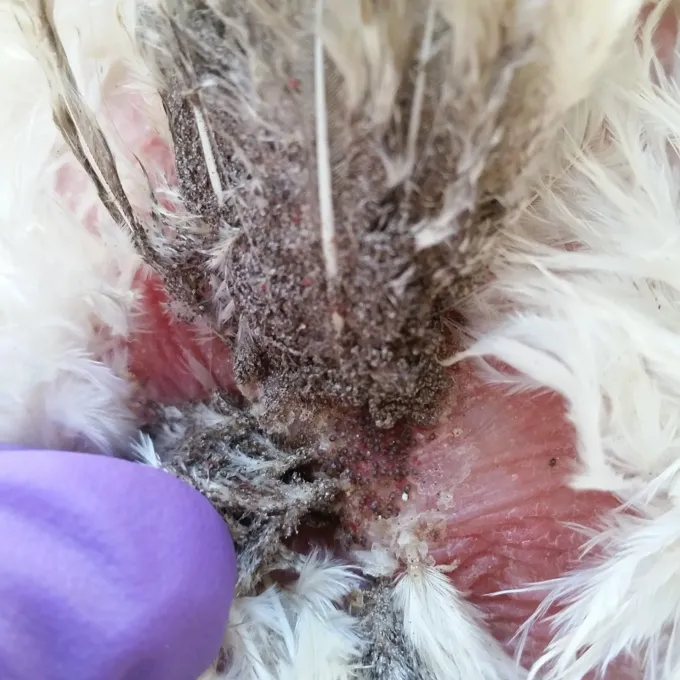
Visual inspection of the skin will reveal small, reddish or yellowish clusters, which are the larvae themselves embedded in the epidermis.
Inflammatory papules, crusts, and small nodules develop at the sites of attachment. These lesions can become quite irritated and enlarged if the bird continues to peck at the area.
Severe infestations may result in patchy feather loss, skin redness (hyperemia), and noticeable swelling in the affected regions due to the inflammatory response.
Diagnosis should be confirmed by a veterinarian through skin scrapings, ensuring that the lesions are indeed caused by Neoschoengastia americana and not other dermatological issues.
Control measures
Effective management requires an integrated approach that combines environmental modification with targeted acaricide treatments to eliminate the mite population.
The most important cultural control is maintaining short vegetation in the poultry range, which reduces the habitat available for the mites and increases their exposure to direct sunlight.
Chemical control involves the use of approved acaricides applied to the soil and coop facilities to kill the mites during their development stages. Always follow label guidelines for safety and withdrawal periods.
Strict biosecurity measures are necessary to prevent the introduction of the mites through new stock or equipment movement between contaminated and clean areas.
- Mow grass and clear debris in poultry ranges.
- Apply approved acaricides in affected housing units.
- Implement strict quarantine for new bird arrivals.
- Monitor poultry skin condition regularly during peak seasons.
Taxonomy
- Latin name
- Neoschoengastia americana
- Order
- Mites
- Family
- Trombiculidae
- EPPO code
- NEOGAM
Discussion
No discussions yet — be the first.