
Chigger mite
Hirsutiella zavchatniki
Description
How to identify
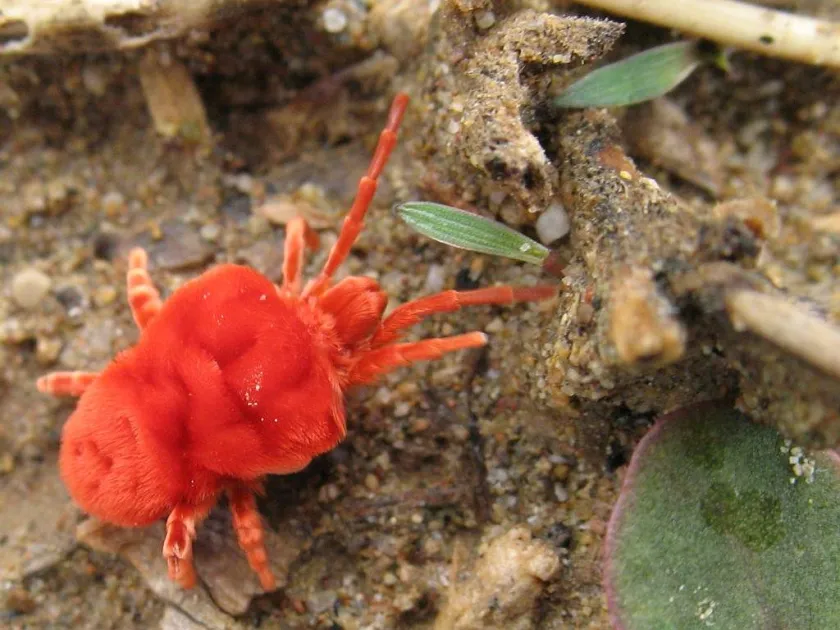
The chigger mite (scientific name Hirsutiella zavchatniki) belongs to the family Trombiculidae, within the order Trombidiformes. Adult mites are distinctive due to their bright red or orange, velvet-like bodies.
The lifecycle consists of several distinct stages: egg, pre-larva, larva, protonymph, deutonymph, tritonymph, and adult. Only the larval stage is parasitic towards vertebrates.
Adult mites, on the other hand, are free-living predators that reside in the soil, feeding on small arthropods and eggs. They play a complex role in soil microfauna health.
Identification is typically achieved through microscopic analysis of the mite's dorsal shield and the arrangement of setae, which are essential diagnostic features for this species.
These mites are commonly found in meadows, forest edges, and poorly managed garden areas where organic matter provides a stable environment for their development.
What it damages
Chigger mites do not feed on plant tissues, meaning they do not cause direct crop damage like spider mites or aphids do. Their economic impact is largely indirect.
The primary concern for farmers is the health and safety of field workers. Larval mites attach to the skin of hosts, causing intense itching and dermatological inflammation.
High populations of chiggers can lead to reduced labor productivity as employees may avoid heavily infested areas, impacting the efficiency of harvesting or pruning.
The presence of large numbers of chiggers often indicates an imbalanced ecosystem, characterized by excessive weed growth and a high density of small rodents.
Managing the site to reduce mite populations is considered a matter of labor safety and public health rather than direct crop protection against yield loss.
When it appears
The activity of chigger mites is highly dependent on environmental temperature and humidity levels. Activity typically begins when soil temperatures rise in the spring.
Larval activity peaks during hot and dry summer weather, which allows the mites to migrate upwards on vegetation to seek hosts passing by.
With the onset of autumn and cooling temperatures, the mites move deeper into the soil profile to enter diapause and survive the winter months.
Rainfall and high humidity can temporarily suppress their upward migration, but they often return to high activity levels as soon as the vegetation dries out.
The seasonal cycle is tightly synchronized with the growth of perennial weeds and grasses that act as "highways" for the mites to reach their hosts.
Signs of infestation
Signs of infestation include the presence of small, red, fast-moving dots on vegetation or the ground, often observed on warm, sunny days.
An indirect indicator is the frequent presence of small rodents or large populations of field mice within the agricultural area or orchard.
Dermatological symptoms on workers, such as localized reddish rashes or persistent itching, are the most common field evidence of a high infestation level.
Monitoring using the "black flag" method involves dragging a piece of dark cloth over the vegetation to attract and capture larvae for density assessment.
Soil sampling followed by flotation in a laboratory remains the most accurate way to confirm the density of the mite population in a specific area.
Control measures
The most effective strategy is habitat modification through regular mowing and vegetation management, which removes the high-humidity microclimate required for mite survival.
Rodent control is critical, as rodents act as the primary hosts for the larval stage of the mite. Reducing the rodent population directly limits the mite's breeding success.
Acaricide application should be restricted to high-risk zones, such as walking paths, rest areas, or equipment storage sites, to minimize environmental impact.
- Maintain short-cut grass around fields.
- Remove debris and brush piles.
- Establish gravel or sand barriers between fields and work zones.
- Ensure workers use protective clothing and repellents.
Encouraging natural predators such as carabid beetles and certain soil fungi can help naturally regulate the mite population, promoting a more stable ecosystem.
Taxonomy
- Latin name
- Hirsutiella zavchatniki
- Order
- Mites
- Family
- Trombiculidae
- EPPO code
- HIRLZA
Discussion
No discussions yet — be the first.