
Harvest mite
Neotrombicula autumnalis
Description
How to identify
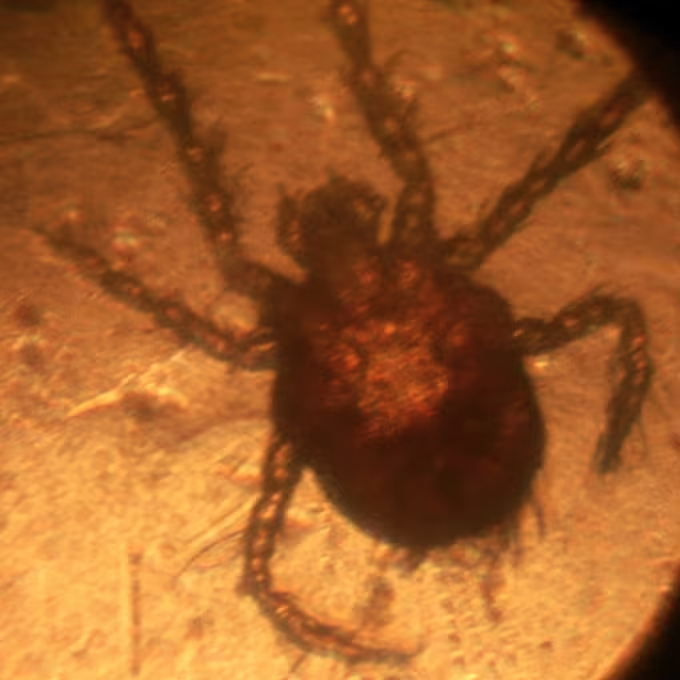
The harvest mite (Neotrombicula autumnalis) is a microscopic mite from the Trombiculidae family, classified under the order Trombidiformes. Adults are bright red, roughly 1 mm in size, and live in the upper soil layers.
The lifecycle consists of several stages: egg, prelarva, larva, nymphal stages, and adult. Only the larval stage is parasitic, while the other stages feed on micro-organisms within the soil litter.
Larvae are characterized by a bright orange or red color and possess six legs. They congregate on tips of vegetation, waiting to attach themselves to a passing host.
While not a plant-feeding pest, its presence is a significant nuisance in gardens and fields, making manual labor uncomfortable or risky for the personnel.
Identifying adult mites in field conditions is difficult due to their minute size and their tendency to remain buried in the soil profile.
What it damages
It is important to note that the harvest mite does not feed on crops or plants, meaning it causes no direct tissue damage or loss to agricultural yields.
The primary concern is the medical and veterinary impact, as the larvae are highly aggressive towards humans, pets, and wildlife, causing intense skin irritation.
During the peak activity season, the presence of these mites discourages farmers and gardeners from maintaining their plots, which can indirectly affect crop care.
In some geographical areas, these mites can be vectors for certain pathogens, necessitating strict hygiene and control measures in agricultural settings.
The economic damage is limited to the costs of implementing safety measures and the potential loss of labor efficiency in areas heavily infested with larvae.
When it appears
The period of maximum larval activity occurs in late summer and early autumn, which gives the species its common name in many languages.
The population peaks during warm, dry weather conditions, which facilitate the movement of larvae from the soil to the surface vegetation.
The adult mites are active in the soil during spring and summer, fulfilling their ecological role as soil-dwelling predators of tiny organisms.
The duration of each developmental stage depends largely on soil humidity and ambient temperature, which dictate the timing of larval emergence.
Winter survival is achieved through diapause, where the mites remain deep within the soil, protected from freezing temperatures.
Signs of infestation
The most common sign of a harvest mite infestation is the sudden appearance of intense, itchy skin lesions on the lower legs of individuals working in the garden.
These skin irritations are usually caused by the larvae feeding on skin cells, resulting in small red bumps that can last for several days.
Pets often exhibit signs of distress, including frequent scratching, biting at the skin, and inflammation in areas such as ears, paws, and abdomen.
Detection can be verified by placing a dark-colored plate or paper on the grass; if mites are present, they will crawl across the surface as bright dots.
The high frequency of small mammal burrows near cultivated fields serves as a significant indicator of potential mite hotspots.
Control measures
Management of harvest mites focuses on altering the habitat and reducing the population of natural hosts that sustain the mite life cycle.
- Mowing tall grass and clearing weeds regularly to reduce hiding spots for both mites and rodents.
- Implementing rodent control programs to eliminate the primary food source for larvae.
- Applying appropriate acaricides to heavily infested lawn areas or garden perimeters during the peak season.
- Wearing protective clothing, including boots and tightly woven fabrics, when working outdoors.
- Using non-porous physical barriers like gravel or sand paths to limit the migration of larvae onto frequently used areas.
Taxonomy
- Latin name
- Neotrombicula autumnalis
- Order
- Mites
- Family
- Trombiculidae
- EPPO code
- TROBAU
Discussion
No discussions yet — be the first.