
Ascoschoengastia indica
Ascoschoengastia indica
Description
How to identify
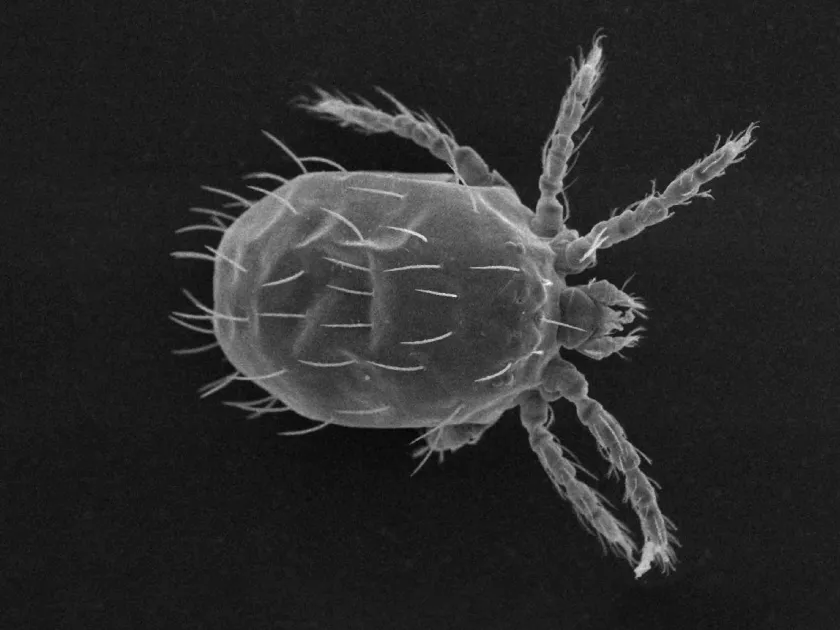
Ascoschoengastia indica is a species of mite belonging to the family Trombiculidae, commonly known as chigger mites.
These mites are characterized by a distinct life cycle where the larval stage is parasitic on vertebrates, while adults are free-living in the soil.
Microscopic examination is required for precise identification, as the larvae possess specialized setae and structures specific to the genus.
The life cycle stages include egg, larva, protonymph, deutonymph, tritonymph, and adult, undergoing significant morphological changes.
Their size is extremely small, typically less than 1 mm, making them invisible to the naked eye during standard field observations.
What it damages
Ascoschoengastia indica does not cause direct physical damage to plants because it does not feed on vegetation or plant sap.
Its primary negative impact in an agricultural context is its role as a vector or an indicator of heavy rodent infestation.
The larvae feed on the tissue fluids of small mammals, which are their required hosts to progress to the next life stage.
While the crops remain unharmed, the presence of these mites represents a health risk for farm workers and domestic animals.
Management focuses on mitigating the risks associated with the animal hosts rather than applying pesticides directly to the crops.
When it appears
The seasonal activity of these mites is strongly influenced by temperature and humidity levels within the top layer of the soil.
Peak populations usually occur during warm and moderately humid conditions, which favor the development of eggs and immature stages.
Prolonged drought or excessively saturated soil conditions can significantly limit the survival and dispersal of the mite population.
In tropical and subtropical climates, the mites can be active throughout most of the year, depending on the availability of hosts.
Their life cycle timing is inherently linked to the seasonal breeding and movement patterns of rodent populations in the field.
Signs of infestation
There are no diagnostic signs of crop damage such as wilting, leaf perforation, or stem tunneling associated with these mites.
A primary indicator of their presence is an observed increase in the density of small mammals within the agricultural area.
Clinical signs in humans, such as localized skin irritation or dermatitis following fieldwork, are often the first alert of an infested site.
Detection in the environment is typically achieved through soil sampling or by monitoring the rodent population for the presence of larval clusters.
Professional field inspections often utilize specialized trapping methods to determine the prevalence of the mites in a given sector.
Control measures
The most effective strategy to control Ascoschoengastia indica is through integrated pest management targeting the primary host: rodents.
Implementing consistent deratization programs helps to break the mite's reproductive cycle by removing its essential larval food source.
Maintaining clean agricultural fields by removing debris and weeds prevents rodents from nesting, thereby reducing the mite habitat.
Personal protection equipment, such as treated protective clothing and repellents, is essential for workers in areas where mites are known to exist.
Sanitation of field borders and improved farm hygiene are critical measures to minimize the risk of mite proliferation in agricultural landscapes.
Taxonomy
- Latin name
- Ascoschoengastia indica
- Order
- Mites
- Family
- Trombiculidae
- EPPO code
- ASSGIN
Discussion
No discussions yet — be the first.