
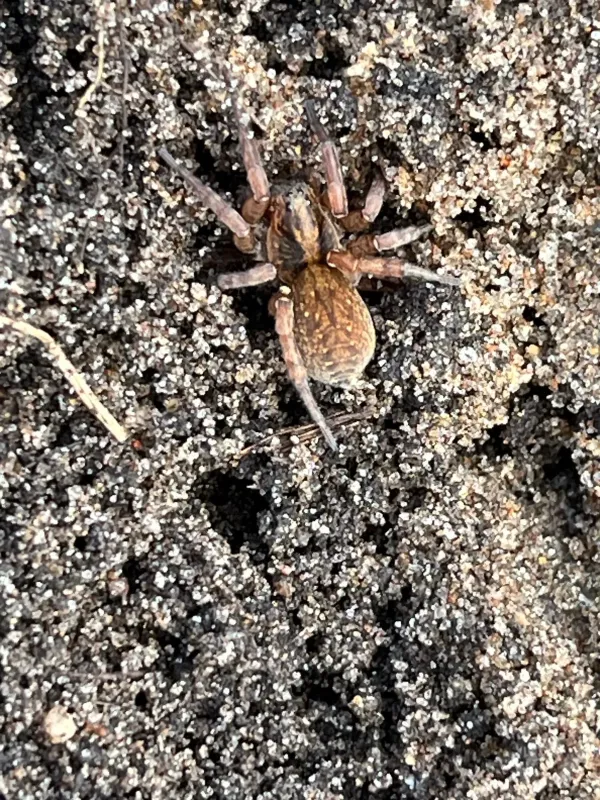
Wolf spider of the genus Trochosa
Trochosa
Description
How to identify
Spiders of the genus Trochosa belong to the wolf spider family (Lycosidae). Unlike many other spiders, they do not build webs to catch their prey.
They are ground-dwelling hunters characterized by a robust body, typically featuring shades of brown and gray that provide excellent camouflage against soil and leaf litter.
The eyes are arranged in three rows, with a pair of large, forward-facing eyes, giving them exceptional vision for tracking small insects during their active hunting hours.
Adult females are generally larger than males, often measuring between 10 to 20 mm, and are frequently seen carrying their egg sac attached to their spinnerets.
These spiders are commonly found in humid environments, preferring damp soil conditions, garden debris, and shadowed areas near the base of vegetation.
What it damages
From an agronomic perspective, Trochosa wolf spiders are not considered crop pests; they are strictly carnivorous predators that benefit agricultural ecosystems.
They do not consume plant matter, nor do they damage foliage, roots, or fruit, as their digestive systems are specialized solely for processing animal protein.
Their diet consists of small arthropods, including many common pests like aphids, beetle larvae, and small caterpillars that would otherwise cause damage to crops.
Any presence of these spiders on plants is incidental, occurring while they patrol for prey, and poses absolutely no threat to the health or yield of the plant.
Therefore, they are classified as beneficial entomophagous insects that contribute to natural pest suppression without requiring any form of crop damage intervention.
When it appears
The activity cycle of Trochosa wolf spiders begins in early spring as temperatures rise, signaling the emergence from their overwintering locations in the soil.
The peak activity period occurs throughout the summer, coinciding with the highest density of insect populations, which provides a steady supply of food for these predators.
As autumn temperatures drop, their metabolic activity slows down significantly, and they seek out sheltered locations to endure the winter months safely.
They overwinter in natural crevices, under debris, or within the upper layers of the soil, remaining dormant until the following spring season brings warmth.
Reproductive behavior is often observed in the warmer months, with females exhibiting maternal care by carrying their spiderlings on their backs after they hatch from the egg sac.
Control measures
Since Trochosa spiders are valuable biological control agents, there are no recommended measures for their suppression or eradication in garden settings.
Farmers and gardeners are encouraged to practice selective pest management to avoid harming these beneficial predators, as broad-spectrum insecticides can severely reduce their numbers.
Maintaining a healthy garden ecosystem with diverse habitats, such as organic mulch or undisturbed soil patches, will encourage these spiders to stay and hunt effectively.
If their presence in sensitive indoor areas like greenhouses is undesirable, simple physical sanitation and moisture reduction are sufficient to discourage them from taking up residence.
In conclusion, wolf spiders of the genus Trochosa should be viewed as natural allies in plant protection, actively reducing the need for chemical intervention against pests.
Taxonomy
- Latin name
- Trochosa
- Family
- Lycosidae
- EPPO code
- TROCSP
Discussion
No discussions yet — be the first.