
Apulian tarantula
Lycosa tarentula
Description
How to identify
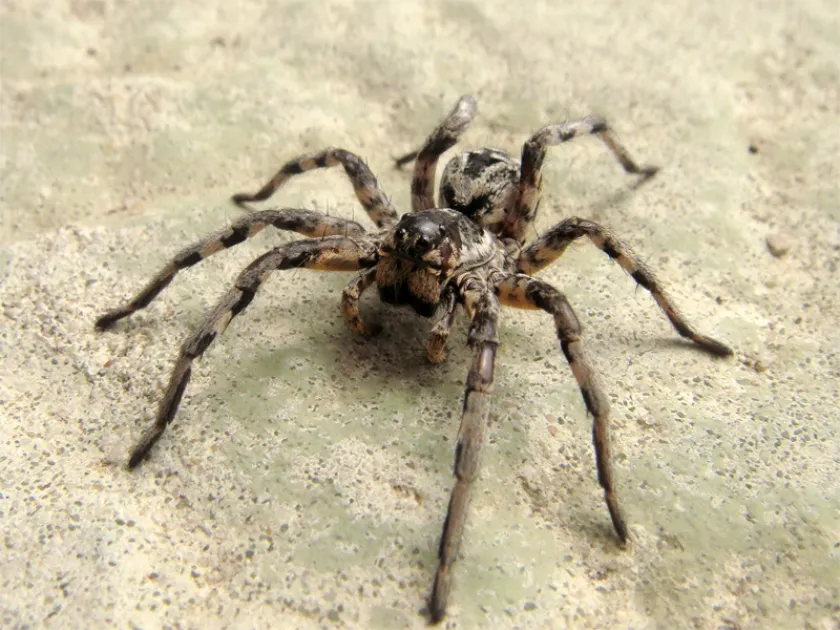
The Apulian tarantula (Lycosa tarentula) is a prominent member of the Lycosidae family, commonly known as wolf spiders, native to the Mediterranean region.
These spiders are characterized by their robust bodies, measuring up to 4 cm in length, with a thick coat of hair and a distinct color pattern designed for camouflage.
They do not build webs to trap prey; instead, they are active hunters that rely on acute eyesight and speed to ambush insects on the soil surface.
Their life involves spending most of the day in vertical burrows, which they reinforce with silk to maintain structural integrity in diverse soil types.
Maternal care is a distinctive biological feature, as females carry their egg sacs and later their spiderlings on their abdomens for several weeks.
What it damages
It is crucial to clarify that the Apulian tarantula is not a plant pest; it does not feed on crops, foliage, or roots, as it is strictly carnivorous.
Its impact in an agricultural setting is largely indirect, as it can disrupt soil structure with its numerous burrows, especially in areas with high spider density.
The primary concern for farmers is the predation of beneficial insects, such as pollinators and natural enemies of crop-damaging pests, which affects biological pest control.
Furthermore, in manual harvesting or scouting operations, the presence of these spiders can pose a nuisance or safety concern due to their bite when threatened.
Overall, they are considered commensal species in agricultural landscapes rather than direct economic pests, requiring no large-scale eradication programs.
When it appears
The Apulian tarantula's annual cycle begins in spring, with activity increasing as soil temperatures rise and the spiders emerge from their wintering burrows.
During the summer months, they reach peak activity, which includes the breeding season and the dispersal of young spiderlings across the field.
As autumn approaches and temperatures drop, their metabolic rate slows down, leading them to retreat deeper into their burrows for the wintering period.
Rainfall patterns significantly influence their behavior; heavy rains can force them to relocate or abandon their existing burrows in search of dryer ground.
Nighttime is when they are most active, with adult spiders frequently patrolling the soil surface, making them more visible during night-time field monitoring.
Signs of infestation
Presence is identified by distinctive, clean-edged vertical burrows in the soil, usually found in undisturbed or minimally tilled areas of the field.
A simple field observation method involves using a flashlight at night; the spiders' eyes reflect light, appearing as glowing dots on the ground.
The remains of insect exoskeletons located near the burrow entrances serve as a clear sign of an active hunting area for these arachnids.
In low-till farming systems, their burrows are more stable and persistent, making their presence more obvious compared to intensively cultivated plots.
During the hatching period, a cluster of spiderlings near a larger entrance is a tell-tale sign of a female raising her brood in that specific location.
Control measures
Since the species is not a primary pest, targeted chemical control is generally not recommended as it may disrupt the wider ecological balance of the farm.
The most effective management strategy is mechanical soil disturbance through plowing, which effectively destroys their burrows and forces the spiders to migrate.
Minimizing the use of non-selective insecticides helps preserve the natural predator-prey balance, allowing birds and other predators to regulate spider populations.
If field workers need to handle crops, standard personal protective equipment (PPE), including thick gloves and sturdy boots, is sufficient to prevent bites.
Encouraging habitat diversity around field borders can also help keep spider populations confined to non-productive areas, away from high-traffic zones.
Taxonomy
- Latin name
- Lycosa tarentula
- Family
- Lycosidae
- EPPO code
- LYCSTA
Discussion
No discussions yet — be the first.