
Wolf spider
Lycosa
Description
How to identify
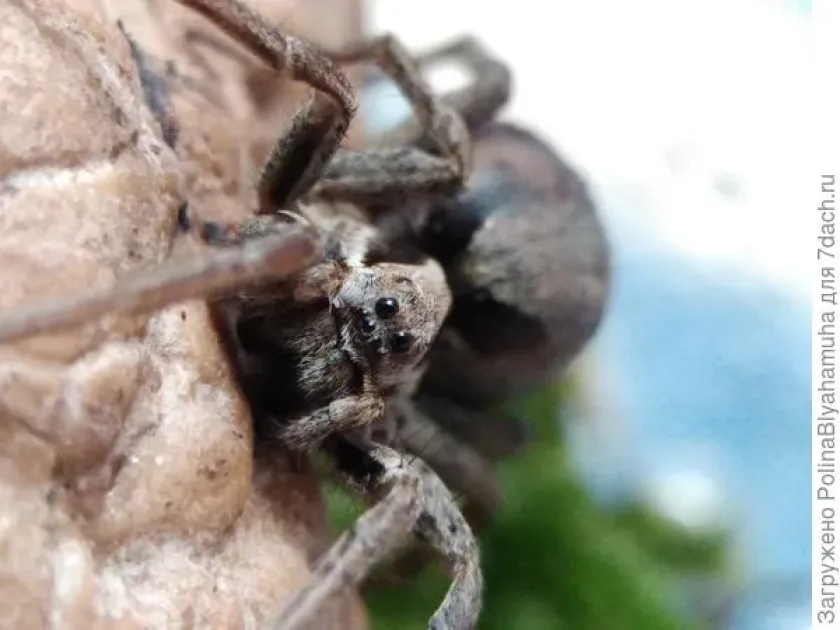
Wolf spiders, belonging to the family Lycosidae, are highly active hunters that do not weave webs. They are recognized by their robust body, dense hair, and a distinct eye pattern consisting of eight eyes arranged in three rows.
Their excellent eyesight allows them to track prey over the ground with high precision. They rely on camouflage, with colors ranging from grey to brown, blending seamlessly with soil, mulch, and plant debris.
Female wolf spiders are distinguished by their maternal care; they carry their egg sac attached to their spinnerets and, after hatching, the spiderlings ride on the mother's abdomen.
These spiders are ground-dwellers and are commonly found in agricultural fields, where they may inhabit small burrows or hide under stones and organic material on the soil surface.
As natural inhabitants of many agricultural ecosystems, they are among the most abundant predatory arthropods, contributing significantly to the structural diversity of the field environment.
What it damages
Despite appearing intimidating, wolf spiders are not pests. They are strictly carnivorous predators and do not feed on plant tissues, meaning they cause zero damage to crops.
Their role in the agricultural landscape is that of a natural control agent. They prey on various harmful insects, such as aphids, caterpillars, beetle larvae, and mites, helping to keep pest populations below the economic injury level.
Because they hunt on the ground, they are particularly effective at controlling soil-dwelling pests and those that spend part of their life cycle in the mulch layer.
Farmers who observe wolf spiders in their fields should view them as partners in integrated pest management (IPM) rather than enemies to be eradicated.
There is no evidence of wolf spiders causing harm to crops, and any perceived threat is based on misunderstandings of their ecological behavior and role as beneficial predators.
When it appears
Wolf spiders become active in the spring when soil temperatures reach favorable levels, typically starting from early to mid-spring depending on the climate zone.
Summer is their peak season for hunting and reproduction. During these months, their metabolic rate increases, and they are highly active in searching for prey to sustain their brood.
As autumn approaches and temperatures drop, wolf spiders seek shelter for overwintering. They burrow deeper into the ground or retreat under thick vegetation to survive the cold months.
Throughout the day, they often avoid direct sunlight to prevent desiccation, emerging to hunt primarily at dusk or during overcast weather conditions.
Their life cycle typically spans one year, though in some environments, individuals may survive longer, contributing to a stable year-round presence in undisturbed fields.
Signs of infestation
Wolf spiders leave subtle signs of their presence, such as small, vertical holes in the soil surface. These are often used as resting spots rather than traditional trap burrows.
At night, using a flashlight, you can detect wolf spiders by the reflection of light in their eyes, which shine back when illuminated at the ground level.
The presence of females carrying egg sacs or young spiderlings on their backs is a key indicator of a healthy population and a stable agricultural environment.
Frequent sightings in fields with no-till or conservation tillage practices indicate that the spiders have found suitable conditions to thrive without excessive soil disturbance.
The absence of crop damage despite the presence of many spiders is the best sign that they are strictly predators acting within the food web of the field.
Control measures
No control measures are necessary, as wolf spiders are beneficial organisms. Implementing eradication tactics against them is counterproductive to sustainable farming.
The most effective strategy is to avoid broad-spectrum insecticide applications, which can inadvertently kill these valuable predators and trigger pest outbreaks.
Maintaining ground cover and avoiding excessive soil tillage helps preserve wolf spider habitats, ensuring they remain present to assist in natural pest control.
Incorporating conservation practices into the farm management plan encourages higher populations of these predators, ultimately leading to lower reliance on synthetic chemical inputs.
Educating field staff about the difference between pests and predators like the wolf spider is the final and most important step in protecting the ecological integrity of the farm.
Taxonomy
- Latin name
- Lycosa
- Family
- Lycosidae
- EPPO code
- LYCSSP
Discussion
No discussions yet — be the first.