
Wetland wolf spider
Pardosa palustris
Description
How to identify
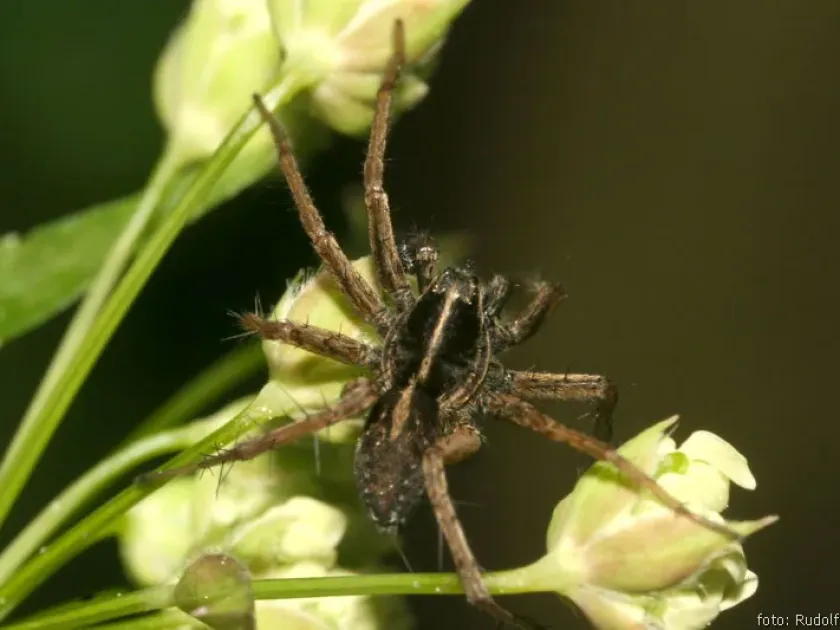
The wetland wolf spider Pardosa palustris is a member of the Lycosidae family, characterized by its non-web-building hunting strategy.
These spiders are typically 5 to 8 mm in length, featuring a mottled grey or brown coloration that provides excellent camouflage on damp soil.
They possess keen eyesight, using their eight eyes to detect the movement of prey across the ground surface during the daylight hours.
Female spiders are frequently observed carrying their egg sacs attached to their spinnerets, protecting their offspring until they hatch.
The species is highly adaptable and commonly found in moist meadow habitats, agricultural fields, and near water bodies.
What it damages
It is crucial to clarify that the wetland wolf spider is not an agricultural pest; it does not consume plants or cause tissue damage.
Instead, it acts as an essential biological control agent, preying upon a wide range of destructive insect species in the crop environment.
By consuming aphids, flies, and other small invertebrates, they help maintain a balance that prevents outbreaks of true pests.
Heavy use of broad-spectrum pesticides often leads to a decline in spider populations, which indirectly invites pest damage to crops.
Promoting the presence of these spiders is a sustainable approach to reducing the reliance on chemical insecticides in modern farming.
When it appears
The activity cycle of these spiders is closely linked to seasonal temperatures, generally spanning from early spring to late autumn.
They emerge from overwintering sites in the soil as soon as temperatures rise, beginning their hunting and reproductive activities.
Peak population density usually occurs during the mid-summer months when invertebrate activity in the field is at its highest.
As the cold weather approaches in late autumn, they seek refuge in soil crevices, thick mulch, or crop residues to survive the winter.
Consistent moisture levels are critical for their activity, making them particularly effective in irrigated crops and lush, vegetation-covered fields.
Control measures
As a beneficial predator, no control measures are required or advised; rather, farmers should focus on conservation and habitat management.
Preserving natural populations helps maintain healthy crop environments without additional input costs or environmental degradation.
- Utilize integrated pest management (IPM) to minimize the impact of chemicals on non-target species.
- Maintain hedgerows and grassy margins to provide refuge for spiders.
- Implement reduced-tillage practices to protect their soil-based overwintering habitats.
- Encourage biodiversity to support stable predator populations throughout the season.
By protecting beneficial arthropods like the wetland wolf spider, growers can foster a self-regulating ecosystem that naturally suppresses pest populations.
Taxonomy
- Latin name
- Pardosa palustris
- Family
- Lycosidae
- EPPO code
- PADOPA
Discussion
No discussions yet — be the first.