
Alpine newt
Triton alpestre
Description
How to identify
The Alpine newt (Ichthyosaura alpestris) is a species of salamander in the family Salamandridae. It is a small amphibian, typically measuring between 8 and 12 cm in length.
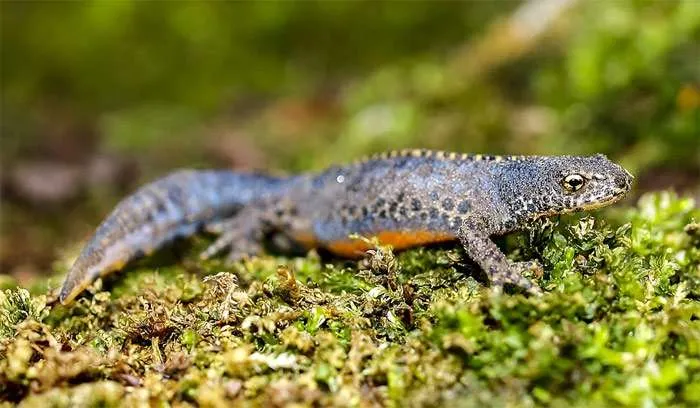
The species is easily recognized by its striking coloration: the dorsal side is often a uniform grey, blue, or black, contrasting with a vibrant orange or yellow belly.
Their skin is smooth, which requires consistent moisture to ensure effective cutaneous respiration, especially when the animal is on land.
During the breeding season, males develop a distinct, often patterned, dorsal crest that helps them attract potential mates in aquatic environments.
These amphibians prefer cool, humid, and shaded habitats, such as deciduous forests, alpine meadows, and water bodies with abundant vegetation.
What it damages
It is crucial to clarify that the Alpine newt is not a plant pest. It is exclusively carnivorous and does not consume any parts of agricultural or ornamental plants.
Its diet consists of various small invertebrates, including insects, slugs, snails, spiders, and earthworms found in the moist soil layer.
They do not cause damage to stems, leaves, roots, or fruits. In fact, they are considered beneficial predators that help control populations of garden slugs and harmful insects.
Any damage observed on crops should be attributed to other garden pests, as the Alpine newt lacks the biological mechanisms to harm vegetation.
Their presence should be viewed as an indicator of a healthy, pesticide-free environment, which is highly beneficial for organic gardening.
When it appears
The activity cycle of the Alpine newt begins in early spring, as temperatures rise and the ice in breeding ponds thaws, usually above 5°C.
Spring is the peak season for aquatic activity, as the newts migrate to ponds to reproduce, making them more visible during these months.
Throughout the summer, they generally adopt a terrestrial lifestyle, hiding in moist, dark crevices, beneath logs, or under dense ground cover during the daylight hours.
As autumn approaches and temperatures drop, the newts retreat to their wintering sites, which include underground burrows, rock crevices, or sheltered piles of organic matter.
The duration and intensity of their activity are highly dependent on local moisture levels and rainfall, as they are susceptible to desiccation in dry conditions.
Signs of infestation
Identifying the presence of Alpine newts involves checking damp areas, especially near garden ponds or under damp piles of stones or leaves.
There are no signs of "infestation" or feeding damage on plants, as they are not herbivores; therefore, any foliage damage on your crops is caused by another source.
One may occasionally find small, individual eggs attached to aquatic plant leaves in spring, which is a sign of a thriving local amphibian population.
The absence of plant damage despite the presence of these amphibians serves as clear evidence that they are peaceful neighbors in your gardening ecosystem.
Gardeners rarely "see" them during the day unless they intentionally look into their hiding spots, as they are primarily nocturnal and very shy creatures.
Control measures
No protective measures are needed against the Alpine newt, as they cause no harm to plants and are valuable assets for pest management.
In many regions, this species is protected by law, and the use of chemical pesticides in areas where they reside is harmful and strictly prohibited.
If you wish to reduce their population in specific garden areas, simply reduce habitat suitability by clearing away unnecessary debris, piles of logs, or damp ground coverings.
Improving site drainage to reduce overall ground moisture will naturally discourage newts from taking up residence in those parts of your garden.
Promoting a balanced environment that supports these amphibians is a sign of a mature, ecologically conscious approach to garden management.
Taxonomy
- Latin name
- Triton alpestre
- Family
- Salamandridae
- EPPO code
- TTURAL
Discussion
No discussions yet — be the first.