
Triops
Triops
Description
How to identify
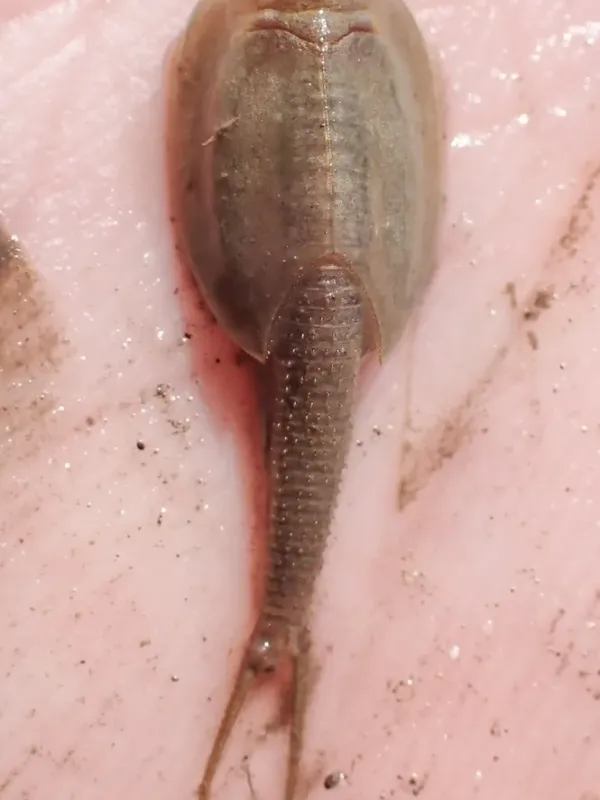
Triops, commonly known as tadpole shrimp, are freshwater crustaceans belonging to the order Notostraca and the family Triopsidae. Their appearance is reminiscent of a prehistoric creature with a wide shield-like carapace covering the front of the body.
Adult individuals can grow to lengths of 5 to 10 centimeters. They feature numerous pairs of swimming legs, a long bifurcated tail, and three distinct eyes, which contribute to their unique biological profile.
The life cycle of Triops is highly specialized for temporary, ephemeral water bodies. Their eggs (cysts) possess remarkable resistance to desiccation, freezing, and chemical exposure, remaining viable in the soil for decades.
Upon flooding of rice fields, the eggs quickly hatch into nauplii, developing into mature, breeding adults within just a few days. This rapid growth allows them to colonize rice paddies effectively.
Populations often reach high densities in stagnant water, where they constantly churn the bottom sediment, which directly impacts the growth environment of young agricultural crops.
What it damages
The primary concern regarding Triops is their impact on rice crops, particularly during the germination and seedling establishment phases. While they naturally feed on organic matter and plankton, they consume rice tissues when natural food sources are limited.
Significant damage occurs within the first weeks after flooding the rice paddies. Adult tadpole shrimp mechanically damage tender seedlings by severing roots and stems.
Furthermore, their constant digging activity causes severe turbidity in the water. This murky environment prevents sunlight from reaching the seedlings, hindering photosynthesis and preventing them from rooting properly.
Consequently, rice stands become sparse, and in areas of high population density, entire sections of the crop can be destroyed, leading to substantial yield losses.
Affected plants that survive often remain stunted, show signs of stress, and become more susceptible to secondary pathogenic infections, ultimately reducing overall field productivity.
When it appears
The emergence of Triops is synchronized with the flooding of rice fields, typically occurring in May or June when water temperatures reach optimal levels for egg hatching. Populations expand rapidly at the start of the growing season.
The severity of the infestation is usually highest when the soil has high concentrations of dormant eggs from previous seasons, leading to explosive population growth within a short timeframe.
Signs of infestation
The most prominent visual indicator is a sudden, persistent turbidity in the field water. The water becomes visibly murky or brownish due to the sediment constantly disturbed by the shrimp.
Upon closer inspection of the seedlings, one can observe bitten or completely severed roots. Seedlings often drift on the water surface after being uprooted by the animals' feeding activities.
During early development, the tadpole shrimp themselves can be spotted swimming actively in the water column or scavenging along the muddy bottom of the fields.
Control measures
The main strategy for control involves agrotechnical practices, such as temporarily draining the fields to induce desiccation of larvae, which proves fatal for the aquatic pests.
Chemical control using specific insecticides is effective if applied early. It is critical to utilize products that are registered and safe for aquatic rice ecosystems to avoid environmental harm.
The application of hydrated lime to the water can alter the chemical balance, creating an environment that is unfavorable for the survival and reproduction of Triops.
Proper water management, including the regulation of water levels and circulation, helps in minimizing the impact of tadpole shrimp on rice establishment.
- Field drainage prior to planting.
- Use of certified aquatic insecticides.
- Monitoring of irrigation water quality.
Taxonomy
- Latin name
- Triops
- Family
- Triopidae
- EPPO code
- TRPSSP
Discussion
No discussions yet — be the first.