
Tadpole shrimp
Lepidurus
Description
How to identify
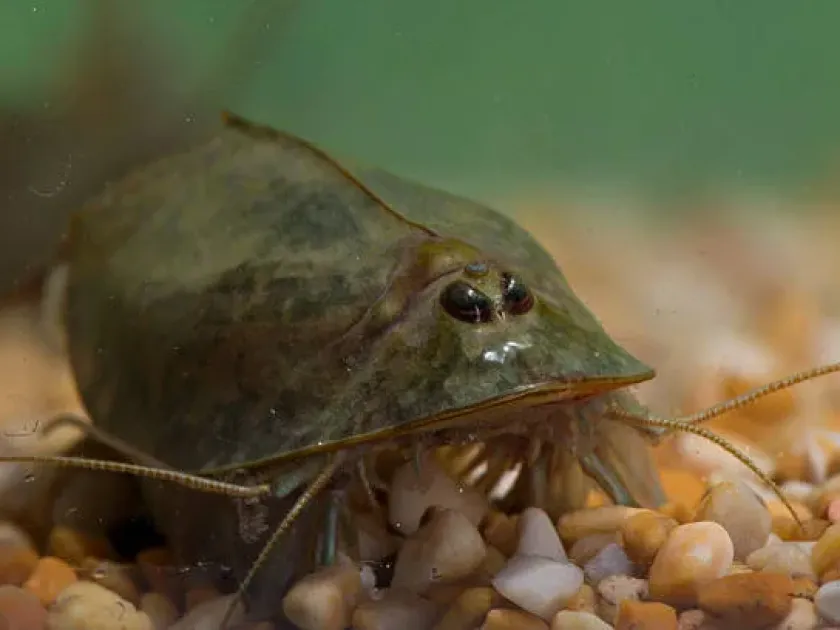
The tadpole shrimp is a large freshwater crustacean of the order Notostraca, resembling a prehistoric creature in appearance. Its body is protected by a broad chitinous shield (carapace) that covers the head and thorax, while the abdomen consists of multiple segments with long thread-like appendages.
Adult specimens can grow from 2 to 10 centimeters long depending on the species and environmental conditions. They possess a complex system of limbs used for moving across the bottom, breathing, and collecting food in the water column.
The coloration of tadpole shrimp ranges from olive-green to brown, making them nearly invisible against the muddy bottom of rice paddies. This adaptation helps them survive in temporary water bodies where they find favorable conditions for reproduction.
Identifying specific species requires examining the number of leg pairs and the shape of the anal plate. While omnivorous, these crustaceans shift their diet to tender crop seedlings during mass outbreaks.
In the agricultural sector, tadpole shrimp represent a significant threat precisely during the period of field flooding, as both larvae and adults actively feed in the water, destroying newly planted or germinating crops.
What it damages
The primary crop damaged is rice, grown under flooded field conditions. The pest causes the most severe damage during the initial stages of crop vegetation, immediately after seeds are sown into the water.
The pest actively gnaws on the roots and stems of young rice seedlings, leading to plant death or significant growth retardation. Mass consumption of plants creates bare patches in the field that often require replanting.
Beyond mechanical damage, the tadpole shrimp negatively affects the structure of the stands, causing thinning. This leads to uneven plant development and a reduction in overall yield per hectare.
By stirring up the bottom layer while foraging, tadpole shrimp increase water turbidity. This limits sunlight penetration to seedlings, which is critical for young rice plants during the first weeks of growth.
In some cases, tadpole shrimp may damage other hydrophilic crops if they are cultivated under conditions of artificial flooding, although rice remains their preferred food source.
When it appears
The lifecycle of the tadpole shrimp is inextricably linked to the presence of water in the fields. It begins with the hatching of eggs (cysts) that can remain in a dry state in the soil for years, waiting for the paddies to be flooded.
Peak pest activity is observed within the first 10–20 days after rice fields are flooded. This period provides ideal conditions for larval hatching and rapid growth due to the warming of the water.
The entire lifecycle proceeds rapidly, as the shrimp must complete their development and lay a new batch of eggs before the water body dries up. This factor makes them extremely dangerous during the spring and summer months.
The appearance of tadpole shrimp often coincides with the beginning of the rice growing season, creating a maximum conflict of interest between the growth of the pest population and the crop's need for protection.
By mid-season, as the rice plants strengthen and cover the water surface, the harmfulness of the tadpole shrimp naturally decreases, though the accumulated supply of eggs in the soil ensures their reappearance the following year.
Signs of infestation
The first sign of infestation is high water turbidity in the paddies, which persists even in the absence of wind. This is due to the tadpole shrimp actively burrowing in the silt.
Visual confirmation of the pest can be obtained by observing the water surface, where characteristic ripples or movement of individuals are often visible. They can be seen with the naked eye as small "swimming shields."
When inspecting plants, characteristic damage is observed: gnawed roots floating on the water surface and stems of young rice seedlings cut at the base.
Thinning of the stands is a clear indicator that the pest population has reached a critical level. If there are more than 5-10 individuals per square meter, the threat to the harvest becomes high.
The presence of bare patches in rice fields requires immediate water inspection for crustaceans to decide on timely protective measures.
Control measures
The most effective method is agronomic control based on water regime management. A short-term drainage of the fields for 2-3 days is fatal to young tadpole shrimp, which require a constant aquatic environment.
Quality pre-sowing soil preparation plays a key role. Deep plowing and thorough leveling of the field surface minimize egg hiding spots and hinder pest movement.
The chemical control method includes the use of insecticides approved for rice farming. Water treatment is carried out by applying granulated or soluble preparations that quickly reduce population density.
To prevent the spread of pest eggs, it is necessary to monitor the cleanliness of irrigation water and use mesh filters that block the penetration of adults from canals into the fields.
Integrated pest management also involves crop rotation and timely rice sowing dates, ensuring that the phase of vulnerable seedlings does not coincide with the peak hatching period of tadpole shrimp larvae.
Taxonomy
- Latin name
- Lepidurus
- Family
- Triopidae
- EPPO code
- LPDUSP
Discussion
No discussions yet — be the first.