
Tadpole shrimp
Lepidurus apus
Description
How to identify
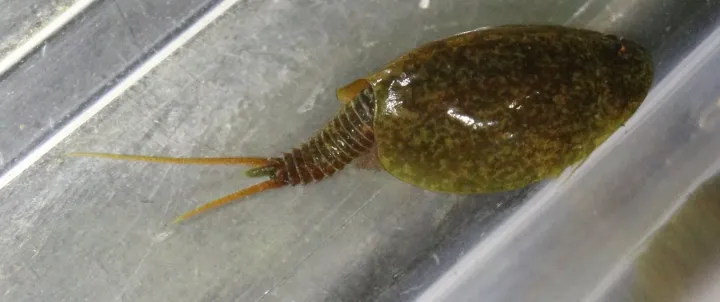
The tadpole shrimp (Lepidurus apus) is a large freshwater crustacean belonging to the family Triopsidae. It has a primitive, prehistoric appearance, with its body covered by a large, oval, shield-like carapace and a long abdomen ending in a pair of tail-like filaments.
Adult specimens can grow between 5 and 8 centimeters in length. They possess three eyes: two large lateral eyes and one smaller naupliar eye located between them. Their coloration ranges from grayish-brown to greenish, providing effective camouflage against the muddy bottom of rice paddies.
The shrimp uses numerous pairs of leaf-like swimming legs, which also function as gills and play a role in filter-feeding. These creatures are highly mobile and can quickly colonize new water bodies, including newly flooded rice fields.
Their life cycle is specialized for temporary water bodies. The eggs are highly resilient, capable of surviving long periods of desiccation and extreme cold, remaining viable in the soil for many years until environmental conditions trigger hatching.
Infestations often coincide with the flooding of rice fields. Larval emergence is rapid, and if left uncontrolled, the population can reach critical levels within just a few days of the field being filled with water.
What it damages
Tadpole shrimp primarily damage rice crops during the early seedling stage. The most significant harm occurs while seeds are germinating and the first shoots are emerging, when the plants are most vulnerable to mechanical disturbance.
Living and foraging at the bottom of the field, the shrimp actively burrow into the top layer of sediment. This behavior results in the mechanical uprooting of young rice seedlings, dislodging them from the soil.
In addition to uprooting, the shrimp consume tender roots and shoots, leading to widespread seedling mortality. This often results in patchy crop emergence, which may necessitate reseeding of affected areas.
The damage is compounded by the shrimp's burrowing activity, which creates significant water turbidity. High levels of suspended sediment block sunlight from reaching the submerged rice plants, hindering photosynthesis and stunting their growth.
Mass infestations are particularly dangerous; under favorable temperature conditions, they can decimate a large portion of the crop, making it impossible to achieve the required plant density for a successful harvest.
When it appears
The activity of the tadpole shrimp is strictly tied to the flooding cycle of rice paddies. Emergence typically occurs in early spring, immediately after water is introduced to the fields, provided the water temperature is between 10 and 15 degrees Celsius.
Development is extremely rapid, with the lifecycle from hatching to sexual maturity often completed in 2 to 3 weeks. This fast cycle allows the pest to produce multiple generations within a single flooding season.
The greatest threat occurs during the first 15 to 20 days after sowing. As the water warms and the rice plants grow stronger, they become less susceptible to damage, eventually outgrowing the risk of being uprooted or consumed.
Soil moisture levels during the off-season play a critical role in population dynamics. If the field remains dry for an extended period, a large reservoir of viable cysts accumulates in the soil, significantly increasing the risk of an outbreak in subsequent years.
Activity decreases as the weather gets hotter and temporary water bodies begin to dry up. The adults complete their lifecycle and die, leaving behind dormant eggs in the mud, which wait for the next flooding event to hatch.
Signs of infestation
The primary indicator of an infestation is the appearance of cloudy, murky patches of water slowly migrating across the field. This is a direct consequence of the intensive burrowing behavior of the shrimp population near the soil surface.
Visual inspection of the water usually reveals adult crustaceans swimming near the surface or scurrying quickly across the bottom. Their jerky, rapid swimming motions make them visible despite the turbidity they create.
The presence of large numbers of rice seedlings floating on the water surface is a critical symptom of damage. Once these plants are dislodged by the shrimp's burrowing, they lose their root system and float away, leading to severe thinning of the stand.
Careful inspection of the paddy floor will reveal uprooted seeds or sprouts with missing roots, along with characteristic furrows in the bottom sediment, confirming that the shrimp are actively foraging in the area.
If the population density exceeds the economic threshold, the field appears as a highly turbid basin with visible areas of crop loss that expand as the colony moves through the rice paddy.
Control measures
The main strategy for managing tadpole shrimp involves cultural practices aimed at keeping the population below harmful levels. Proper field leveling and high-quality pre-sowing soil preparation are essential first steps.
A highly effective control measure is a short-term drainage of the fields for 2 to 3 days. Exposing the soil surface to air leads to the desiccation and death of the sensitive young larvae, effectively curbing the population before significant damage occurs.
Chemical control is justified when population levels exceed economic thresholds. Growers should apply registered insecticides according to local agricultural regulations for use in flooded rice paddies.
It is important to ensure uniform water heating across the field, as cold water can lead to staggered hatching, making it harder to time control measures. Stable temperature conditions allow for more efficient and focused intervention.
Recommended control methods include:
- Implementing a short drainage period immediately following mass larval emergence.
- Ensuring precise leveling of paddy fields to eliminate stagnant zones.
- Using specialized insecticides when population counts reach critical thresholds.
Taxonomy
- Latin name
- Lepidurus apus
- Family
- Triopidae
- EPPO code
- LPDUAP
Discussion
No discussions yet — be the first.