
Trilophidia conturbata
Trilophidia conturbata
Description
How to identify
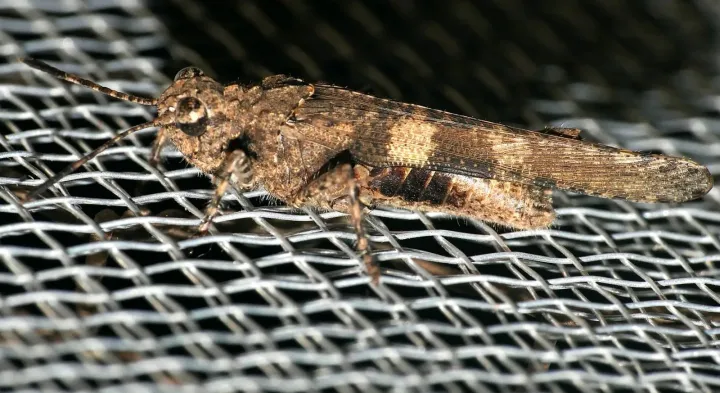
Trilophidia conturbata is a species of grasshopper belonging to the Acrididae family within the order Orthoptera. This insect is characterized by a robust body structure, adapted for jumping, and a well-developed chewing mouthpart designed for feeding on various plant tissues.
The morphology of the adult is marked by effective camouflage, typically displaying gray to dark brown hues with mottled patterns. This coloration mimics the appearance of soil and dry plant debris, making the insect extremely difficult to detect in field environments.
A key diagnostic feature of this species is the structure of the pronotum, which features distinct ridges or bumps. The wings often exhibit darkened patches visible during flight, which serves as a reliable marker for identification by field agronomists.
Nymphs, or immature stages, resemble smaller, wingless versions of the adults. They undergo several molting stages, gradually increasing in size and developing more defined wing pads as they approach the final adult stage.
Adults possess significant migratory capabilities, allowing them to traverse large areas. Precise species identification usually requires expert examination of the male genitalia and specific morphometric parameters of the wing venation.
What it damages
This species is a generalist herbivore (polyphage) that feeds on a wide range of grasses and broadleaf plants. Agricultural crops, including various cereals and vegetable plants, are susceptible to feeding damage when populations reach high densities.
Both adults and older nymphs cause significant damage by consuming leaves, stems, and occasionally reproductive parts of plants. During outbreaks, the sheer number of insects can lead to total defoliation of cultivated fields.
Damage often starts from the leaf margins, progressing inward until only the thick veins remain. This defoliation drastically reduces the photosynthetic capacity of the plants, resulting in stunted growth and significant yield loss.
During periods of drought, when natural grasslands dry up, these grasshoppers frequently migrate into agricultural lands, intensifying the pressure on crops that are already under environmental stress.
The feeding damage creates physical wounds on the plants, which act as entry points for secondary bacterial and fungal pathogens, further complicating the health status of the crop and reducing product quality.
When it appears
The life cycle of Trilophidia conturbata is highly dependent on ambient temperature and soil moisture levels. Eggs overwinter in the soil, with hatching usually occurring in late spring as temperatures consistently rise.
Nymphal development takes place during the early summer, during which time the insects exhibit high metabolic activity. This stage is critical for population growth and is the most vulnerable period for intervention.
Egg-laying (oviposition) is a key event in the late summer, where females deposit eggs in the soil, forming protective egg pods. The success of these pods depends heavily on the moisture levels and soil structure during the transition into winter.
Peak adult activity is typically observed in mid-to-late summer, when they are most mobile and widespread across fields. During this time, they engage in active mating and continuous feeding, expanding the range of the infestation.
Seasonal dynamics conclude in autumn as temperatures drop, leading to the reduction of active population stages. Effective management programs are built around these seasonal windows to ensure timely chemical or mechanical action.
Signs of infestation
Initial signs of infestation include irregular, ragged edges on leaves, often accompanied by the presence of small, pellet-like frass on the soil surface beneath the plants. These visual cues are often the first alert for field scouting.
When walking through a field during the day, sudden jumping or short-distance flight activity is a primary indicator of a grasshopper presence. In quiet conditions, one may also hear the stridulation (chirping) of the males.
Severe infestations manifest as bald or thin patches in the crop canopy. Plants within these areas appear severely stripped, with the damage being clearly visible on stems and remaining foliage.
Discovery of egg pods in the surface layers of the soil, particularly in margins, fallow lands, or near roadsides, indicates high potential for a population surge in the following season.
High bird activity in specific areas of a field can also serve as a bio-indicator for an underlying insect outbreak, as predatory birds frequently concentrate on sites with a high density of grasshoppers.
Control measures
A successful control strategy relies on Integrated Pest Management (IPM), which combines physical, biological, and chemical methods to minimize damage to economic crops.
Cultural practices such as deep autumn tillage are highly effective. This process destroys egg pods by exposing them to desiccation, frost, and predators, significantly lowering the population density before the next growing season.
Chemical control involving insecticides is necessary when population thresholds are exceeded. Targeting the younger nymphal stages provides the best results, as they have limited mobility and are highly susceptible to contact-action products.
- Utilizing registered, effective insecticides during the early nymph stage.
- Maintaining clean fields and borders by removing weeds that provide shelter.
- Encouraging and protecting natural predators such as birds and predatory insects.
Biological control alternatives, including the use of entomopathogenic fungi or pheromone traps, are gaining attention as sustainable ways to suppress population growth in environmentally sensitive areas.
Taxonomy
- Latin name
- Trilophidia conturbata
- Order
- Orthoptera (locusts)
- Family
- Acrididae
- EPPO code
- TRLPCT
Discussion
No discussions yet — be the first.