
Trilophidia
Trilophidia
Description
How to identify
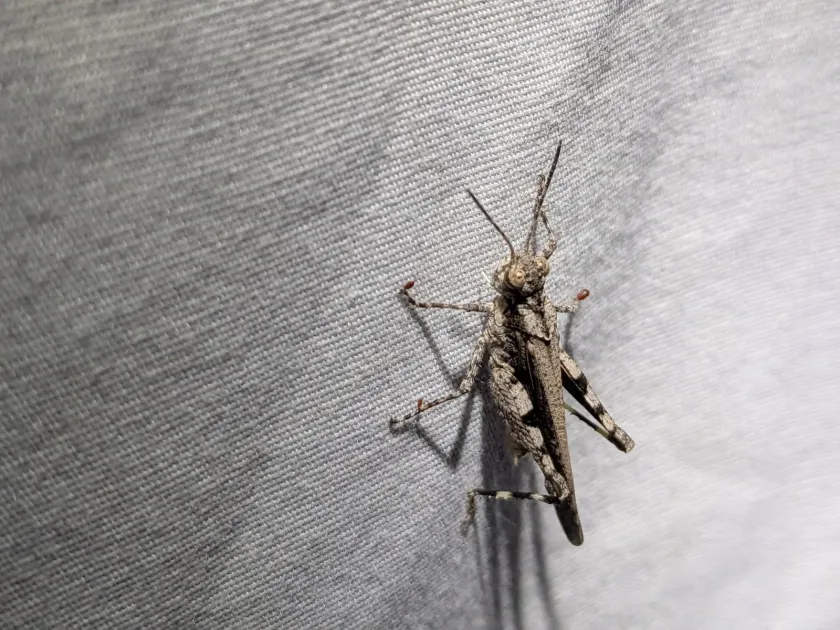
Trilophidia is a genus of insects within the Acrididae family, commonly known as short-horned grasshoppers. These insects have evolved sophisticated camouflage patterns, allowing them to blend seamlessly with bare soil and dry vegetation.
The defining morphological feature is the distinct ridge pattern on the pronotum, which serves as a key identifier for this genus. They possess robust hind legs designed for jumping, essential for their survival in open landscapes.
Their visual acuity is highly developed, enabling them to detect movement from a distance. The body texture is often rough or tuberculate, providing added visual disruption against gravelly or sandy substrates.
Life cycle stages include eggs, nymphs, and adults. Trilophidia undergo incomplete metamorphosis, which contributes to their resilience in harsh environmental conditions.
Females are equipped with strong ovipositors, allowing them to deposit eggs deep into firm soil. This protects the clutches from desiccation and temperature extremes, ensuring the continuity of the population.
What it damages
Trilophidia can inflict significant damage on various agricultural crops, including cereals, vegetable crops, and pasture grasses. Both adults and older nymphs are considered primary pests due to their voracious feeding habits.
They feed on the vegetative parts of plants, systematically chewing leaves and stems. Extensive feeding often leads to severe defoliation, which cripples the plant's photosynthetic capacity.
Young seedlings are particularly vulnerable and can be completely destroyed during an outbreak, leading to crop failure. Early-season monitoring is vital to prevent such catastrophic losses.
Beyond physical tissue loss, the wounds created by these grasshoppers serve as entry points for secondary infections like bacteria and fungi. This often leads to widespread field decay.
Overall economic impact includes reduced crop yields and diminished product quality. Farmers must assess fields regularly to mitigate potential infestations before they escalate.
When it appears
The seasonal activity of Trilophidia is highly temperature-dependent, with most activity occurring in late spring and throughout the summer. Warm weather stimulates the hatching of eggs that overwintered in the soil.
Nymphal development proceeds through several stages, with the insects becoming increasingly destructive as they grow. The rate of development is heavily influenced by the accumulation of active temperatures.
Adults typically emerge by mid-summer, exhibiting high mobility and the ability to migrate across larger areas. This mobility can make controlling outbreaks significantly more difficult.
As the season approaches autumn, the focus of the population shifts toward reproductive activities. Adults prepare to deposit eggs into the soil, establishing the next generation.
Environmental conditions during the autumn and winter months play a critical role in overwintering success. A mild winter often results in a higher density of the pest for the following season.
Signs of infestation
Visual identification of an infestation starts with irregular leaf damage. You will observe gnawed leaf edges or holes, which are typical of the chewing mouthparts of grasshoppers.
Observing jumping insects when walking through fields or operating machinery is a primary indicator of population density. This is often the first sign that alerts farmers to a potential problem.
Fecal deposits found on leaves or the soil surface confirm active feeding sites. In areas of high population density, these deposits become highly visible and widespread across the field.
Unexplained stunted growth or wilting on specific patches of a field may indicate heavy feeding pressure. This requires close inspection to rule out soil-borne pathogens or other pests.
Discovering egg pods during soil preparation or harrowing in the off-season is a major indicator of an impending threat for the next planting cycle.
Control measures
Integrated Pest Management (IPM) for Trilophidia starts with cultural practices. Deep plowing of the soil after harvest is highly effective at destroying egg pods by exposing them to predators and desiccation.
Maintaining clean field edges and removing weeds helps eliminate essential shelter and supplemental food sources. A well-maintained agricultural perimeter acts as a physical deterrent against outbreaks.
Chemical control involving insecticides is necessary when population levels exceed the economic threshold. Applying treatments during the early nymphal stages is more effective and requires lower dosages.
Biological control, by protecting natural predators such as birds and predatory insects, can help keep populations below economically damaging levels in the long term.
- Perform regular scouting to monitor population density.
- Implement crop rotation to disrupt the insect's life cycle.
- Always apply chemical products according to local safety regulations.
Taxonomy
- Latin name
- Trilophidia
- Order
- Orthoptera (locusts)
- Family
- Acrididae
- EPPO code
- TRLPSP
Discussion
No discussions yet — be the first.