
Tobacco beetle
Tricorynus tabaci
Description
How to identify
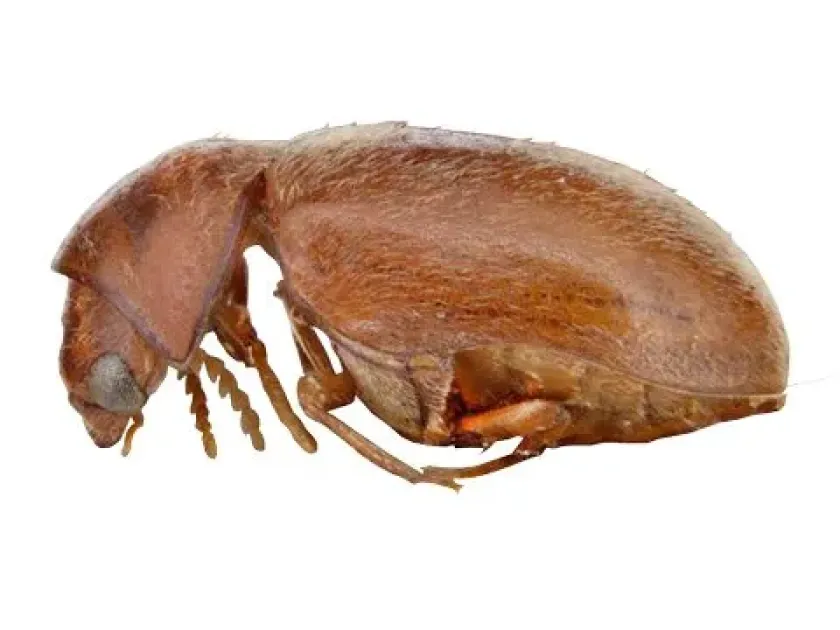
The tobacco beetle, Tricorynus tabaci, is a member of the order Coleoptera and the family Anobiidae. Adult beetles are small, measuring approximately 2 to 3 millimeters in length, with a robust and oval body shape.
Their coloration typically ranges from reddish-brown to dark brown. The body surface is densely covered with fine hairs, giving the insect a matte appearance under magnification, which is a key diagnostic feature.
The larvae are C-shaped, creamy-white in color, and possess a well-developed head capsule with strong mandibles. This anatomical structure allows them to tunnel effectively through tough, dried plant materials.
Identifying the pest is often done through visual inspection of damaged goods or by using pheromone traps placed throughout warehouses to detect the presence of adult beetles.
Due to the similarity of this species to other stored-product beetles, precise identification usually requires an expert assessment of morphological features, particularly the antennae and elytral structure.
What it damages
This beetle is a significant pest of stored agricultural products. It primarily infests tobacco, dried herbs, medicinal plants, seeds, and various processed vegetable commodities.
Damage is caused by both adults and larvae. Larvae tunnel deep into the product, consuming internal parts and leaving behind extensive networks of galleries that compromise the integrity of the material.
The infestation results in the conversion of the product into fine powder mixed with frass. This degradation not only destroys the market value of the goods but also promotes secondary mold growth.
Tobacco manufacturing and pharmaceutical storage facilities are particularly vulnerable, as the insect can cause massive inventory losses if not detected during the early stages of the life cycle.
In cases of severe infestation, the cumulative damage can render entire batches of raw material completely unusable, necessitating total disposal of the contaminated product.
When it appears
Tricorynus tabaci thrives in indoor environments where stable temperatures and food sources are available. In temperature-controlled warehouses, the beetle can complete multiple generations annually.
The optimal development temperature for this species ranges between 25°C and 30°C. Within this range, the life cycle from egg to adult is significantly accelerated.
While the beetle prefers warm conditions, larvae can endure colder temperatures by entering a state of dormancy, which allows them to survive until favorable conditions return.
The number of generations per year depends heavily on the warehouse microclimate. In poorly ventilated or heated areas, the beetle can maintain a continuous cycle of reproduction throughout the year.
Monitoring for the pest must be constant, as a single batch of contaminated raw material introduced to a warehouse can initiate a rapid infestation across the entire stock.
Signs of infestation
The presence of the tobacco beetle is usually indicated by small, circular exit holes found on the surface of packages, boxes, or the stored commodity itself.
Fine dust or "frass," which is a mixture of fecal pellets and pulverized plant material, is frequently found beneath or around the infested goods as a clear sign of larval feeding.
Upon breaking open damaged packages, one may discover the larvae inside the galleries, as well as remnants of pupal cases left behind after the adults have emerged.
A distinctive musty odor often accompanies a heavy infestation, especially when large quantities of stored material have been degraded by the larval activity.
Adults are often observed near light sources in the evening or during night inspections, as they are capable fliers and move between storage areas to expand the infestation.
Control measures
Sanitation is the cornerstone of managing the tobacco beetle. Warehouses should be kept clean, and all spills or debris must be removed regularly to eliminate potential breeding sites.
Fumigation is the most effective method for controlling established infestations, as it ensures that the gas penetrates deep into the product, killing larvae hidden inside the material.
Temperature management is another critical tool. Storing susceptible products at temperatures below 10°C significantly slows down larval metabolism and inhibits successful reproduction.
- Use pheromone traps to monitor adult beetle activity.
- Seal warehouse doors and vents to prevent migration.
- Promptly isolate and dispose of infested batches.
Applying residual insecticides to empty warehouse surfaces can provide a protective barrier, preventing the re-establishment of the pest population after a thorough cleaning.
Taxonomy
- Latin name
- Tricorynus tabaci
- Order
- Coleoptera (beetles)
- Family
- Ptinidae
- EPPO code
- CATMTA
Discussion
No discussions yet — be the first.