
Gibbium psylloides
Gibbium psylloides
Description
How to identify
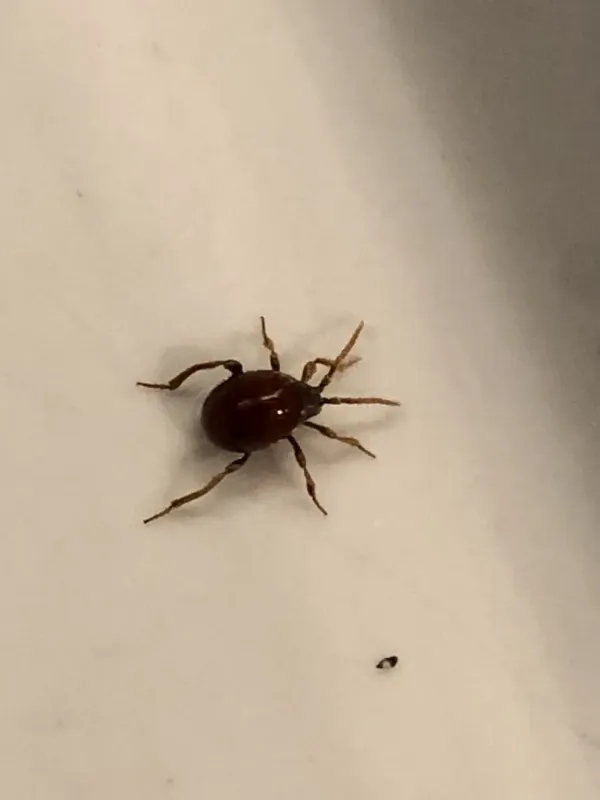
Gibbium psylloides, commonly known as the smooth spider beetle, is a small insect belonging to the family Ptinidae. It is characterized by its spider-like appearance, which is due to its globular body and long, thin legs.
The beetle typically measures between 2 and 3.5 mm in length. Its body is smooth, shiny, and usually ranges in color from reddish-brown to dark brown or nearly black.
Like many members of its family, this species is flightless as it lacks wings. Its movement is slow, and it is most active during the night, as it prefers dark and secluded environments.
The larvae are small, white, and curved, with a hairy appearance. They are rarely seen, as they remain hidden deep within their food source or in cracks and crevices of the structure.
When disturbed, the adult beetle displays a classic defensive behavior of the family, pulling in its legs and antennae to appear as if it is dead, which is why it is often called a "feigning" beetle.
What it damages
The smooth spider beetle is a significant pest of stored products and is considered a generalist feeder. It has a broad diet and can thrive on various organic materials found in warehouses and homes.
It frequently attacks cereal products, flour, grain, spices, dried fruits, and herbs. Its larvae bore into these items, causing significant internal damage that often goes unnoticed until the population is large.
In addition to food, this pest also consumes materials of animal origin, including dried skins, wool, animal hides, and feathers, posing a risk to diverse types of stored goods.
The insects damage packaging materials such as paper and cardboard, allowing for secondary contamination by mold and other storage pests that exploit the holes created by the beetles.
Economic losses are caused not only by the direct consumption of the product but also by the contamination of the goods with frass, larval skins, and webbing, making the product unsellable.
When it appears
In heated warehouses or residential areas, the smooth spider beetle can breed throughout the year. It does not require a specific season to reproduce if the environmental conditions are favorable.
The beetle thrives in moderate temperatures ranging from 20 to 25 degrees Celsius and prefers humid environments. Under such conditions, a generation can complete its development in a few months.
In unheated environments, development slows down significantly. The beetle can survive the winter months by sheltering in cracks in floors, walls, or within the bulk of stored produce.
Females lay eggs in small clusters directly on or near the food supply. A single female can produce several dozen eggs, which leads to a rapid increase in the population if conditions remain unchecked.
Infestation usually spreads when infested materials are transported or when old, contaminated stock is mixed with fresh, clean products in a warehouse facility.
Signs of infestation
Detection is often difficult due to the cryptic nature of the pest. The most common sign is observing adult beetles moving on surfaces or near sacks of products during the night.
Small exit holes in food packaging or the presence of fine debris and "flour dust" around the storage area are clear indicators of an active larval infestation inside the goods.
During a thorough inspection, one may find small, round cocoons constructed by the larvae. These cocoons are often camouflaged with particles of the food substrate, making them hard to spot.
A persistent musty or unpleasant odor in a storage area is a major warning sign that an infestation has reached a high density and requires immediate attention.
The presence of damaged product that has taken on a bitter taste or a foul odor confirms that the infestation has reached a critical stage of contamination.
Control measures
The primary control measure for Gibbium psylloides is the maintenance of high standards of hygiene. Regularly cleaning storage areas and removing spilled grains is crucial to minimize hiding spots.
Before storing new commodities, the warehouse should undergo professional disinfection. Fumigation is often the most effective method for deep-seated infestations in large facilities.
Implementing a strict inventory management system is essential. Rotate stock using the "first-in, first-out" (FIFO) principle to ensure that older goods do not become permanent reservoirs for the pests.
Monitoring using pheromone-baited traps or adhesive traps can provide early warning of an infestation, allowing for targeted and localized control efforts rather than broad chemical application.
In cases of severe contamination, infested materials must be destroyed or processed through thermal treatment, such as freezing or heating, to kill all life stages of the beetle.
Taxonomy
- Latin name
- Gibbium psylloides
- Order
- Coleoptera (beetles)
- Family
- Ptinidae
- EPPO code
- GIBMPS
Discussion
No discussions yet — be the first.