
Ornate checkered beetle
Trichodes ornatus
Description
How to identify
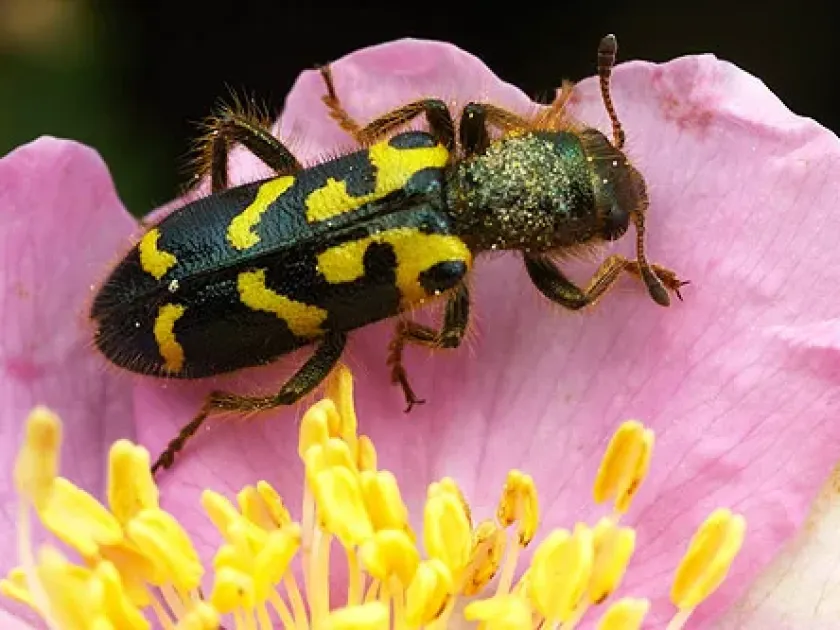
The ornate checkered beetle (Trichodes ornatus) belongs to the Cleridae family, order Coleoptera. The insect is easily recognized by its vibrant appearance, featuring blue-green elytra adorned with bright red or orange transverse stripes.
The beetle has a robust, hairy body, with adult specimens typically measuring between 8 and 12 millimeters in length. Their metallic head and pronotum provide a distinct look among the various checkered beetle species found in field settings.
What it damages
While adult beetles are predators, their primary ecological impact involves larvae parasitizing the nests of wild bees and other Hymenoptera. This behavior categorizes them as an indirect threat to crop productivity.
By reducing the populations of essential pollinators, these beetles may negatively affect the yield of various agricultural crops that rely heavily on insect pollination for fruit set.
When it appears
The activity of adults occurs during the summer months, characterized by swarming and increased movement across flowering plants. They are frequently observed feeding on pollen or hunting smaller insects on blooms.
The life cycle involves complete metamorphosis. Larvae are specialist parasitoids that invade nests, where they consume the larvae of the host and feed on the stored pollen or provisions found within the nest cells.
Signs of infestation
Signs of their presence include the observed activity of these distinctively colored beetles on flowers near nesting sites of wild bees. They do not feed on leaves, stems, or fruits of agricultural crops directly.
Indirect indicators include a noticeable reduction in pollinator traffic at your cultivation site, which may lead to reduced yields in cross-pollinating crops such as legumes or vegetables.
Control measures
Targeted control measures for the ornate checkered beetle are rarely required as they are not classified as primary agricultural pests in most commercial farming operations.
Integrated pest management strategies focusing on the protection of beneficial pollinators and the reduction of broad-spectrum insecticide usage during bloom are considered the best approach.
Taxonomy
- Latin name
- Trichodes ornatus
- Order
- Coleoptera (beetles)
- Family
- Cleridae
- EPPO code
- TRCOOR
Discussion
No discussions yet — be the first.