
Bee beetle
Trichodes alvearius
Description
How to identify
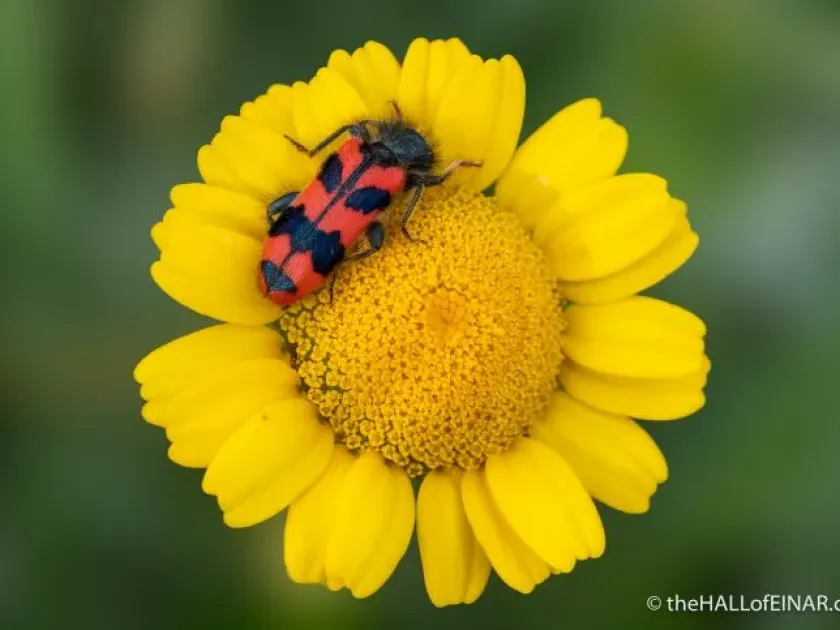
The bee beetle (Trichodes alvearius) is a member of the Cleridae family. The adult beetle is easily recognizable by its vibrant coloration, featuring a dark, metallic blue or green body with distinct red bands across the elytra.
Adults typically measure between 10 and 15 millimeters in length. Their bodies are covered in dense hairs, making them highly visible when crawling on hive equipment or landing boards during sunny weather.
The larvae, which are the damaging stage of the pest, are elongated and often exhibit a reddish or pinkish hue, allowing them to blend into the larval mass within the bee brood cells.
As opportunistic parasites, they are well-adapted to infiltrate the nests of both solitary and honey bees, making them a significant concern for managed apiaries.
In the wild, adult beetles are frequently found on flowering plants, feeding on pollen and smaller insects, which serves as a pre-breeding nutrition phase before they target bee nests.
What it damages
The primary damage is caused by the larvae, which enter brood cells to feed on bee larvae and pupae. This activity directly reduces the workforce of the colony.
In addition to consuming the brood, the larvae damage the wax cells by chewing tunnels through them, compromising the integrity of the honeycombs and the stored food supplies.
In severe infestations, the colony's population can decline significantly, leading to reduced honey production and poor overwintering success for the bees.
The most severe impact occurs during the peak breeding season, as the abundance of bee larvae provides the bee beetle with ample food to complete its development cycle.
Because they can also affect solitary bee populations like mason bees, they can disrupt the natural pollination services provided by these beneficial insects in the vicinity of an apiary.
When it appears
The active period for adult bee beetles is from late spring through the summer months. This is when they engage in mating and searching for suitable hosts for egg-laying.
The life cycle duration is heavily influenced by regional climate conditions, with typically one generation per year, though warmer temperatures can accelerate larval development.
They overwinter as larvae inside the bee nests, where the food source and protection from the environment allow them to survive until the next cycle begins in spring.
Springtime emergence aligns with the bees' peak brood-rearing activity, creating ideal conditions for the larvae to immediately find and exploit new food sources.
Late summer marks the emergence of the new adult generation, which leaves the hive to seek out flowers for feeding before the onset of autumn.
Signs of infestation
Beekeepers can spot the beetles during routine hive inspections, as their metallic coloration stands out against the wooden surfaces of the hive or the wax frames.
Signs of an infestation include damaged brood cells where pupae have been consumed, often accompanied by debris from the larvae's chewing activity within the combs.
- Adult beetles observed on or near the hive entrance or on flowers nearby.
- Presence of reddish larvae within the sealed brood cells during frame inspection.
- Perforated or tunneled wax cappings and comb walls.
- Unexplained weakness or slow growth of the colony during the peak season.
Careful examination of the outer frames and the space between the hive body and the cover often reveals the presence of these beetles during their active season.
Monitoring solitary bee nesting sites near the apiary can also provide early warning signs of the beetle population density in the local environment.
Control measures
Maintaining strong, vigorous colonies is the most effective defense, as healthy bees are generally capable of detecting and removing foreign larvae from their brood nest.
Regular replacement of old, dark brood combs with new foundation is essential, as older combs are more likely to harbor overwintering larvae and provide refuge for the beetles.
Mechanical trapping of adult beetles can be implemented around the apiary during the peak season to reduce the number of egg-laying individuals entering the hives.
Good sanitation practices, including keeping the area clean and promptly disposing of old or damaged comb remnants, significantly reduce the available habitats for the beetle.
Chemical control is rarely recommended due to the potential toxicity to bees; therefore, reliance on integrated pest management and cultural practices is the preferred approach for beekeepers.
Taxonomy
- Latin name
- Trichodes alvearius
- Order
- Coleoptera (beetles)
- Family
- Cleridae
- EPPO code
- TRCOAL
Discussion
No discussions yet — be the first.