
Checkered beetles
Trichodes
Description
How to identify
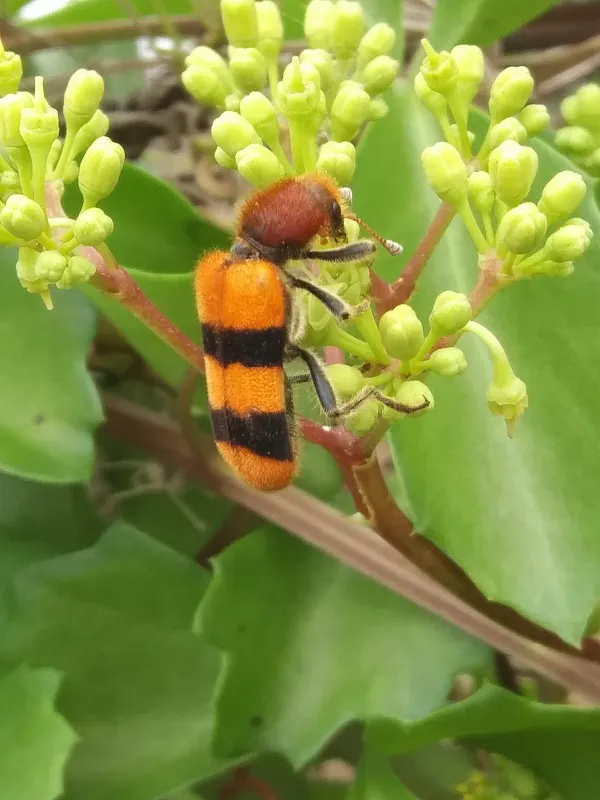
Beetles of the genus Trichodes belong to the family Cleridae, order Coleoptera. Adult specimens are known for their vibrant metallic coloration, often featuring red, blue, or black transverse bands on the elytra.
The body is typically elongated, ranging from 5 to 18 millimeters in length, and is covered with dense setae (hairs). The head and pronotum are usually dark, while the distinct pattern on the wings serves as an aposematic signal against predators.
The larval stage of these beetles has unique biological traits: they often live concealed within the nests of bees or other Hymenoptera, feeding on their larvae or stored provisions.
Accurate species identification often requires a detailed examination of morphological characters, such as antennal structure and genital anatomy, due to the visual similarity between many species.
Entomologists note that adults are highly active during sunny weather, when they fly between flowers to feed on pollen and nectar while searching for mating partners.
What it damages
Adult checkered beetles frequently visit the flowers of various crops, feeding on pollen and nectar, which often results in mechanical damage to the flower's reproductive organs.
The primary economic damage is not limited to the consumption of plant tissues but includes the disruption of pollination processes, which significantly reduces yield in seed-producing crops.
The larval stage, which develops inside the nests of wild bees, indirectly harms agriculture by reducing the population of natural pollinators essential for many flowering plants.
Heavy infestations of these beetles on blooming crops can lead to a noticeable decrease in the aesthetic quality of seeds and damage to the plant's reproductive structures.
In some cases, at high population densities, the beetles may chew on petals and developing fruit buds, negatively impacting the development of fruit-bearing crops.
When it appears
The peak activity period for Trichodes beetles occurs during the spring and summer, coinciding with the peak flowering of major nectar-rich and agricultural crops.
Adults typically emerge in late spring when ambient temperatures rise, facilitating flight and the search for food sources.
Depending on the climatic zone, the lifecycle can span throughout the warm season, with population peaks occurring during June and July.
The beetles usually overwinter as larvae or pupae within the substrate or soil where development took place, protecting them from extreme winter conditions.
Population dynamics are closely correlated with the phenological phases of local wild and cultivated plants that provide the necessary nutrition for the adults.
Signs of infestation
The most reliable sign of the presence of checkered beetles is the observation of brightly colored beetles on flowers during daylight hours.
Visual inspections may reveal damaged stamens, chewed petals, and empty anthers, which are sometimes misidentified as symptoms of fungal diseases or other insect pests.
Discovery of empty brood cells in wild bee nests near agricultural fields can indicate that the larvae of the beetles have completed their life cycle in the area.
Signs of intensive feeding can be identified by the presence of frass or pollen remains on the flowers, indicating that the beetles have been active on the crop for an extended period.
Large aggregations of these beetles often lead to premature wilting of individual flowers and significant pollen shedding, which serves as an indicator of high pest pressure.
Control measures
Pest management for Trichodes focuses on cultural practices that disrupt their development sites and limit their access to susceptible crops.
- Implementing crop rotation to break the life cycle of the beetles.
- Manual collection of adults in small areas during the early morning hours.
- Application of specialized biological insecticides at the economic threshold of damage.
- Removing weeds that serve as alternative food sources for the adults.
Chemical control with broad-spectrum insecticides is discouraged unless absolutely necessary, as it can be highly detrimental to beneficial pollinators and natural enemies.
Integrated Pest Management (IPM) programs rely on monitoring adult population density using light traps and regular field scouting throughout the flowering period.
Taxonomy
- Latin name
- Trichodes
- Order
- Coleoptera (beetles)
- Family
- Cleridae
- EPPO code
- TRCOSP
Discussion
No discussions yet — be the first.