
Transeius montdorensis
Transeius montdorensis
Description
How to identify
Transeius montdorensis is a predatory mite belonging to the family Phytoseiidae, order Mesostigmata. It is a well-known beneficial organism in commercial greenhouse production.
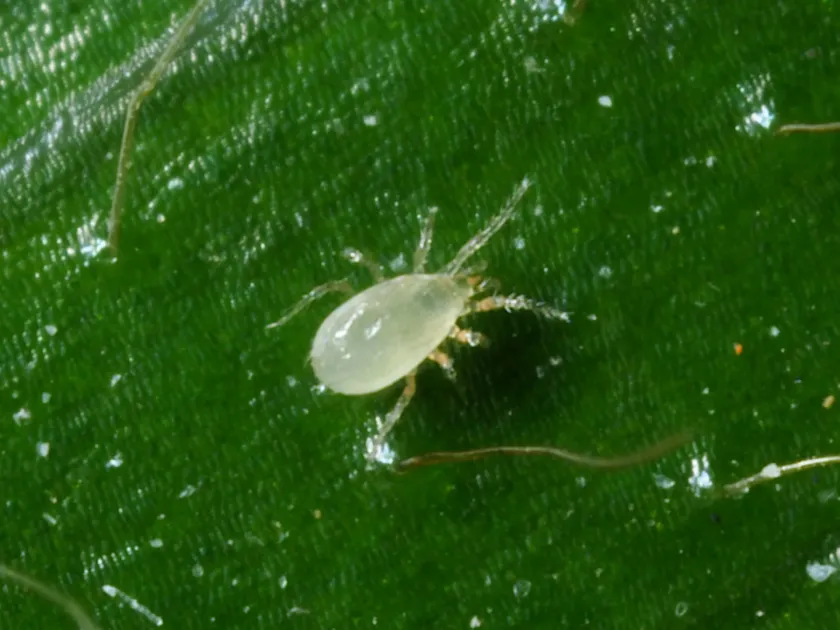
Adult mites are small, measuring approximately 0.3–0.5 mm in length. Their bodies are light-colored, translucent, and highly mobile, allowing them to traverse leaf surfaces in search of prey.
The life cycle of this species comprises egg, larva, protonymph, deutonymph, and adult stages. Development is highly responsive to ambient temperature, typically optimal between 20°C and 30°C.
Unlike some specialized predators, T. montdorensis is a generalist. It can survive on pollen or nectar in the absence of prey, which allows for stable population levels on host plants.
Its ability to establish quickly in a crop makes it a reliable choice for preventive control programs in greenhouse vegetable and ornamental flower production.
What it damages
It is crucial to clarify that Transeius montdorensis is not a plant pest. Instead, it is a highly valued biocontrol agent designed to protect plants from agricultural damage.
The mite effectively feeds on larvae of the western flower thrips (Frankliniella occidentalis) and onion thrips (Thrips tabaci), as well as eggs and larvae of whiteflies (Trialeurodes vaporariorum).
By consuming these damaging insects, the predator prevents the plant tissue necrosis and viral infections commonly associated with thrips infestations, ensuring high-quality yields.
It also exhibits activity against several species of tarsonemid mites and spider mites, providing a multi-layered defense strategy for greenhouse crops like tomatoes, peppers, and roses.
The use of this predator minimizes the necessity for chemical insecticides, thereby protecting the overall health of the crop and reducing residue issues on marketed produce.
Control measures
The application of this biological control agent is usually performed by releasing them into the crop environment. They are typically deployed via controlled-release sachets hung from plants.
For best results, preventive releases are recommended before pest levels become noticeable. This ensures a healthy population of predators is established to immediately counter any incoming pest pressure.
Greenhouse climate management plays a key role in the success of the release. Keeping the humidity levels around 60–70% significantly improves the predator's survival and reproduction rates.
Chemical intervention should be strictly managed. Compatible pesticides must be selected to avoid harming the predator population; always consult the side-effect guidelines before spraying.
Integrated Pest Management (IPM) programs increasingly rely on T. montdorensis as a cornerstone for maintaining sustainable and profitable greenhouse operations throughout the year.
Taxonomy
- Latin name
- Transeius montdorensis
- Order
- Mites
- Family
- Phytoseiidae
- EPPO code
- AMBSMO
Discussion
No discussions yet — be the first.