
Amblydromalus limonicus
Amblydromalus limonicus
Description
How to identify
Amblydromalus limonicus is a predatory mite belonging to the Phytoseiidae family. It is widely recognized not as a pest, but as a highly efficient beneficial organism used in integrated pest management (IPM) programs.
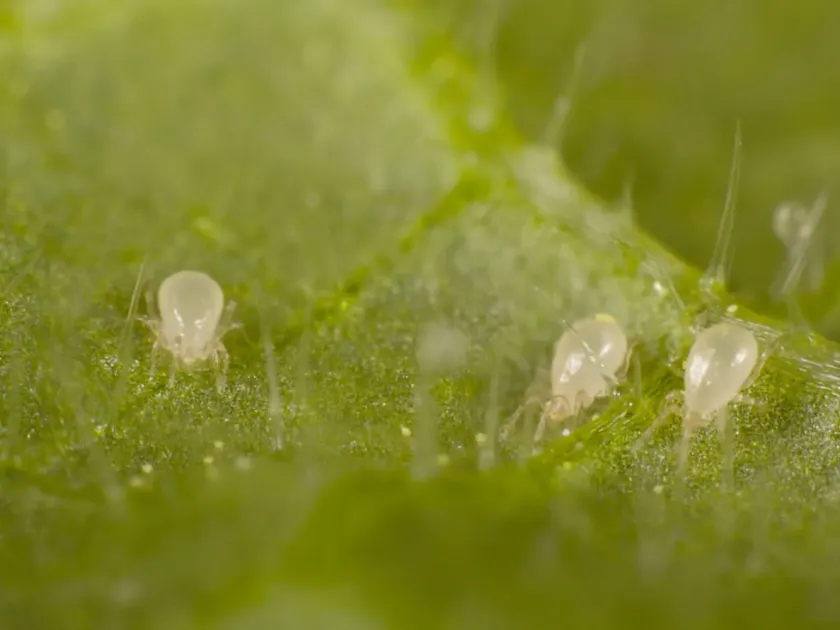
These mites are small, oval-shaped, and usually pale or pinkish in color. They are characterized by their high mobility, which allows them to explore plant surfaces quickly and efficiently to locate potential prey such as thrips larvae or whitefly eggs.
The life cycle of this species consists of an egg, a larva, and two nymphal stages (protonymph and deutonymph). Under favorable greenhouse conditions, typically around 25°C, their population can expand very rapidly, providing effective control.
Unlike herbivorous mites, Amblydromalus limonicus possesses specialized mouthparts adapted for preying on small insects and other mites. It does not feed on plant sap or foliage, making it safe for all greenhouse crops.
In modern agriculture, this species is considered a robust biological control agent due to its ability to survive and thrive on various plants, including cucumbers, peppers, and ornamental flowers.
What it damages
Amblydromalus limonicus does not cause any damage to plants. On the contrary, it is an essential ally for farmers, as it actively reduces the population of major agricultural pests that do cause significant damage.
Its primary prey includes the western flower thrips (Frankliniella occidentalis) and various species of whitefly. By preying on the larval stages of these pests, the mite effectively prevents the spread of viral diseases and physical leaf damage.
By preventing pest infestations, these mites help maintain the health and vigor of the plants. Without their presence, growers would often need to resort to heavy chemical interventions to save their harvests.
The presence of this predator on leaves is a sign of a balanced agroecosystem. It indicates that the grower is successfully implementing biological control methods, which lead to higher quality produce.
Therefore, it is crucial for agronomists to distinguish this beneficial predator from actual spider mites to avoid accidental harm during routine crop monitoring.
When it appears
The activity of Amblydromalus limonicus is highly dependent on temperature and humidity. The optimal temperature range for its development and predation is between 20°C and 30°C.
In greenhouse settings, these mites can remain active throughout the year as long as environmental parameters are controlled and food sources are available. High humidity levels (60% and above) are vital for their optimal performance.
In outdoor environments, their seasonal presence depends on the growing season. They are most effective during the warmer months when thrips and whitefly populations are also naturally increasing.
Strategic release programs are used to establish populations early in the season. This preventative approach ensures that a robust predator population is present before the pest density reaches the economic threshold.
If temperatures drop below 15°C, their metabolic rate decreases, and their effectiveness as a biological control agent drops significantly, necessitating supplemental heat or alternative control measures.
Control measures
Because Amblydromalus limonicus is a beneficial mite, "control" in this context refers to preserving its population and ensuring its effectiveness. Chemical pesticides are the biggest threat to these beneficial insects.
Agro-managers should avoid the use of broad-spectrum insecticides that are known to be toxic to phytoseiid mites. Instead, they should opt for selective products that are compatible with the use of biological control agents.
Regular monitoring using sticky traps and leaf inspections is necessary to determine if the predator-to-prey ratio is sufficient. If the pest population increases, additional releases of the mite may be required.
Maintaining the greenhouse environment is also key. Keeping consistent humidity and temperature levels ensures that the predatory mite remains vigorous and continues to hunt pests effectively.
Best practices for management include:
- Prioritizing biological agents over harsh chemical sprays.
- Using IPM-compatible pesticides when necessary.
- Monitoring pest density regularly.
- Creating favorable microclimates to boost mite activity.
Taxonomy
- Latin name
- Amblydromalus limonicus
- Order
- Mites
- Family
- Phytoseiidae
- EPPO code
- AMBSLI
Discussion
No discussions yet — be the first.