
Amblyseius
Amblyseius
Description
How to identify
Amblyseius is a genus of predatory mites belonging to the Phytoseiidae family. In agricultural practices, they are not considered pests; rather, they are recognized as highly effective agents for the biological control of plant-feeding mites and small insects.
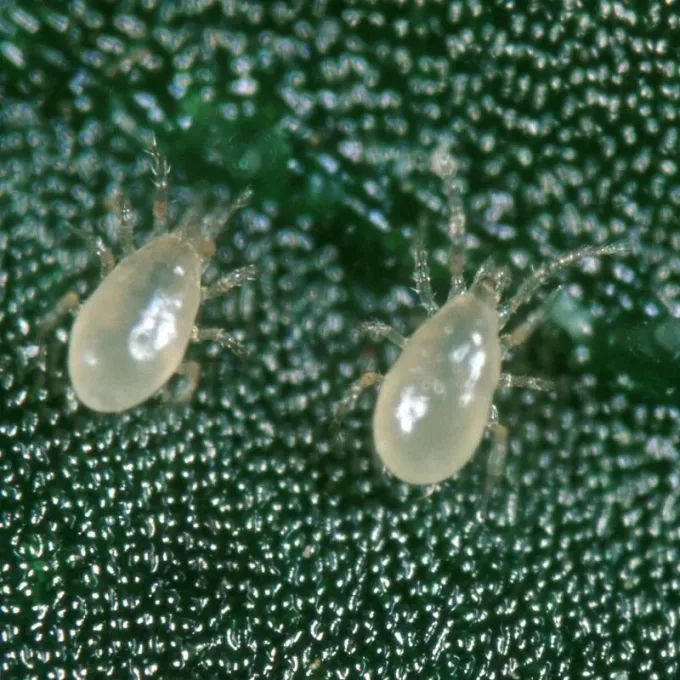
Visually, these mites have a teardrop-shaped body with a color ranging from translucent to light brown, depending on their diet. Measuring only 0.3–0.5 mm in size, they are extremely difficult to observe on foliage without magnification.
The life cycle of Amblyseius includes the egg, larva, two nymphal stages, and the adult phase. Under optimal conditions, the entire life cycle takes about a week, allowing the population to multiply rapidly when pest density increases.
These mites are highly active and continuously crawl across the leaf surface searching for prey. Unlike herbivorous mites, Amblyseius possess predatory instincts and do not cause damage to plant tissues or foliage.
They prefer to reside on the underside of leaves along the veins, where pests typically congregate. They also utilize the micro-topography of the leaf surface to protect their eggs from desiccation and potential predators.
What it damages
It is critical to note that Amblyseius do not damage crops. They are specialized predators that focus on consuming other microscopic organisms that pose a threat to plant health and crop yield.
The primary targets for these mites include spider mites, tarsonemid mites, and young thrips larvae. The predator effectively pierces the prey and consumes its contents, leaving behind only the empty exoskeleton.
In the absence of a primary food source, certain species of Amblyseius can transition to feeding on plant pollen or sap, which allows them to survive until a new pest infestation occurs. This trait makes them highly versatile and resilient.
Utilizing Amblyseius enables growers to significantly reduce or eliminate the need for chemical pesticides during the fruit-bearing season. This practice enhances the environmental safety and quality of produce grown in greenhouses.
In many cases, they are used as a preventative measure. By introducing these predators before pest symptoms appear, agronomists establish a protective barrier that suppresses the development of spider mite colonies before they become problematic.
When it appears
The activity level of these predators is directly influenced by the temperature and humidity within the greenhouse. They are most efficient at temperatures between +20°C and +30°C and a relative humidity exceeding 60–70 percent.
In outdoor environments, their activity is limited to warm weather. However, the primary application for these mites is in greenhouse agriculture, where controlled microclimates allow for year-round biological protection.
If temperatures drop below +15°C, the reproductive rate of the predator slows significantly. During winter, if the greenhouse temperature is not maintained, the population may enter diapause or perish.
Releases of Amblyseius are typically carried out in series throughout the season based on pest monitoring data. It is essential to avoid extreme fluctuations in humidity, as dry air is detrimental to the development of predatory mite eggs.
The release frequency depends on the crop type and the severity of the infestation. On average, to maintain control over pest populations, it is recommended to conduct subsequent releases every 2–4 weeks.
Signs of infestation
The primary indicator of successful Amblyseius activity is a gradual decline in the population of spider mites or thrips on the plants. Since the predator suppresses the pests, you will observe an absence of typical feeding damage on the leaves.
Confirming the presence of the mites themselves usually requires a strong magnifying lens or laboratory equipment. During leaf inspection, you might observe the characteristic active movement of these tiny predators.
Effective biological control is evidenced by a reduction in webbing on the plants and the absence of yellow stippling or spots on leaves, which are typical symptoms of piercing-sucking pest activity.
A sign that Amblyseius has successfully established itself is the presence of all life stages, from eggs to adults, on the foliage. This indicates that the population has begun to reproduce naturally within the crop environment.
If no visual signs of pest damage are present on the plants, it can be concluded that the biological control program is working effectively, and no additional chemical treatments are necessary.
Control measures
While Amblyseius is a tool for pest control, specific measures are needed to support its population. The agronomist’s main responsibility is to create a favorable environment by avoiding the use of pesticides that are toxic to these beneficial mites.
If chemical application is absolutely necessary, growers must select products with low toxicity to beneficial arthropods. Most broad-spectrum insecticides will completely eliminate the Amblyseius population.
It is recommended to use specialized supplementary feeding systems (such as pollen supplements) if pest density is low. This ensures the predators can sustain their population numbers even in the absence of prey.
Maintaining adequate humidity levels in the greenhouse is vital. The use of fogging systems or regular watering helps prevent air desiccation, which is critical for the survival of the predator's eggs and larvae.
When developing a protection strategy, you may combine several types of biocontrol agents to manage different pest species, provided they are compatible with one another within the greenhouse ecosystem.
Taxonomy
- Latin name
- Amblyseius
- Order
- Mites
- Family
- Phytoseiidae
- EPPO code
- AMBSSP
Discussion
No discussions yet — be the first.