
Transeius
Transeius
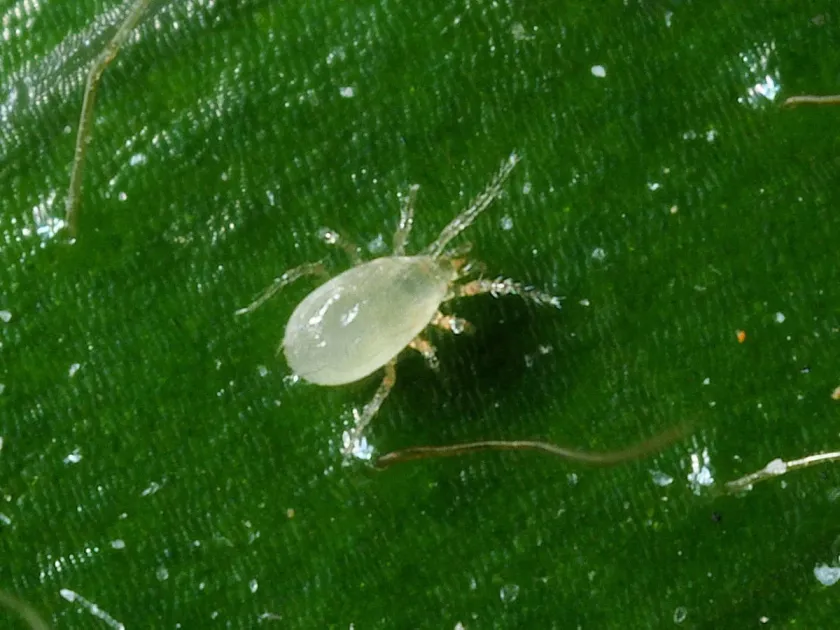
Description
How to identify
The genus Transeius belongs to the Phytoseiidae family within the order Mesostigmata. These are small, predatory mites widely recognized in professional horticulture.
Adult mites typically possess a pear-shaped body, with coloration shifting from translucent white to light brown based on their dietary intake of prey.
Microscopic identification is required to confirm the specific species, as they share morphological characteristics with other members of the phytoseiid family.
They are highly active hunters, frequently patrolling the leaf surface, veins, and underside of leaves to locate their food sources.
Their physical structure allows them to navigate dense plant foliage with ease, making them excellent candidates for biological control programs.
What it damages
It is critical to clarify that Transeius mites are not agricultural pests; they are beneficial organisms and vital tools in integrated pest management.
These mites function as predators, consuming eggs, larvae, and sometimes nymphs of various harmful species, such as thrips.
By effectively suppressing the population of pests, they prevent significant crop loss and reduce the need for synthetic chemical applications.
Their predation habits do not include feeding on plant tissues, meaning they cause zero harm to the host plant itself.
Consequently, they are highly valued in organic and sustainable farming systems for their ability to maintain ecological balance.
When it appears
The development and activity of Transeius are heavily influenced by environmental factors such as ambient temperature and relative humidity.
They thrive and hunt most effectively when temperatures range between 20°C and 28°C, which is typical for modern greenhouse facilities.
Their life cycle consists of the egg, larva, two nymphal stages, and the adult stage, allowing for rapid population growth under ideal conditions.
Multiple generations can occur throughout the growing season, providing continuous protection for crops against infestation cycles.
Stable climate control is essential, as extreme heat or severe dryness can hinder their predatory efficiency and overall survival rate.
Signs of infestation
Monitoring for the presence of Transeius involves observing a decline in the target pest population, particularly in high-risk areas of the greenhouse.
A closer inspection with a magnifying glass often reveals the presence of small, fast-moving mites patrolling the undersides of leaves.
The absence of typical pest damage, such as leaf discoloration or distortion, indicates that the predatory mites are successfully controlling the infestation.
Healthy plant growth and the lack of new pest egg clusters serve as positive indicators of the predator's impact on the ecosystem.
- Reduced thrips larvae counts in monitored crop sectors.
- Observation of predatory mites on leaf surfaces.
- Improvement in overall foliage appearance over time.
Control measures
To ensure the survival of Transeius populations, it is mandatory to avoid the use of broad-spectrum pesticides that are toxic to beneficial mites.
Integrated pest management strategies must prioritize the use of selective pesticides that are compatible with the release of predatory mites.
Maintaining a relative humidity level above 60% provides the necessary conditions for the mite to reproduce and remain active throughout the day.
Supplementary feeding with specialized commercial pollen or food packets can be utilized if natural prey density falls below a critical threshold.
Frequent scouting and consistent population density checks are necessary to determine if additional release of predators is required for effective control.
Taxonomy
- Latin name
- Transeius
- Order
- Mites
- Family
- Phytoseiidae
- EPPO code
- TRNSSP
Discussion
No discussions yet — be the first.