
Tolype
Tolype
Description
How to identify
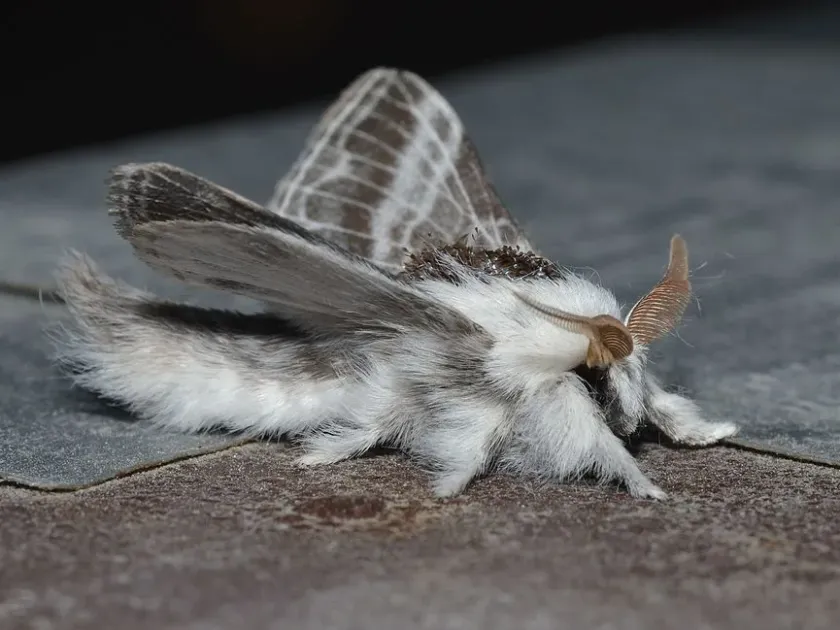
The genus Tolype belongs to the family Lasiocampidae (lappet moths) in the order Lepidoptera. These nocturnal moths have a distinct appearance: their bodies are densely covered in hair, and their wings often feature complex gray or white patterns that mimic tree bark.
The larvae of the Tolype genus are characterized by tufts of hair or specific growths, making them well-camouflaged against tree branches. When at rest, they often press themselves against the substrate, blending perfectly with the texture of the twigs.
Adult moths have a robust physique and a developed proboscis; however, adults are short-lived, focusing primarily on reproduction. The wingspan varies by species but generally ranges from 30 to 50 mm.
Eggs are typically laid by females in clusters on tree bark or in twig forks. The egg mass is often covered with a protective layer of hair from the female's abdomen, shielding the offspring from predators and harsh weather conditions.
The development follows a complete metamorphosis: egg, larva, pupa, and adult. In most cases, the species produces one generation per year, overwintering at the egg stage, which ensures high survival rates during the winter months.
What it damages
The larvae of Tolype are significant phytophagous pests that attack primarily woody trees and shrubs. The main damage occurs during the feeding phase on foliage, leading to crown defoliation.
Host plants include many species within the Rosaceae family (apple, pear, plum trees) and Fagaceae. These pests pose a particular threat to young saplings and ornamental trees in parks and urban landscapes.
During mass outbreaks, caterpillars can skeletonize leaves or consume the entire leaf blade, leaving only the petioles. This significantly reduces the photosynthetic capacity and weakens the overall health of the tree.
Persistent infestation over several seasons results in reduced plant immunity, making the trees susceptible to secondary pests and various fungal pathogens. Crop yields in orchards can drop significantly.
In addition to direct damage from leaf consumption, the pest may attack buds in the early spring. This prevents normal leaf development and fruit set, which negatively impacts the productivity of the orchard.
When it appears
Larval activity begins in spring, synchronized with the budding of host plants. During this period, the caterpillars are most voracious and noticeable as they rapidly accumulate biomass.
The flight of adult moths usually occurs in late summer or early autumn. At this time, the insects mate and lay eggs, which overwinter on the bark or in protected crevices on branches.
Pupation takes place in the summer inside dense cocoons that the larvae spin among branches or in bark fissures. The pupal stage can last several weeks, after which the adults emerge.
Spring temperatures play a critical role in synchronizing the hatching of larvae with plant phenology. Protracted, cold springs may delay population development, reducing the overall level of damage.
Monitoring for the pest should begin immediately after stable daytime temperatures are established. Regular inspections of the underside of leaves and twig crotches help identify early infestation hotspots.
Control measures
Integrated pest management (IPM) strategies for Tolype include agricultural, mechanical, and chemical control methods. Maintaining tree health through timely pruning and bark cleaning is essential.
Mechanical removal of egg masses during winter and early spring is one of the most effective methods for reducing populations in private gardens. Larval nests should be cut out and destroyed before the caterpillars disperse.
- Application of biological pesticides based on Bacillus thuringiensis against early-instar larvae.
- Use of contact-stomach insecticides when damage thresholds are exceeded.
- Encouraging natural enemies such as birds, predatory insects, and parasitoids in the garden.
Chemical treatments should be timed carefully based on the pest's activity cycle. Pesticide application during flowering is strictly discouraged to avoid harming populations of pollinators, such as honey bees.
Systematic monitoring using light traps to track adult moth flights allows for accurate forecasting of treatment windows. This minimizes environmental impact while maintaining high levels of pest suppression.
Taxonomy
- Latin name
- Tolype
- Order
- Lepidoptera (butterflies)
- Family
- Lasiocampidae
- EPPO code
- TLYPSP
Discussion
No discussions yet — be the first.