
Dendrolimus punctatus
Dendrolimus punctatus
Description
How to identify
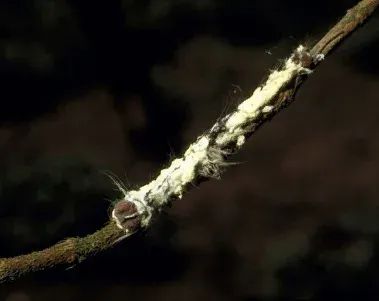
Dendrolimus punctatus, commonly known as the pine caterpillar, is a moth species belonging to the family Lasiocampidae. The adult moth has a wingspan ranging from 45 to 80 mm and typically displays a greyish or brownish coloration with distinct light spots on its forewings.
The larvae are physically robust, growing up to 80 mm in length. They are covered with dense setae (hairs) which are known to cause significant skin irritation in humans upon contact. Their coloration is variable and often includes bright stripes for warning or camouflage.
The life cycle can take between one to two years to complete, depending on environmental temperatures and geographic location. The pupal stage occurs inside firm, oval-shaped cocoons attached to tree twigs or trunks.
Females lay their eggs in clusters, usually on pine needles. The eggs are relatively small and pale, making them difficult to spot unless a thorough inspection of the canopy is conducted.
Adult moths are primarily nocturnal and possess strong flight capabilities, which enables them to spread rapidly throughout forested areas, making the management of outbreaks particularly challenging.
What it damages
The primary food source for Dendrolimus punctatus larvae is the needles of various pine tree species. The species is considered one of the most destructive pests of pine forests due to its ability to completely defoliate large areas.
Trees that suffer from heavy defoliation lose their ability to photosynthesize effectively, leading to significant physiological stress. This makes them highly susceptible to secondary infestation by bark beetles and wood-boring insects.
Mass outbreaks can lead to the total mortality of vast pine plantations within a single or two consecutive growing seasons, causing severe economic damage to the timber industry.
Even in non-lethal cases, the reduction in needle mass significantly stunts tree growth, resulting in poor wood quality and decreased yield, which impacts forest sustainability over the long term.
Repeated defoliation events fundamentally alter the forest structure, preventing natural regeneration and creating fire hazards due to the accumulation of dead wood and dry debris.
Signs of infestation
The most visible sign of infestation is the progressive consumption of pine needles. Larvae typically consume older needles first, eventually moving to younger ones, leaving the branches bare.
Large quantities of larval frass (droppings) on the forest floor beneath the canopy serve as a clear indicator of active feeding activity by a large caterpillar population.
During peak infestation, the sound of thousands of larvae chewing on needles can often be heard in the forest, which is a unique and alarming acoustic sign of a massive pest outbreak.
Detection of cocoons on the stems or within branch crotches is another reliable sign. Furthermore, egg masses found on the foliage confirm the presence of the pest and the potential for a new generation.
Changes in tree color, where the canopy turns yellowish-brown before needles drop, often indicate the terminal stages of heavy larval feeding pressure on the host trees.
Control measures
Biological control methods, particularly the use of Bacillus thuringiensis sprays, are highly recommended for large-scale forest management as they target the caterpillars without harming beneficial organisms.
Chemical intervention involving systemic insecticides may be necessary during severe outbreaks. This is often executed via aerial spraying to ensure coverage over affected mountainous or remote forest regions.
Integrated pest management includes the use of pheromone traps to monitor adult moth activity. This data is essential for timing insecticide applications to the most vulnerable larval stages.
Forest sanitation practices, such as the removal of heavily infested or weakened trees, are crucial to reducing the insect population density and slowing down the rate of spread.
Conservation of natural predators, including parasitic wasps and predatory beetles, is a key strategy for keeping the population in check under normal environmental conditions.
Taxonomy
- Latin name
- Dendrolimus punctatus
- Order
- Lepidoptera (butterflies)
- Family
- Lasiocampidae
- EPPO code
- DENDPU
Discussion
No discussions yet — be the first.