
Siberian moth
Dendrolimus
Description
How to identify
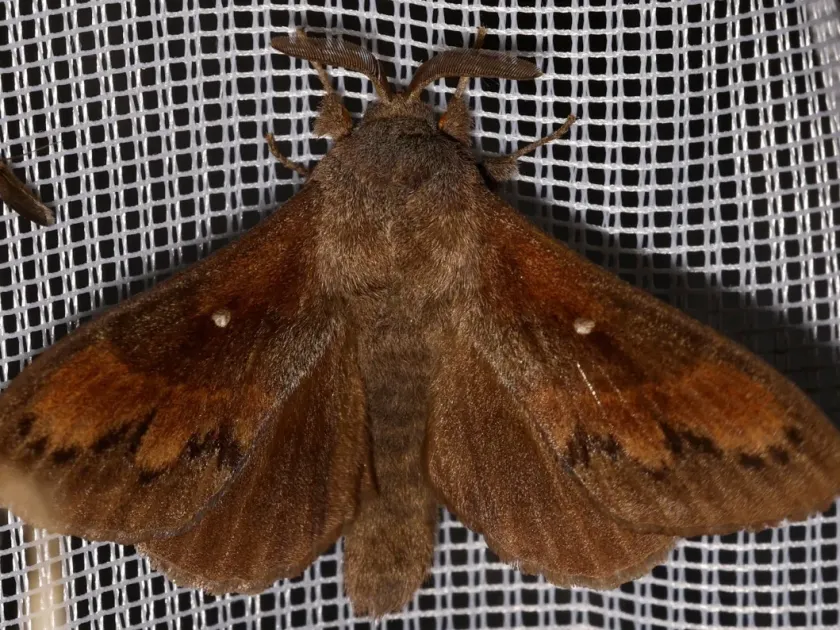
The Siberian moth (Dendrolimus sibiricus) is a serious forest pest belonging to the order Lepidoptera and the family Lasiocampidae. Adult moths are medium to large in size, with wingspans ranging from 40 to 80 mm, featuring camouflage colors that blend perfectly with the bark of coniferous trees.
The larvae, or caterpillars, are the most destructive stage of the life cycle. They are characterized by long, dense hairs that protect them from predators. These larvae can grow up to 70-80 mm in length and exhibit significant color variation, often matching their surroundings.
What it damages
This pest primarily attacks coniferous trees, favoring larch, Siberian cedar, fir, and spruce. During massive outbreaks, the Siberian moth acts as a primary defoliator, consuming needles and causing extensive damage to forest health over large geographical areas.
The damage caused by the larvae leads to severe tree stress and growth reduction. Multiple consecutive years of defoliation result in the total death of the trees, creating high-risk environments for wildfire spread and secondary infestations by wood-boring insects like bark beetles.
When it appears
The life cycle of the Siberian moth is typically multi-annual, ranging from 2 to 3 years depending on the climate. The species overwinters as larvae, mostly hiding in the forest floor litter or under tree bark to survive cold temperatures.
During the spring, larvae emerge to feed on new needle growth. The adult flight period occurs during the summer months, specifically July and August, at which point mating and egg-laying take place on the needles of host trees.
Signs of infestation
The first indicator of an infestation is the premature browning and thinning of the forest canopy caused by larval feeding. Below the trees, significant amounts of larval droppings (frass) accumulate, providing clear evidence of a large caterpillar population in the canopy.
- Partial or total needle loss on branches.
- Presence of silken webs or cocoon remains on bark.
- Increased mortality of weakened trees.
- Visible larval activity during evening inspections.
During peak outbreak years, the sound of larval feeding is often audible in the forest, and the defoliated trees create a distinctive, sparse appearance that can be detected via satellite or aerial monitoring.
Control measures
Management of the Siberian moth involves integrated pest management strategies. Aerial spraying of biological insecticides, such as Bacillus thuringiensis, is the primary method used to suppress outbreak populations while minimizing environmental impact.
Forest managers use pheromone traps for early detection and population modeling. By analyzing the data collected from these traps and monitoring the density of overwintering larvae in the litter, authorities can strategically plan suppression efforts to prevent further ecological loss.
Taxonomy
- Latin name
- Dendrolimus
- Order
- Lepidoptera (butterflies)
- Family
- Lasiocampidae
- EPPO code
- DENDSP
Discussion
No discussions yet — be the first.