
Hou pine caterpillar
Dendrolimus houi
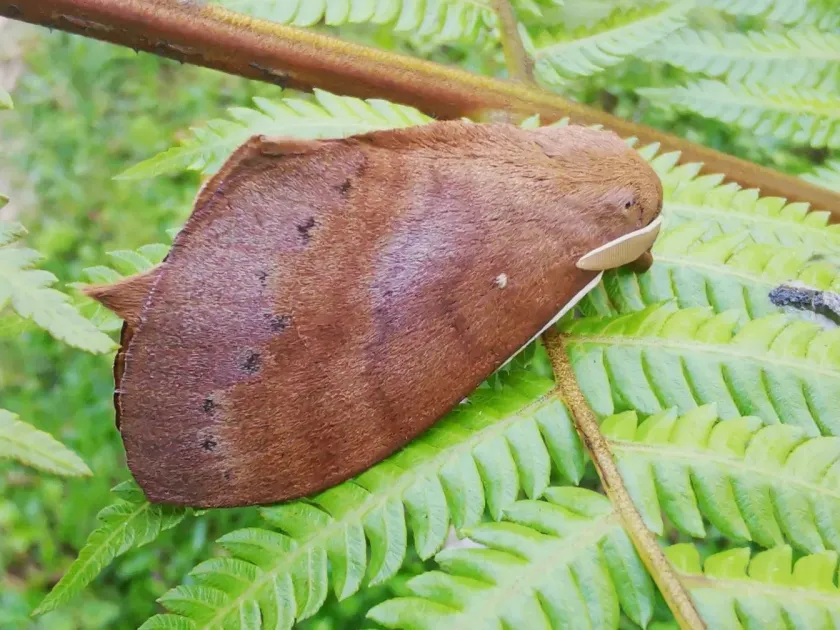
Description
How to identify
Dendrolimus houi is a member of the Lasiocampidae family, commonly known as the Hou pine caterpillar. These moths are characterized by a significant wingspan, often ranging from 70 to 90 mm, with cryptic coloration that mimics tree bark.
The larvae, or caterpillars, go through several instars, feeding extensively on needles. They are typically hairy, and their appearance can vary depending on the stage of development, often featuring patterns that blend with coniferous branches.
Identification often relies on observing the adult moths, which are nocturnal. Entomologists use light traps or pheromone baits to confirm the presence of this species in forestry areas, as they are often difficult to spot during the day.
Eggs are laid in clusters, often deposited on the needles or bark. These egg masses are a key target for early monitoring, as finding them allows for preemptive management before the larvae hatch and begin feeding.
Pupation occurs within silk cocoons, which are strategically placed in the crown of the tree or hidden within the forest floor litter, providing significant protection from environmental stressors and predators.
What it damages
This pest primarily targets pine trees (genus Pinus), causing severe defoliation. In regions where it is prevalent, it is considered a major threat to the health and productivity of coniferous forests.
As larvae reach later instars, their appetite increases dramatically. A massive infestation can strip a tree of its needles entirely, leading to a total loss of photosynthetic capacity and eventual mortality.
Stressed trees subjected to defoliation are highly susceptible to secondary attacks from bark beetles and wood-boring insects. This compounding effect accelerates the destruction of the forest stand.
Economic damage is substantial, encompassing the loss of timber value, costs related to forest sanitation and salvage logging, and the significant long-term loss of reforestation investments.
Beyond individual trees, the pest affects ecosystem services, including carbon sequestration and soil stabilization, particularly when large forest patches are devastated during an outbreak.
When it appears
The life cycle of Dendrolimus houi is driven by seasonal climate patterns. Adult flight typically occurs during the warmer summer months, facilitating mating and the deposition of eggs for the next generation.
Larvae commonly overwinter in various stages, often hibernating within the forest floor litter or under bark scales to survive cold temperatures. Activity resumes as temperatures rise in the spring.
Feeding peaks in spring and early summer, coinciding with the rapid growth of new pine needles. This is the critical window for forest managers to conduct surveys and implement control strategies.
Pupation generally finishes by mid-summer, leading to the emergence of adults. The exact timing and speed of these transitions are highly dependent on local weather conditions and thermal accumulation.
Depending on the latitude and climate, the species may be univoltine (one generation per year). However, in warmer regions, the potential for faster development cycles can lead to more frequent population spikes.
Signs of infestation
The first indicator of an infestation is often the thinning of the forest canopy, specifically in the upper crowns. Needles may appear jagged or partially eaten, reflecting the feeding patterns of the larvae.
The presence of large amounts of caterpillar frass (excrement) on the ground underneath the trees is a tell-tale sign that an infestation is currently active and occurring in the crown above.
Dead or dying branches that turn a brownish hue indicate that the tree is severely stressed. If the defoliation is widespread, the entire crown may change color, signaling a critical health status.
Increased activity of birds and predatory insects within a specific pine stand can indicate a high density of caterpillars, providing a biological hint to foresters before other symptoms become obvious.
Finding cocoons stuck to bark or branches confirms that the larvae have completed their feeding stage and are moving into the pupal phase, indicating that current year damage has likely peaked.
Control measures
Biological control is the most sustainable approach, utilizing sprays containing Bacillus thuringiensis. These bacterial formulations are highly effective against the larvae while maintaining ecological safety.
Aerial application of approved insecticides may be required during catastrophic outbreaks to protect high-value timber stands. This method provides rapid suppression of the larval population.
Forest management practices such as thinning and removing infested debris help to interrupt the life cycle and reduce the available habitat for the next generation of pests.
Pheromone monitoring is an essential tool in integrated pest management (IPM). It allows managers to predict outbreak trends and time their interventions for maximum efficiency.
Encouraging the natural presence of beneficial insects and birds in the forest is a key component of long-term health, as they act as a natural check against small-scale population increases.
Taxonomy
- Latin name
- Dendrolimus houi
- Order
- Lepidoptera (butterflies)
- Family
- Lasiocampidae
- EPPO code
- DENDHO
Discussion
No discussions yet — be the first.