
Tench
Tinca tinca
Description
How to identify
The tench (Tinca tinca) is a freshwater fish belonging to the Cyprinidae family, commonly found in slow-moving or stagnant water bodies.
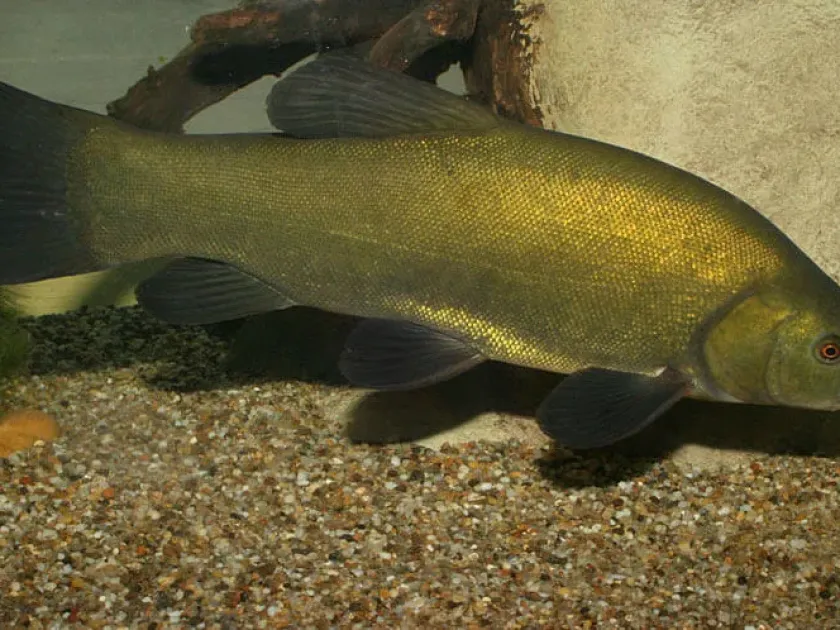
This species is characterized by its stocky body, small scales deeply embedded in a thick, mucus-coated skin, which helps it thrive in muddy habitats.
The color of the tench ranges from deep olive-green to dark brown on the back, with golden flanks and yellowish bellies, featuring small, reddish-orange eyes.
In aquaculture environments, it is often viewed as a nuisance or secondary species due to its ability to disturb the substrate and compete for resources.
Tench are remarkably resilient and can inhabit irrigation canals and drainage systems, where their behavior often leads to significant maintenance challenges.
What it damages
The primary concern regarding the tench in aquaculture is its role as a resource competitor, as it feeds on the same benthic organisms as target fish species.
By rooting through the bottom mud in search of food, tench create excessive turbidity, which hinders the growth of submerged aquatic plants.
In rice paddies or specialized aquatic nurseries, tench can physically damage the root systems of young seedlings, leading to reduced yield and plant development.
Their intense foraging activity increases the operating costs of fish farms by depleting added supplemental feed meant for primary commercial species.
Additionally, they can contribute to the clogging of fine-mesh water intakes, causing water flow issues in hydraulic systems through the accumulation of mucus and sediment.
When it appears
Tench activity is highly temperature-dependent, with feeding rates increasing significantly once water temperatures exceed 15-18 degrees Celsius in the spring.
The spawning season, occurring between May and June, is a critical time when the fish move to shallow areas and actively disrupt the bottom vegetation.
During the peak heat of summer, tench remain in the deeper, muddy layers of the pond, where they continually stir up sediments and affect water quality.
As water temperatures drop in the autumn, their foraging intensity decreases, yet they remain active enough to disturb pond floors during preparation phases.
Winter dormancy involves the tench burying themselves deep in the mud, which marks the period of least activity for the species in agricultural water systems.
Signs of infestation
The presence of tench in a pond or irrigation system is often indicated by persistent water turbidity that cannot be attributed to weather or algae blooms.
- Circular digging marks and craters on the pond bottom.
- Upheaval of aquatic vegetation and floating plant debris.
- Reduced performance and growth rates of target commercial fish species.
- Accumulation of thick mucus on filter screens and water intake grates.
An indirect sign is the noticeable decline in natural benthic fauna, which is a key food source for juvenile fish in managed water bodies.
Visual identification is occasionally possible during morning or evening hours when the fish surface, or through consistent findings during periodic monitoring.
Control measures
Effective management of tench populations relies on a combination of physical barriers and integrated aquaculture practices to minimize their impact.
The installation of fine-mesh screening at all water inlets and irrigation points is essential to prevent the entry of this species into controlled systems.
Complete drainage and drying of pond bottoms during the autumn months is the most effective method for eradicating existing tench populations from a site.
Biological control, such as stocking predator species like pike, can naturally manage tench numbers and keep their population below harmful thresholds.
Proper feed management, including the use of targeted feeding trays, helps ensure that food resources are consumed by the target species rather than opportunistic foragers like tench.
Taxonomy
- Latin name
- Tinca tinca
- Family
- Cyprinidae
- EPPO code
- TNCATI
Discussion
No discussions yet — be the first.