
Tench
Tinca
Description
How to identify
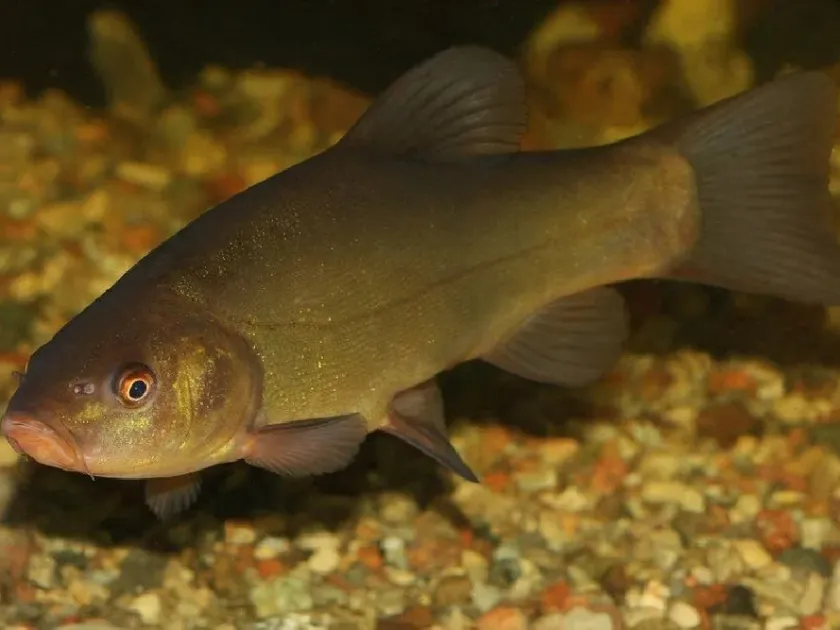
The tench (Tinca tinca) is a freshwater fish belonging to the order Cypriniformes and the family Cyprinidae. It is characterized by a stocky body covered with small scales and a thick layer of mucus, which serves as a protective barrier.
The fish is easily recognized by its rounded fins and olive-green coloration with a golden sheen. Its eyes are small, featuring a distinct orange-red iris.
Adult tench can reach a weight of up to 2-3 kg, although medium-sized specimens are more commonly found in managed ponds. They prefer stagnant or slow-moving waters with muddy bottoms, which dictates their habitat.
This species is exceptionally tolerant of low oxygen levels, allowing it to survive in conditions where many other commercial fish species perish. This trait makes it an invasive or "nuisance" element in intensive aquaculture.
Spawning occurs during the summer months when water temperatures reach 18–20 degrees Celsius. The high fecundity of females leads to rapid colonization of water bodies if not properly managed.
What it damages
The primary damage caused by tench in agricultural settings relates to its presence in rice paddies and specialized carp ponds.
In rice paddies, tench can damage young rice seedlings by digging up their root systems while searching for benthic organisms in the mud. This leads to sparse crop stands and reduced yields.
In aquaculture ponds, tench acts as a food competitor for high-value species like common carp. It actively consumes feed supplies intended for the growth of the main stock.
The feeding behavior of tench contributes to increased water turbidity, which negatively impacts water transparency and inhibits the photosynthesis of essential aquatic plants.
Due to its high adaptability, the tench population often dominates pond ecosystems, outcompeting more sensitive species and complicating selective breeding programs.
When it appears
Tench activity begins in early spring as water temperatures in the shallows rise. During this period, the fish begins active feeding to recover from winter.
Peak activity occurs throughout the summer, particularly in June and July, coinciding with the spawning period and increased metabolic demands.
In autumn, as water temperatures drop below 10–12 degrees Celsius, tench reduce their activity levels and prepare for hibernation by burying themselves in the bottom mud.
During the winter, the fish enters a state of dormancy, staying inactive at the bottom, which halts direct damage to crops until the following spring.
In warmer climate regions, the active period is extended, necessitating continuous population control throughout the rice growing season.
Signs of infestation
Presence of tench in rice paddies can be identified by water clouding in the morning hours, indicating fish activity near the plant roots.
Visual inspection of the crops may reveal damaged or exposed rice roots caused by the fish digging through the substrate.
In managed ponds, signs of an excessive tench population include a reduced growth rate of the main carp stock despite optimal feeding conditions.
A characteristic sign is the formation of furrows or tracks on the pond bottom caused by the fish searching for larvae, worms, and mollusks.
During test netting, an increasing proportion of small and medium-sized tench serves as an indicator of an imbalance in the pond's fish community structure.
Control measures
The main control method involves the installation of fish barriers and fine-mesh screens on inlet and outlet channels to prevent the migration of young fish.
Complete draining of ponds and paddies during the off-season is highly recommended, as it allows for the eradication of the population through drying or freezing of the bottom mud.
Biological control strategies include stocking predatory fish such as pike or zander, which help regulate the tench population by preying on the juveniles.
Regular sanitary fishing is essential to reduce the number of sexually mature individuals and prevent uncontrolled reproduction within the system.
- Mechanical cleaning of bottom sediments.
- Fine-mesh filtration at water inlets.
- Selective culling of the tench population.
Taxonomy
- Latin name
- Tinca
- Family
- Cyprinidae
- EPPO code
- TNCASP
Discussion
No discussions yet — be the first.