
Thyanta custator
Thyanta custator
Description
How to identify
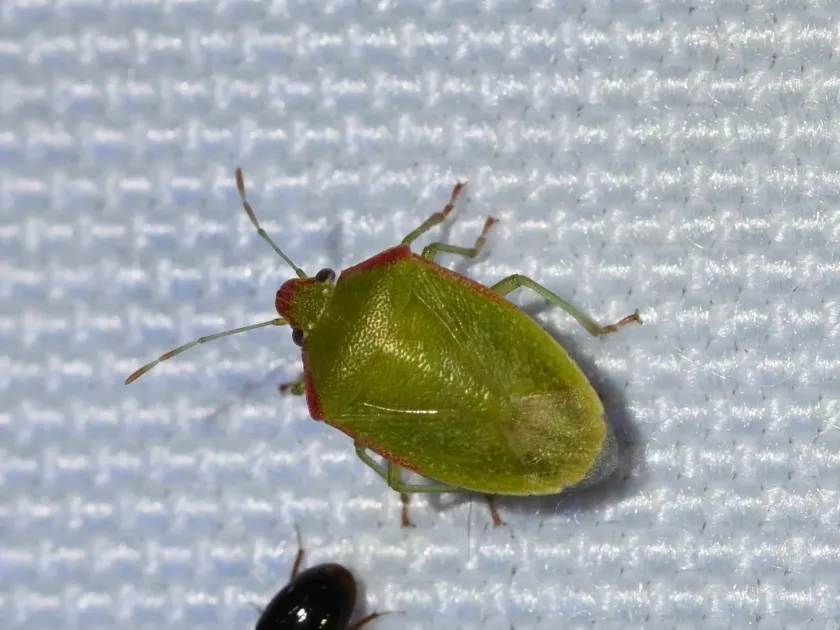
The green stink bug, Thyanta custator, belongs to the order Hemiptera and the family Pentatomidae. These insects are easily recognized by their shield-shaped bodies and vibrant green or yellowish-green coloration, which acts as effective camouflage in vegetation.
Adult specimens typically range from 8 to 12 mm in length. A key identification feature is the presence of sharp angles or spikes on the pronotum, the dorsal plate covering the thorax, which differentiates this species from other similar stink bugs.
Nymphs undergo several developmental stages (instars) before reaching adulthood. Throughout these stages, their appearance changes, often showing different color patterns and lacking the fully developed wings present on mature insects.
Their mouthparts consist of a needle-like rostrum adapted for piercing plant tissues. This structure allows them to extract sap and nutrients efficiently, which is the primary source of their feeding behavior.
Like other members of the Pentatomidae family, these bugs possess scent glands that release a pungent odor when the insect is disturbed or threatened, serving as a defense mechanism against predators.
What it damages
Thyanta custator is a polyphagous pest, meaning it feeds on a wide variety of plants. It is particularly known for causing economic damage to legumes, especially soybeans, as well as various cereal crops and vegetables.
The damage is caused by both adults and nymphs feeding on vegetative and reproductive parts of the plant. They prefer young pods and developing seeds, which are highly vulnerable to their piercing-sucking mouthparts.
As they feed, they inject digestive enzymes into the plant tissue, which causes the breakdown of cell structures. This results in the abortion of pods, stunted seed development, and general weakening of the plant.
In soybeans, seeds damaged by the green stink bug may appear shriveled, discolored, or deformed. This significantly lowers both the yield volume and the quality of the harvest, making it a critical concern for farmers.
Under heavy infestation, the cumulative impact of these feedings can lead to substantial yield losses across large fields, particularly if the infestation occurs during the critical grain-filling period.
When it appears
The life cycle of Thyanta custator is driven by seasonal temperatures. They typically overwinter as adults, finding shelter in forest litter, dried crop residues, or other protected areas near fields.
When spring temperatures rise, the bugs emerge from hibernation and begin feeding on wild host plants. As agricultural crops begin to develop, the bugs migrate into these fields to feed and reproduce.
Depending on the latitude and local climate, the species can complete one or more generations per growing season. Their population levels often peak in mid-to-late summer when the crops are most nutritionally favorable.
Development from egg to adult is rapid, especially during warm, dry weather conditions, which favor the proliferation of the population. This allows them to quickly establish high density in crop fields.
As autumn approaches and temperatures drop, adults begin to seek overwintering sites, marking the end of the active feeding phase for the year.
Signs of infestation
The most noticeable sign of damage is the appearance of small, dark, puncture-like spots on the surface of pods or fruits. These spots are often associated with the site where the bug pierced the tissue.
Inside the pods, damaged seeds will show signs of necrosis, discoloration, or malformation. In some cases, the seeds may not develop at all, leading to empty or underfilled pods.
Observers may see the insects themselves, often hiding on the undersides of leaves or congregating on reproductive parts of the plant. Egg masses are frequently laid in neat, orderly rows on leaves.
Plants heavily infested by this pest may show symptoms of physiological stress, including leaf yellowing and premature dropping of pods or flowers due to the nutrient drain caused by the insects.
A strong, characteristic odor near the crop canopy is a definitive sign of the presence of stink bugs, allowing scouts to detect their activity even before extensive damage becomes visible.
Control measures
Effective management relies on regular field scouting to monitor population density. Using sweep nets is the standard method for determining if the infestation has reached an economic threshold.
Cultural control includes effective weed management, particularly of wild hosts around field borders, which helps reduce the reservoir population before they move onto the main crop.
- Apply insecticides, such as pyrethroids, only when scouting reports indicate a threshold has been reached.
- Practice crop rotation to interrupt the bug's life cycle and reduce overwintering success.
- Preserve natural enemies, including parasitoid wasps, which prey on stink bug eggs.
- Implement early planting strategies to ensure the crop reaches maturity before peak stink bug populations occur.
Integrated Pest Management (IPM) programs should be utilized to balance chemical controls with biological and cultural practices, ensuring long-term field health and sustainable yields.
Taxonomy
- Latin name
- Thyanta custator
- Order
- Hemiptera (bugs, aphids, leafhoppers)
- Family
- Pentatomidae
- EPPO code
- THYNCU
Discussion
No discussions yet — be the first.