
Thosea vetusta
Thosea vetusta
Description
How to identify
Thosea vetusta belongs to the Limacodidae family (slug moths) within the order Lepidoptera. This species is named after its larvae, which resemble small slugs rather than typical caterpillars.
The adult moth has a wingspan of approximately 30–40 mm. Its wings are typically colored in shades of brown and gray, providing excellent camouflage against tree bark during the day.
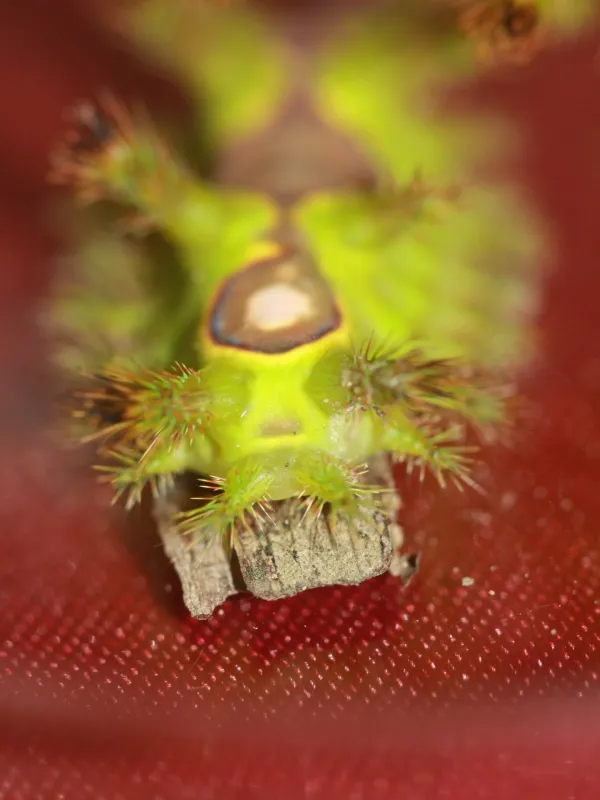
The larvae are distinctively flattened and broad, lacking visible prolegs, which contributes to their slug-like appearance. Their skin is covered with short, stiff setae that can be irritating to the touch.
Larval coloration is often vivid, featuring contrasting stripes or spots that act as a warning signal to predators. They lead a cryptic life, predominantly residing on the undersides of leaves.
Pupation occurs within dense, oval-shaped cocoons that the larvae attach securely to branches or stems, ensuring protection throughout the pupal phase and overwintering periods.
What it damages
The primary damage is caused by the larvae, which are voracious leaf-feeders. They impact a wide variety of agricultural crops, including both woody perennials and shrub-like plants.
Significant economic losses are recorded in tea and coffee plantations, where Thosea vetusta infestations can lead to rapid defoliation and skeletonization of the plant canopy.
In addition to beverage crops, the pest affects fruit trees such as mango and citrus, as well as several ornamental shrubs, causing stunted growth and decreased vigor in affected plants.
High population densities lead to the consumption of both mature and young leaves, causing severe physiological stress, impaired photosynthetic ability, and long-term yield reduction.
The weakening of the plant's structural integrity and its reduced ability to recover from herbivory often leave the plantation susceptible to secondary diseases and environmental stress.
When it appears
The life cycle of Thosea vetusta is closely tied to tropical and subtropical climates, allowing for continuous development throughout the year where environmental conditions are stable.
Peak larval activity generally aligns with periods of high humidity and rainfall, which promote lush vegetative growth in host plants and provide an abundant food source for the population.
Moths are nocturnal, with mating and egg-laying occurring primarily at night, often on the undersides of foliage to protect the eggs from predators and environmental extremes.
Under optimal conditions, the life cycle from egg to adult takes approximately 6 to 8 weeks, allowing for multiple overlapping generations within a single calendar year.
The overwintering or dormant phase usually manifests as cocoons attached to woody tissues, allowing the insect to survive cooler or drier periods before emerging as adults.
Signs of infestation
The most immediate sign of infestation is the skeletonization of leaves, where larvae consume the leaf lamina while leaving the central and lateral veins intact.
Careful examination of the underside of leaves will reveal the larvae themselves; their cryptic coloration and static nature often allow them to blend into the leaf surface seamlessly.
Small, dark, pellet-like frass (excrement) found on the upper surface of lower leaves or on the ground beneath the canopy indicates the presence of active feeding larvae.
In cases of severe outbreaks, a distinct rustling or crunching sound can be heard at night, caused by the simultaneous feeding of large numbers of larvae throughout the canopy.
The discovery of hard, brownish-gray oval cocoons firmly attached to twigs and branches is a definitive sign of successful larval development and indicates potential for future infestation.
Control measures
Integrated Pest Management (IPM) strategies include the application of biological insecticides such as Bacillus thuringiensis, which target larvae effectively while sparing beneficial insects.
Manual removal of larvae and pruning of infested twigs containing cocoons are viable and effective strategies for small-scale operations or organic agricultural plots.
The use of pheromone-based monitoring traps helps growers track adult moth flights, allowing for precise timing of interventions to minimize the need for broad-spectrum chemical sprays.
Encouraging natural biological control agents, including parasitic wasps and predatory bugs, is crucial for maintaining long-term population suppression of Thosea vetusta.
- Use systemic insecticides only as a last resort during high-density outbreaks.
- Ensure proper plant nutrition to boost host defense mechanisms.
- Conduct regular nocturnal monitoring sessions with flashlights to detect early-stage populations.
Taxonomy
- Latin name
- Thosea vetusta
- Order
- Lepidoptera (butterflies)
- Family
- Limacodidae
- EPPO code
- THOSVE
Discussion
No discussions yet — be the first.