
Acharia fusca
Acharia fusca
Description
How to identify
Acharia fusca belongs to the Limacodidae family, commonly known as slug caterpillars. The adult is a small moth with a wingspan of approximately 25–30 mm, characterized by its brownish coloration.
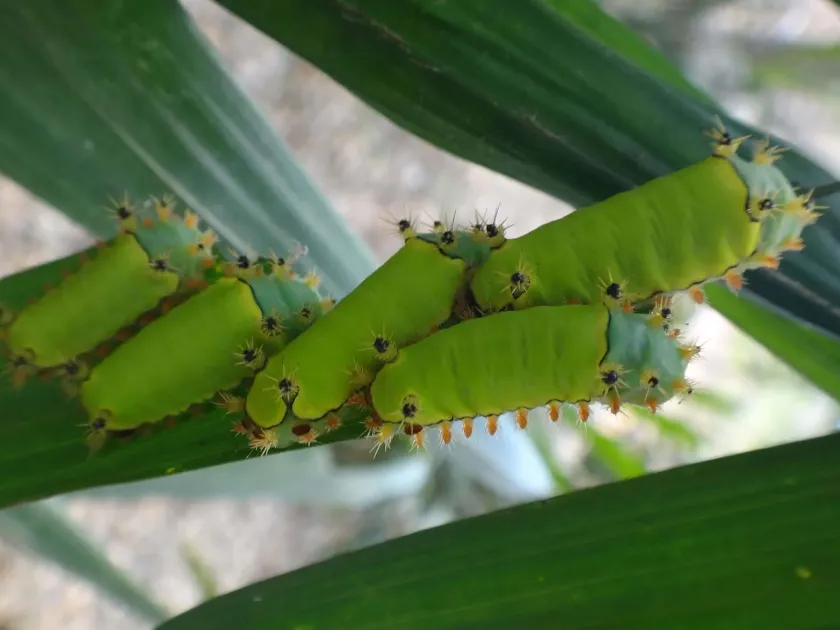
The larvae, or caterpillars, are notable for their slug-like appearance, lacking distinct thoracic legs and moving on suction-like structures. Their body is covered with urticating (stinging) hairs that cause irritation upon contact.
Coloration of the larvae can range from yellowish-green to brown, often featuring warning spots or stripes. They spin hard, spherical cocoons that are securely attached to twigs or the bark of host plants.
The life cycle involves complete metamorphosis: egg, larva, pupa, and adult. Depending on local climatic conditions, the species may produce one or two generations per year.
Overwintering typically occurs as a late-stage larva or pupa within the cocoon, which is often hidden in crevices of the bark or among plant debris on the soil surface.
What it damages
This pest affects a wide range of woody plants and shrubs, including fruit-bearing trees such as apple, pear, and plum. It has also been documented on various broad-leaved forest trees.
The larvae are voracious leaf-feeders. They skeletonize the leaves by consuming the tissue while leaving the larger veins intact, which drastically impairs the plant's photosynthetic ability.
Heavy infestations lead to significant defoliation, which weakens the trees, reduces their tolerance to winter frost, and leads to a decline in fruit yield for the subsequent season.
Young trees in nurseries are particularly vulnerable. Severe feeding damage can stunt their growth and may result in the death of the tree if combined with other environmental stressors.
The presence of stinging hairs on the larvae complicates orchard management, as workers must exercise caution to avoid painful skin contact during routine maintenance or pruning.
When it appears
The adult moth flight generally occurs during the summer months, from June through August, which is when mating and oviposition take place.
Larval activity peaks between July and early autumn. This is the period when significant damage to the plant foliage is observed and monitoring efforts should be intensified.
Development is highly dependent on warm temperatures. Prolonged periods of cold, rainy weather can naturally suppress populations by promoting fungal diseases in the larvae.
Pupation occurs by late summer or early autumn, with larvae entering a dormant state to survive the winter months until the next season begins.
Monitoring for adults can be effectively conducted using light traps or pheromone traps during the evening hours when the moths are most active.
Signs of infestation
The earliest sign of an Acharia fusca infestation is the appearance of irregular holes in the leaves that quickly expand, leaving behind a skeletal web of veins.
Caterpillars are often difficult to spot due to their camouflage, but a close inspection of the underside of leaves or the base of new shoots usually reveals their presence.
The accumulation of small, dark granular frass (excrement) on the ground beneath the tree or on lower leaves is a clear indicator of active feeding occurring in the canopy.
Hard, rounded cocoons attached to twigs or bark are visible during the dormant season, serving as a sign of where the pest spent its winter.
Premature yellowing and falling of leaves, resulting in visible thin patches in the canopy, are indicative of substantial damage from a large population.
Control measures
Cultural control involves removing and destroying infested branches or collecting cocoons during winter pruning to significantly reduce the overwintering population.
Biological control methods, such as the application of Bacillus thuringiensis, are highly effective against young larvae while remaining environmentally friendly.
If population levels exceed economic thresholds, contact or systemic insecticides approved for horticultural use should be applied during the larval feeding stage.
Safety is a priority when controlling this pest; personnel should wear protective gear, including gloves and long-sleeved clothing, to prevent stings from the larvae.
- Encouraging natural predators such as birds and parasitic wasps in the orchard.
- Using pheromone traps for precise timing of chemical applications.
- Maintaining healthy tree vigor to help them withstand incidental feeding.
Taxonomy
- Latin name
- Acharia fusca
- Order
- Lepidoptera (butterflies)
- Family
- Limacodidae
- EPPO code
- SIBIFU
Discussion
No discussions yet — be the first.