
Cup moth
Apoda
Description
How to identify
The cup moth (Apoda limacodes) belongs to the family Limacodidae, commonly known as slug moths, within the order Lepidoptera. Adults are small moths with a wingspan of up to 30 mm, characterized by their reddish-brown or ochre coloration.
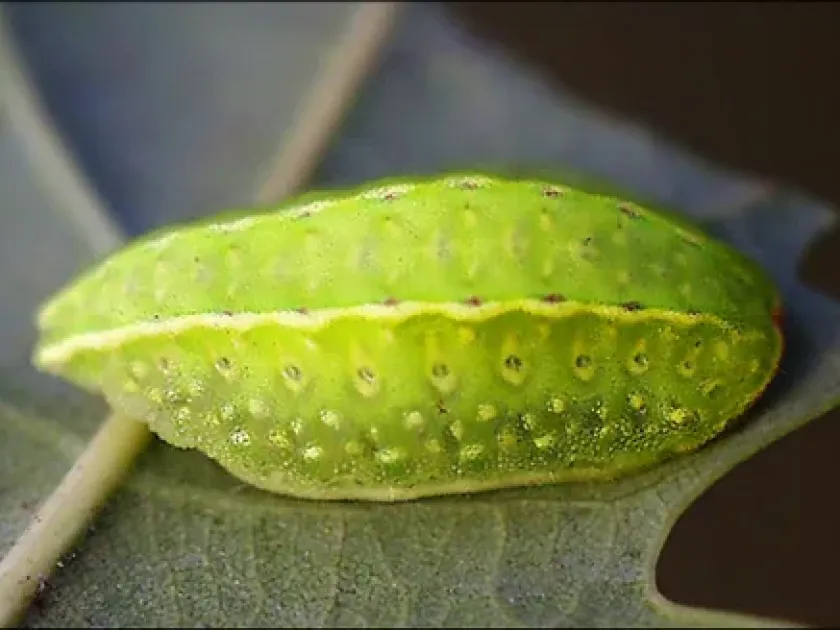
The larva is the most distinctive stage, often confused with a slug because of its flattened, legless, and oval-shaped body. This unique appearance is where the common name and the family name originate.
The caterpillar is bright green with reddish or yellowish markings on its back, which act as highly effective camouflage against the leaves of host plants. The surface of the body is smooth, lacking the long hairs typical of many other moth larvae.
The life cycle includes the egg, larva, pupa, and imago stages. They typically overwinter as caterpillars in dense, often well-hidden cocoons attached to bark or within the forest floor litter.
Moths emerge in spring or early summer. After mating, females lay eggs on the undersides of leaves, starting the next generation of larvae that feed throughout the growing season.
What it damages
Cup moth larvae primarily infest various deciduous trees and shrubs, including oak, beech, apple, pear, and hazel. Their feeding habits can cause localized, yet significant, damage to foliage.
The caterpillars possess powerful mouthparts and feed on the leaf parenchyma. They typically skeletonize the leaves, leaving behind the veins while consuming the soft tissue in between.
Heavy infestations can lead to substantial defoliation of the host plant, which reduces the tree's overall photosynthetic capacity and weakens its ability to produce fruit or store nutrients for winter.
The damage caused by these caterpillars creates entry points for various bacterial and fungal pathogens, potentially leading to secondary infections in the wood or leaves.
Young trees and saplings are particularly vulnerable; chronic defoliation can lead to stunted growth, reduced vigor, and increased sensitivity to environmental stresses like drought or frost.
Signs of infestation
The primary symptom of an infestation is the appearance of lace-like leaves, where only the vascular structure (veins) remains while the green tissue has been consumed by the larvae.
Careful inspection of the undersides of the leaves often reveals the caterpillars resting motionless. Because of their slug-like appearance, they are frequently overlooked or mistaken for other natural leaf outgrowths.
Early leaf drop in the middle of summer is another clear indicator of heavy infestation. When foliage begins to brown and fall prematurely in areas with high larval density, immediate action is often required.
In autumn, small, dense, and well-camouflaged cocoons may be found in the crevices of tree bark, indicating the locations where the next generation is preparing to overwinter.
Increased adult moth activity near the crown of trees during dusk or night hours serves as an early warning sign that a new generation of larvae will soon appear.
Control measures
Effective management of the cup moth involves an integrated pest management (IPM) approach that combines mechanical, chemical, and biological control methods.
Manual removal of caterpillars from foliage and cleaning tree trunks of loose, dead bark during the winter months can significantly reduce the overwintering population.
Chemical control should be applied using targeted insecticides during the early stages of larval development, specifically when the young caterpillars are most active on the leaf surfaces.
Biological control, including the protection and encouragement of natural predators like birds and parasitic wasps, is highly effective in keeping populations below economic threshold levels.
Maintaining optimal tree health through regular fertilization and irrigation ensures that the trees are more resilient and capable of recovering quickly from minor larval damage.
Taxonomy
- Latin name
- Apoda
- Order
- Lepidoptera (butterflies)
- Family
- Limacodidae
- EPPO code
- AQODSP
Discussion
No discussions yet — be the first.