
Acharia bonaerensis
Acharia bonaerensis
Description
How to identify
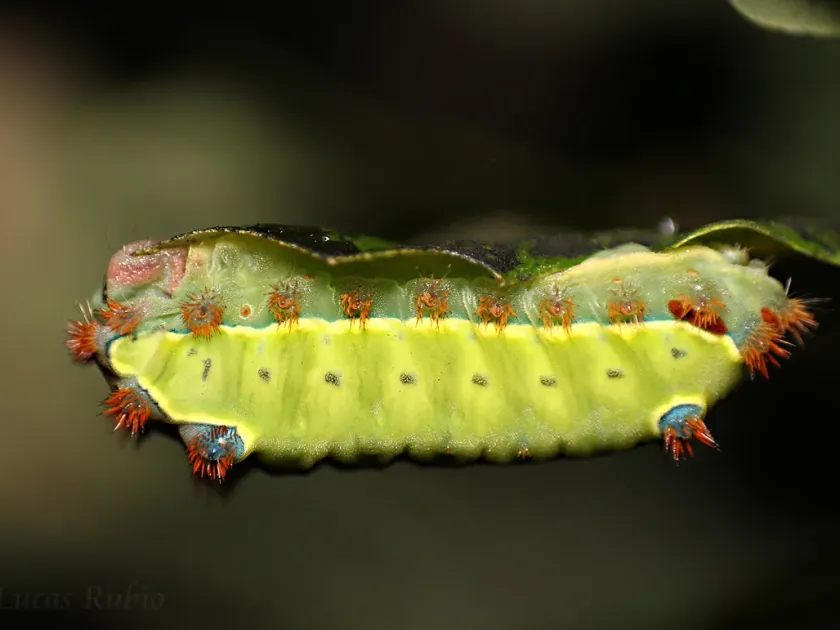
Acharia bonaerensis belongs to the Limacodidae family, known as slug moths, within the order Lepidoptera. The larvae, or caterpillars, are distinguished by their slug-like appearance, having a flattened body and reduced legs, which makes them unique among common garden pests.
The caterpillars are often equipped with urticating (stinging) hairs that provide a chemical defense mechanism, making them hazardous to handle without protective gear.
Adult moths are typically nocturnal, with a robust body and cryptic coloration that allows them to blend in perfectly with bark or dry foliage during the day.
The life cycle involves complete metamorphosis, where the pupal stage is protected within an exceptionally hard, silk-reinforced cocoon that is often attached to twigs or bark.
Proper identification in the field requires looking for these distinctive, slug-shaped larvae that remain motionless on the underside of leaves for long periods.
What it damages
This species primarily feeds on the foliage of a variety of broad-leaved trees and shrubs, posing a risk to both commercial fruit orchards and ornamental gardens.
Larvae consume leaf tissue with high intensity, often starting from the edges or causing complete skeletonization, leaving only the primary veins intact.
Severe infestations can lead to significant defoliation, which hampers the photosynthetic capacity of the plant and reduces its overall vigor throughout the growing season.
For fruit-bearing plants, the reduction in leaf area directly translates into reduced fruit size, poorer quality, and lower yield potential for the current year.
Persistent attacks over several consecutive seasons can exhaust the plant, leading to the dieback of shoots and increased vulnerability to secondary infections and environmental stress.
Signs of infestation
The presence of irregular, notched feeding patterns on leaf margins is a primary indicator that Acharia larvae are active in the canopy.
Accumulated frass (larval droppings) on the leaves or the ground beneath the plant serves as a clear indicator of a feeding population above.
Hard, oval-shaped cocoons found on the bark or at the base of branches are definitive evidence of the species' presence in the environment.
During the day, larvae may be found stationary on leaves, often camouflaged so well that they are mistaken for part of the plant structure.
Wilting or yellowing of foliage in isolated patches can sometimes be linked to heavy larval grazing that has severely damaged the vascular integrity of the leaves.
Control measures
Physical removal of cocoons during pruning operations in the dormant season is a highly effective way to reduce the following year's population.
Biological control using microbial insecticides, such as those containing Bacillus thuringiensis, is recommended as an environmentally friendly approach to target early larval stages.
Chemical control should be applied judiciously, targeting the larvae while they are still in early stages of development and ensuring compliance with local safety regulations.
Enhancing habitat diversity to encourage the presence of predatory wasps and other natural enemies can help keep the pest population below economic damage thresholds.
Good orchard management, including thinning the canopy and maintaining optimal plant health, reduces the attractiveness of the site for ovipositing moths.
Taxonomy
- Latin name
- Acharia bonaerensis
- Order
- Lepidoptera (butterflies)
- Family
- Limacodidae
- EPPO code
- SIBIBO
Discussion
No discussions yet — be the first.