
Saddleback caterpillar
Acharia stimulea
Description
How to identify
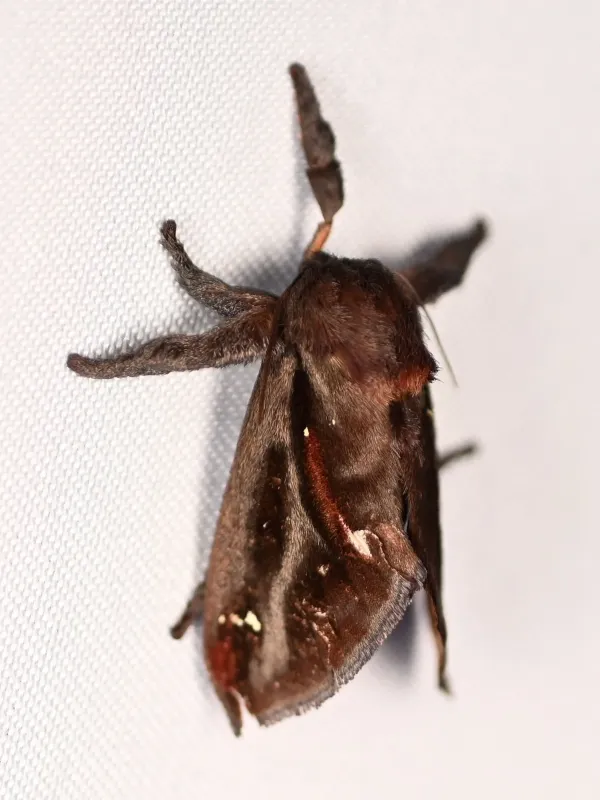
The saddleback caterpillar (Acharia stimulea) belongs to the Limacodidae family, also known as slug moths. While the adult moth is relatively inconspicuous, the larval stage is highly distinct and easily recognizable due to its unique shape and coloration.
The caterpillar features a vibrant color pattern including green, brown, and white. Its most striking feature is a prominent central brown spot surrounded by white, which resembles a saddle, giving the insect its common name.
The body is covered with fleshy, spiny protrusions known as scoli. These spines contain a potent toxin that causes severe irritation, rashes, and pain upon contact with human skin. Consequently, it is considered a pest that poses a health risk to gardeners.
Biologically, the larva lacks traditional prolegs, using a sucker-like motion to glide over surfaces, similar to a slug. This movement is a defining characteristic of the entire Limacodidae family.
The species undergoes a complete metamorphosis, progressing through egg, larval, pupal, and adult stages. They are highly resilient, and their defensive adaptations make them successful survivors in various environments.
What it damages
The saddleback caterpillar is a generalist feeder with a wide host range. It is known to infest a variety of landscape plants, fruit trees, and ornamental shrubs, making it a common concern in horticulture and landscaping.
Primary host plants include fruit-bearing trees like apple and cherry, as well as ornamentals such as roses and hibiscus. They are also frequently found on oak, maple, and various citrus species, often showing little preference for specific plant families.
Feeding damage occurs primarily on the foliage. Young larvae often skeletonize leaves, leaving only the veins intact. Larger caterpillars are capable of consuming entire leaves, leaving only the petioles or midribs behind.
Heavy infestations can lead to significant defoliation of host plants. This loss of photosynthetic surface area weakens the plant, reducing its vigor, overall growth, and potential for future fruit or flower production.
In nursery settings, the presence of these caterpillars is particularly detrimental. Not only do they cause physical damage to the inventory, but they also represent a liability due to their stinging properties, which can deter workers and customers.
When it appears
The active feeding season for saddleback caterpillars typically occurs during the late summer and early autumn, specifically from July through September. During this time, the larvae feed voraciously to build up energy for pupation.
The species overwinters as a pupa within a hard, dense, spherical silk cocoon. These cocoons are typically attached to the stems of host plants or buried in the leaf litter at the base of the tree.
Adult moths emerge in late spring or early summer to mate. Females then lay clusters of eggs on the underside of host leaves, often going unnoticed due to their protective placement and coloration.
The larval development period lasts for several weeks. Once the caterpillar reaches its final instar, it seeks a suitable location to spin its cocoon, which generally coincides with the approach of cooler fall weather.
Early monitoring is essential for effective management. Gardeners should inspect their plants for signs of foliage damage or egg clusters starting in mid-summer to prevent an outbreak from escalating.
Signs of infestation
The most common sign of a saddleback infestation is the presence of irregular, notched holes in the leaves. When young, the larvae create a skeletonized pattern where leaf tissue between veins is removed.
Frass, or caterpillar droppings, are often found on the foliage below the feeding site. These dark, small, pellet-like droppings are a strong indicator that larvae are active in the canopy above.
If you notice leaves that appear withered or have jagged edges, carefully examine the underside of the foliage. The caterpillars are often camouflaged, but their bright colors and distinct "saddle" make them easier to spot if the plant is inspected closely.
Changes in leaf health, such as premature browning or yellowing, may also indicate severe larval feeding. In some cases, the presence of predatory wasps or birds congregating around a plant can serve as an indirect sign of an infestation.
During the dormant season, inspect the woody stems of host plants for small, hard, round cocoons. Manually removing and destroying these can significantly reduce the local population of the pest for the following year.
Control measures
- Mechanical removal: Wear thick, long-sleeved clothing and leather gloves to pick off caterpillars, ensuring no skin is exposed to their stinging spines.
- Biological control: Utilize products containing Bacillus thuringiensis (Bt), which are effective against young larvae while remaining safe for most beneficial insects.
- Chemical intervention: Apply registered contact or systemic insecticides if the infestation is severe and non-chemical methods prove insufficient.
- Natural predators: Encourage the presence of parasitic wasps, birds, and other predators that help maintain a natural balance in the garden.
- Cultural practices: Clean up leaf litter and prune heavily infested branches during the dormant season to eliminate overwintering pupae.
Taxonomy
- Latin name
- Acharia stimulea
- Order
- Lepidoptera (butterflies)
- Family
- Limacodidae
- EPPO code
- SIBIST
Discussion
No discussions yet — be the first.